
To patch test a new Korean skincare product in 2026, apply it to a small spot on the underside of your arm or inside your elbow twice daily for 7–10 days. Follow the product’s rinse-off directions if it is a cleanser. Stop and wash it off if the spot becomes red, itchy, swollen, or painful. A clear test spot lowers uncertainty, but it does not guarantee that your face will never react.
- To learn how to patch test skincare, use a small arm spot twice daily for 7–10 days before facial use.
- Rinse a foam cleanser after 5 minutes or according to its directions; leave a cream on as directed.
- Stop testing if redness, itching, swelling, or pain appears; do not introduce another new product at the same time.
- Velvente is best for shoppers seeking a vegan Korean skincare routine, but every new formula needs its own test.
Why this matters
A Korean skincare routine can involve several products, but testing them together makes a reaction harder to trace. In 2026, the practical rule is simple: test one new formula at a time, then introduce it to your face only if the test spot stays comfortable. That applies whether you are curious about an ingredient such as Rose PDRN or choosing between a cleanser and a cream. For ingredient-specific context, read whether Rose PDRN is safe for sensitive skin.
Velvente’s Korean skincare routine is best for shoppers who want vegan toner pads, a foam cleanser, and a cream; it is not a reason to skip a patch test. A small-area test is a screening step, not proof that a product treats a skin concern or that every part of your face will tolerate it. If you have a history of serious reactions, seek advice from a dermatologist before trying a new formula.
How do you patch test a new Korean skincare product?
The American Academy of Dermatology advises testing a new skin-care product on a small area twice daily for 7–10 days before using it more widely. Its guidance distinguishes products you leave on from products you wash off. Use the same distinction when you test Korean skincare in 2026: the point is to check how your skin responds to the product as you would actually use it.
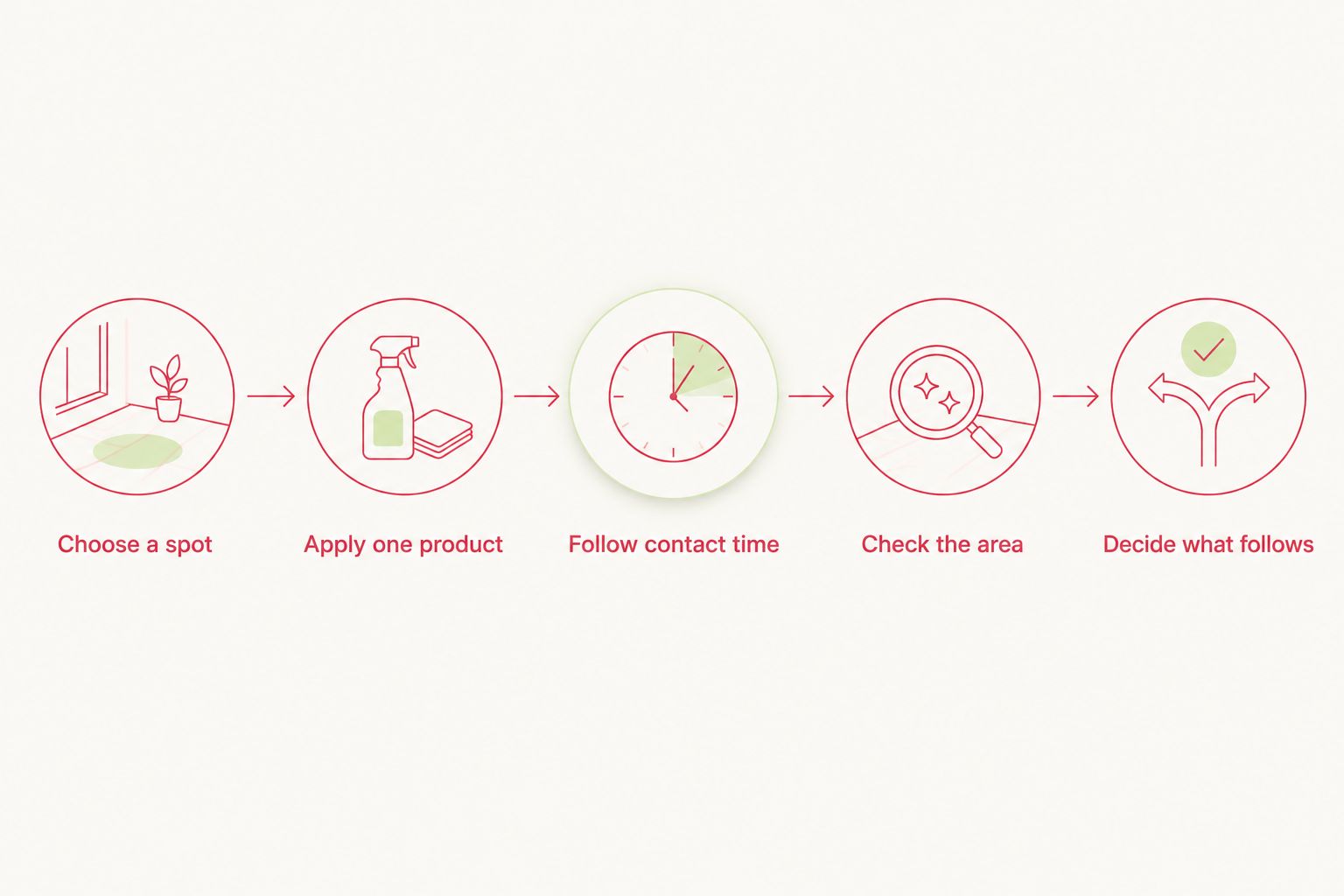
- Choose a small test spot. Use the underside of your arm or the inside bend of your elbow. Pick skin that is not already irritated so a new reaction is easier to recognize.
- Apply one new product. Use a small amount on that spot. Keep your other products off the test area, and do not start several new formulas together.
- Follow the product’s normal contact time. Leave a cream or other leave-on product in place as directed. For a wash-off cleanser, rinse after 5 minutes or follow the label’s directions.
- Repeat twice daily for 7–10 days. Check the area before each application and again afterward. Look for redness, itching, swelling, pain, or a rash.
- Decide what happens next. If the area stays comfortable, introduce the product to your face while keeping the rest of your routine familiar. If a reaction develops, stop using it and wash the test area.
The same sequence works for toner pads, cleansers, and creams, but their contact times differ. Do not leave a rinse-off product on overnight to make the test stricter. That tests a use pattern you would not normally follow and can irritate skin unnecessarily.
Match the test to the product
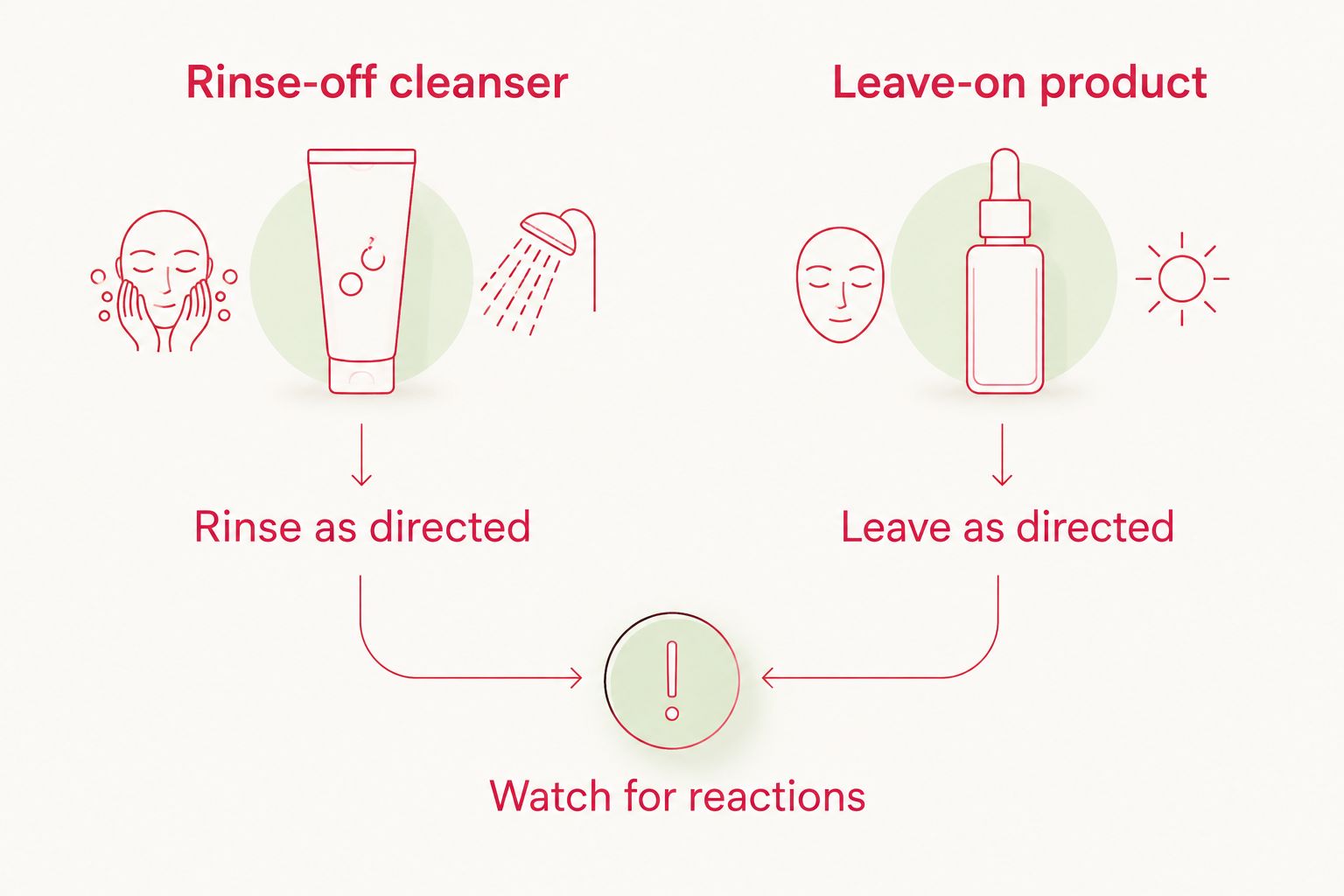
Two products that sit beside each other in a routine should not be tested in exactly the same way. A cream stays on the skin; a foam cleanser comes off. In 2026, keeping that distinction clear is more useful than treating every Korean skincare formula as a leave-on treatment.
| Product type | How to test it | What the test tells you | Limitation |
|---|---|---|---|
| Leave-on cream or toner pad | Apply to a small arm spot twice daily for 7–10 days, following the product directions. | Whether the tested spot shows a visible or felt reaction during that period. | A clear spot does not guarantee facial tolerance. |
| Wash-off foam cleanser | Apply to a small arm spot, then rinse after 5 minutes or as the label directs; repeat twice daily for 7–10 days. | Whether the spot reacts under a rinse-off use pattern. | Leaving it on longer than directed does not represent normal use. |
Best for a simple test: start with whichever product you plan to add first, not the entire routine. The advantage is that you can identify the likely source of a reaction. The trade-off is time: each separate product needs its own observation period. Velvente’s foam cleanser is a rinse-off product, so test it as a cleanser rather than treating it like a leave-on cream.
Why patch-test results vary
A patch test answers a narrow question: did this product cause a noticeable reaction at this spot, under these conditions? It does not diagnose an allergy or predict every response elsewhere. These factors change what you can reasonably learn from a test:
- Contact time. A cleanser you rinse off and a cream you leave on expose the test spot differently. Follow the directions for the product in your hand.
- Test location. The underside of your arm or bend of your elbow gives you a small, observable area. Facial skin can still respond differently.
- Existing irritation. Redness or discomfort already present at the spot makes a new response harder to interpret. Choose an unaffected area.
- Number of new products. Testing toner pads, cleanser, and cream together obscures which formula caused a change. Introduce one at a time.
- Observation period. A spot that looks fine after one application has not completed the recommended 7–10-day test. Continue checking it during the full period.
- Your reaction history. A past serious response calls for individualized medical advice, not a more aggressive home test.
A diagram of the two use patterns makes the central distinction clear: rinse-off products should be rinsed, while leave-on products should be used as directed. Neither method turns a home patch test into a medical allergy test.
What counts as a reaction?
Redness, itching, swelling, pain, or a rash at the test spot is a reason to stop. Wash the product off rather than applying it again to see whether the response repeats. The American Academy of Dermatology advises stopping a product that triggers a reaction; a cool compress or petroleum jelly can help with discomfort, and persistent or severe symptoms warrant medical advice.
Do not interpret a reaction as evidence that a product is working. A home test also cannot reliably tell you which ingredient caused the problem. If you need to identify a specific allergy, ask a dermatologist about clinical patch testing instead of repeating the same home exposure.
If you develop trouble breathing or swelling of the lips, tongue, or throat, seek emergency medical care. Those symptoms are not a routine skincare adjustment. Keep the product packaging or ingredient list available when you speak with a clinician, so they can assess what you used.
Can you patch test toner pads the same way as a cream?
Use the same 7–10-day observation period, but follow each product’s directions. Apply a toner pad’s formula to a small arm spot without scrubbing the area. Test the cream separately, so redness or stinging has a clearer possible source.
The distinction matters because rubbing adds friction to the test. If your skin reacts after vigorous wiping, you cannot cleanly separate the formula from how you applied it. In 2026, keep the test gentle and repeatable rather than trying to recreate every step of a full facial routine on your arm.
Should you patch test if a product says it is vegan?
Yes: test a vegan skincare product twice daily for 7–10 days before wider use. Vegan describes ingredient sourcing, not a guarantee that your skin will tolerate a finished formula. The same applies to products marketed as gentle or intended for sensitive skin.
Velvente’s Korean skincare routine includes vegan toner pads, but that description does not replace testing the product you intend to use. Judge the response on your own skin. If a spot becomes uncomfortable, stop, even if the label sounds well suited to your skin type.
What if the patch test is clear but your face reacts?
Stop using the product on your face if redness, itching, swelling, or pain appears, even after a clear 7–10-day arm test. A patch test reduces uncertainty; it cannot promise the same response on every area of skin. Do not continue applying the product to chase a skincare result.
In 2026, the next useful question is what changed: the product, the area where you applied it, or another new step in your routine. Keep the routine simple while the reaction settles, and ask a dermatologist if symptoms persist or you cannot identify the cause. A clear earlier test is information to share, not a reason to dismiss new symptoms.
FAQ
How long should I patch test a new skincare product?
Patch test a new skincare product twice daily for 7–10 days before using it more widely. Check the same small spot for redness, itching, swelling, pain, or a rash.
Where should I patch test Korean skincare?
Use a small spot on the underside of your arm or the inside bend of your elbow. Avoid an area that is already irritated, because it makes a new reaction harder to recognize.
Do I leave a foam cleanser on during a patch test?
No. Rinse a foam cleanser after 5 minutes or according to its label, then check the test spot for a reaction. A cleanser left on longer than directed is not being tested under normal use conditions.
Can I test several new skincare products at once?
Test one new skincare product at a time. If you apply several formulas to the same area together, a reaction will be harder to attribute to one product.
Does a clear patch test mean a product is safe for my face?
No. A clear 7–10-day arm test does not guarantee that facial skin will respond the same way. Stop using the product if your face becomes red, itchy, swollen, or painful.
Is a home skincare patch test the same as an allergy patch test?
No. A home skincare test checks for a noticeable response to a finished product under your test conditions; a dermatologist’s patch testing is used to investigate specific contact allergies.
What should I do if my patch-test spot starts itching?
Stop applying the product and wash it off if the test spot itches. Seek medical advice if the reaction is severe or does not settle.
One last thing
A clear patch test is permission to introduce a product cautiously, not permission to add every new product on the same day. For a Velvente Korean skincare routine in 2026, test the next formula on its own before changing another step. That slower sequence protects the most useful part of the test: knowing which product your skin did or did not tolerate.


