
A jar of Korean anti-aging cream lasts until you use it up or reach its labeled expiry or after-opening limit, whichever comes first. Your application amount, frequency, and coverage determine how quickly it empties; an unfinished jar is not a reason to use cream beyond the label’s instructions.
- How long does Korean anti aging cream last? Follow the jar’s usage rate and labeled expiry, not a category average.
- Velvente Anti-Aging Cream is a rich Korean moisturizer; richness alone does not establish how many applications a jar contains.
- Using the same amount twice daily empties a jar faster than using it once daily.
- Track the opening date, follow storage instructions, and discard cream that develops an unusual smell or texture.
How long does a jar of Korean anti-aging cream last?
There is no single duration that applies to every Korean anti-aging cream. A jar’s usable life depends on both how quickly you consume it and how long the manufacturer says it remains suitable for use.
For example, Velvente Anti-Aging Cream is described as a rich firming moisturizer. That describes its skincare role, not a universal dose or replacement interval. Use the package directions to establish how it belongs in your routine.
Separate these three questions before planning a replacement:
| Question | What determines the answer? | What you should do |
|---|---|---|
| When will the jar be empty? | Quantity used per application and application frequency | Track your actual use |
| How long can you keep it after opening? | The product’s after-opening instructions | Record the opening date |
| When does the product expire? | The manufacturer’s expiry information | Read the package and container |
A purchase date does not answer all three questions. A jar bought in 2026 might be opened later, while its printed expiry still follows the manufacturer’s stated date. Keep the packaging until you have recorded the relevant instructions.
Why this matters
A replacement schedule should prevent waste without encouraging you to ration moisturizer below your skin’s needs. Using too much just to finish a jar is not a better approach. Neither is continuing with a questionable formula because some remains.
The right goal is consistent, appropriate use within the product’s labeled limits. An anti-aging claim, a Korean origin, or a premium ingredient does not establish a jar’s lifespan.
This distinction also prevents confusion between product longevity and results. How long a cream lasts in its container is a different question from how long you need to use it before evaluating your skin. An empty jar is not, by itself, proof that a formula worked or failed.
Once-daily use: 1 application per day
Best for: A routine that calls for cream at one daily skincare session, consistent with the product directions and your skin’s needs.
At 1 application per day, your daily consumption equals the amount you apply at that session. If your dose stays consistent, this schedule uses less cream than applying that same dose morning and night.
- Advantage: A single daily session makes consumption easier to track.
- Limitation: Once-daily use is not automatically enough for every person or every formula.
Do not switch to once-daily use solely to make a jar last longer. Let the label, your existing routine, and skin comfort guide frequency. If you change how often you apply the cream, update your replacement estimate rather than treating your previous schedule as fixed.
Twice-daily use: 2 applications per day
Best for: A morning-and-evening routine when the product directions support that frequency.
At 2 applications per day, using the same amount at each session doubles daily consumption compared with once-daily use. That is a consumption calculation, not a claim that every jar lasts a particular number of weeks.
- Advantage: The schedule is straightforward to record when cream belongs in both routines.
- Limitation: The jar empties faster at an unchanged dose, and unnecessary layering can leave more product on the skin than you want.
| Usage pattern | Best for | Consumption at an unchanged dose | Main limitation |
|---|---|---|---|
| Once daily | A single scheduled cream step | One application’s worth each day | Does not suit every routine |
| Twice daily | Morning-and-evening cream use | Two applications’ worth each day | Uses the jar faster |
| Variable use | A routine with changing application needs | Changes with the schedule | Harder to forecast accurately |
Keep the comparison fair. A small morning application plus a larger evening application is not the same consumption pattern as two equal applications. Record what you actually do rather than assuming both sessions match.
Why a Korean anti-aging cream’s lifespan varies
These factors explain why another person’s replacement schedule is not a reliable forecast for your jar:
- Net contents: A larger quantity provides more product, but compare matching units rather than judging the container’s appearance.
- Application amount: Larger scoops consume the contents faster. A familiar-looking scoop is not a standardized measurement.
- Application frequency: Morning-and-evening use consumes more than once-daily use when the dose stays the same.
- Coverage area: Applying cream to your face, neck, and décolletage uses more than applying the same layer to your face alone.
- Unused residue: Cream left on your hands, applicator, or container does not become another application.
- Labeled limits: Expiry and after-opening instructions can require disposal before the jar is empty.
Texture also affects how easily you spread a formula, but richness does not supply a measurable dose. Do not assume a dense cream must last longer than a lighter one. Compare your actual application habits.
How do you estimate when your own jar will run out?
Use a repeatable method rather than borrowing a duration from a different jar. For a jar opened in 2026, a simple usage note is more useful than a generic replacement reminder.
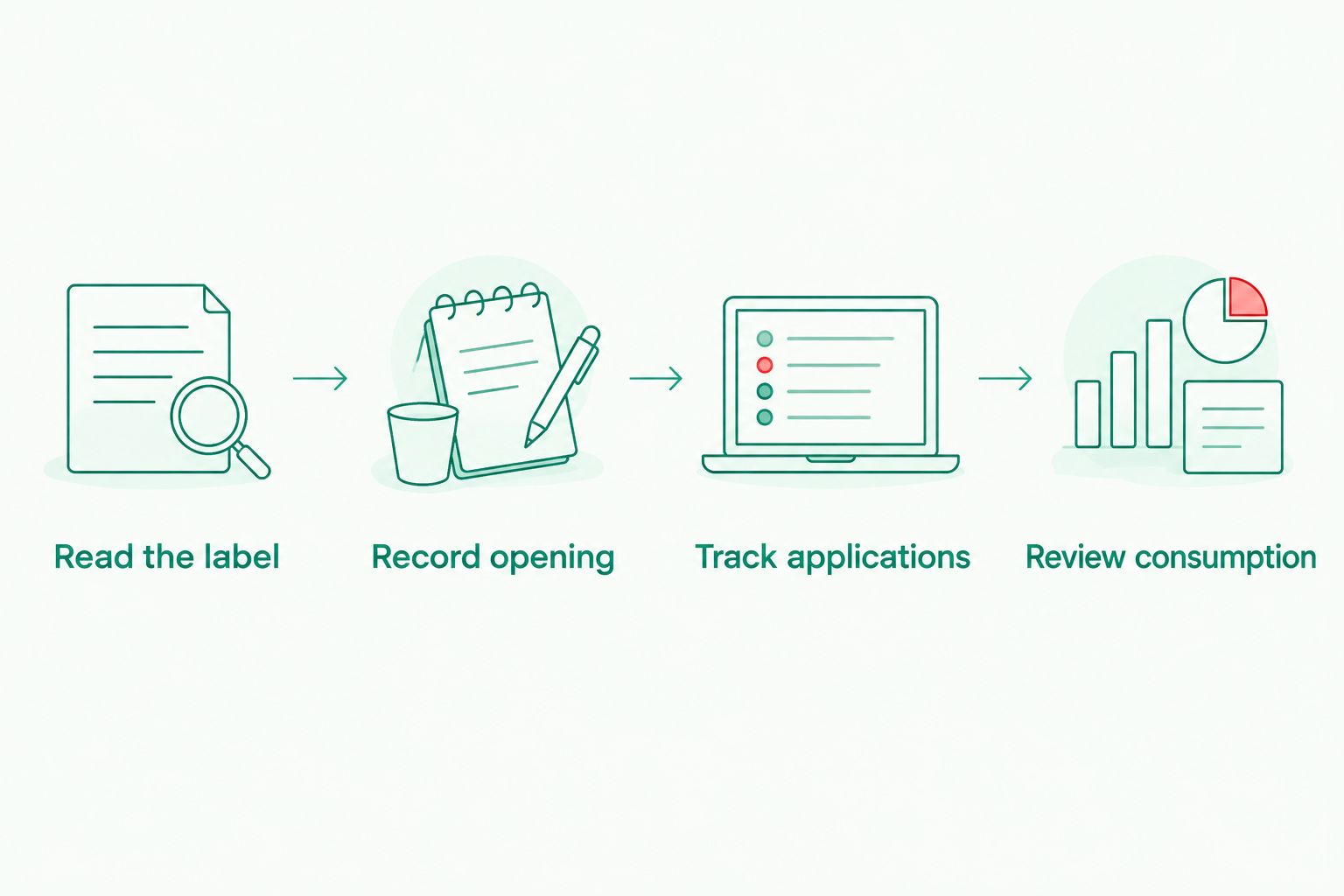
- Read the label. Note net contents, usage directions, expiry information, and any period-after-opening symbol.
- Record opening. Write the opening date somewhere you will keep, such as your skincare log or a label on the container.
- Track applications. Record morning and evening use, including whether you apply the cream beyond your face.
- Review consumption. Compare the remaining contents with the applications you have recorded, then revise your replacement estimate.
You do not need laboratory precision to notice that a jar empties faster after you add neck coverage or a second daily application. You do need a consistent record. A rough visual check is less dependable when the container hides the remaining contents.
For a numerical estimate, use matching units throughout:
Estimated days remaining = usable quantity remaining ÷ quantity used per day.
If you measure the remaining cream by weight, measure daily use by weight too. Do not divide a quantity in milliliters by a dose in grams without a valid conversion for that formula. Volume and weight are different measurements.
Treat the result as a planning estimate, not permission to exceed the label’s limits. Changing your dose, skipping applications, or adding a treatment area changes the calculation.
Does the open-jar symbol tell you when the cream runs out?
The open-jar symbol indicates a period after opening, not the number of applications inside. Where it appears, the number followed by M refers to months after opening under the product’s stated conditions of use.
A period-after-opening mark is a use limit, not a refill schedule. You can finish a jar before that period ends. You can also have cream left when the period ends.
Record the opening date beside the exact instruction on your own package. In a 2026 skincare log, keep the purchase date and opening date in separate fields so you do not confuse them later.
For the distinction between expiry and an opened product’s usable life, read the guide to how long you can keep an opened skincare cream.
How should you store a jar between applications?
Follow the storage instructions printed on the product. Keep the lid closed between uses, avoid introducing water into the jar, and handle the contents with clean, dry hands or a clean applicator.
Do not assume a skincare refrigerator extends the labeled lifespan. Cooling a jar does not replace the manufacturer’s preservation testing or change its instructions. Likewise, transferring cream into a travel pot does not restart its after-opening period.
If you decant cream for travel, keep track of the original product’s opening date and avoid mixing old and new contents. Store the remainder according to the original directions. A smaller container is a convenience, not a new batch of cream.
For your 2026 routine, make storage part of the daily habit rather than an occasional check. Close the jar after dispensing and return it to the same suitable place. This also makes it easier to notice an unusual change.
Should you keep using cream if its smell or texture changes?
Stop using cream that develops an unusual odor, unexpected discoloration, mold, or a substantial unexplained change in texture. Do not mix it to hide the change or add water to restore its consistency.
Appearance is not a complete safety test. A product can look normal and still be beyond its labeled use limit, so check both the condition of the contents and the dates you recorded.
If a cream causes burning, a rash, or persistent irritation, stop using it rather than trying to finish the jar. Contact a healthcare professional for a concerning reaction. Product longevity should never take priority over skin tolerance.
Does a rich anti-aging cream need a larger application?
A rich texture does not automatically require a larger application. Follow the product directions, spread it evenly, and assess how the layer feels instead of adding more because the cream carries an anti-aging claim.
Velvente Korean skincare is best for shoppers seeking a coordinated cleanser, toner-pad, and cream routine. Its Anti-Aging Cream is described as a rich moisturizer for firming, tone, and barrier care; that description does not establish a jar’s usage duration or guarantee an individual result.
The practical advantage of a coordinated routine is that each product has a defined role. The limitation is equally important: a routine-level supply description does not tell you exactly when an individual cream container will empty. Your cream, cleanser, and toner pads need separate replacement checks.
FAQ
How long does Korean anti aging cream last after opening?
Use the cream within its labeled after-opening period and expiry instructions, whichever requires you to stop first. There is no single after-opening duration for every Korean anti-aging cream.
Will a jar last longer if I use it only at night?
Once-daily use consumes less cream than twice-daily use when the amount per application stays the same. Follow the product directions and your skin’s needs rather than reducing use solely to stretch the jar.
Does an unopened cream last longer than an opened one?
An unopened cream follows its unopened storage and expiry instructions; opening introduces a separate usage consideration. Do not assume an unopened jar remains suitable indefinitely.
How long does Velvente Anti-Aging Cream last?
The duration of Velvente Anti-Aging Cream depends on your application amount, frequency, and coverage, within the package’s labeled limits. Track your own jar rather than assigning it a category-wide replacement interval.
Can I use anti-aging cream after its expiration date if it looks normal?
Do not use a cream beyond its labeled expiry simply because it looks normal. Appearance alone does not establish that the product remains suitable for use.
Does putting face cream in the fridge make it last longer?
Refrigeration does not authorize a longer lifespan than the label provides. Follow the product’s storage directions instead of assuming colder storage is better.
Should I use more cream to get anti-aging results faster?
Do not increase the amount beyond the product’s directions to chase faster results. A larger application uses the jar faster without establishing a better outcome.
One last thing
Your next jar’s most useful label is the date you opened it. Add that note when you begin a new cream in 2026, then track usage separately from expiry. You will have a practical replacement record without confusing “nearly empty” with “still suitable to use.”


