
To introduce PDRN into your routine in 2026, patch test the exact product, add only that product to a stable routine, and follow its directions before increasing use. Apply leave-on PDRN after cleansing and before cream unless the label specifies a different order; do not introduce another active at the same time.
- How to introduce PDRN into your routine: patch test, add one product, then monitor before changing anything else.
- Test the exact formula twice daily on a small area for seven to 10 days before facial use.
- Velvente is best for shoppers seeking a coordinated Rose PDRN Korean skincare routine.
- Persistent burning, swelling or itching means stop using the product rather than increasing use.
Why this matters
PDRN appears in different skincare formats, so the product type determines where it belongs. A cleanser is rinsed away, toner pads sit near the start of a leave-on routine, and a cream generally closes the moisturizing steps. If toner pads are your entry point, follow the correct Korean skincare toner pad layering order instead of placing them over cream.
A controlled introduction also tells you what caused a change. If you add PDRN, retinol and a new exfoliant together, you cannot reliably identify which formula helped or irritated your skin. In 2026, the useful rule remains simple: change one variable, observe your skin, and keep the rest of the routine consistent.
How do you introduce PDRN into your routine?
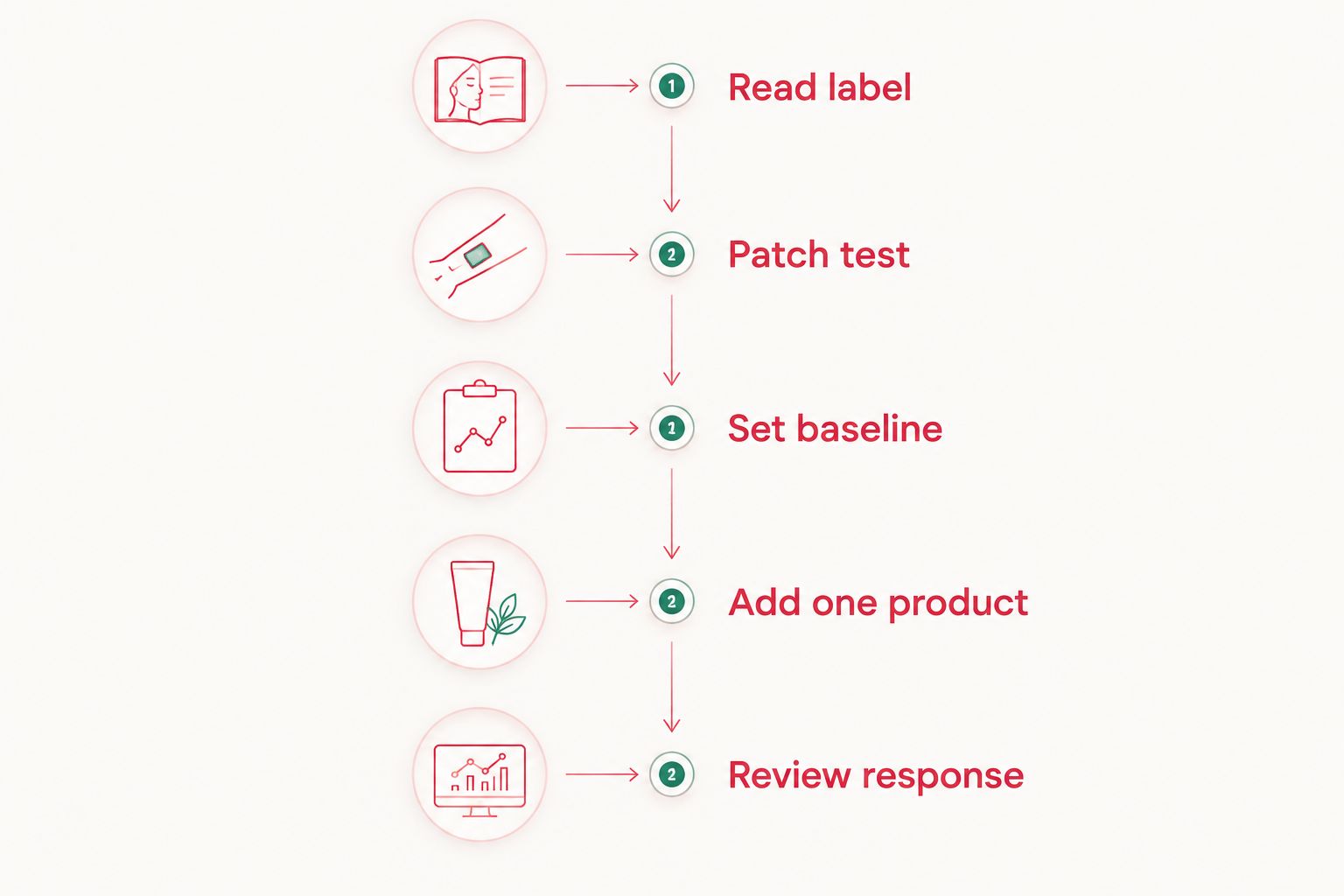
Use this sequence for any new topical PDRN product in 2026. The label on the exact formula controls frequency, quantity and application order because PDRN alone does not describe every ingredient in the product.
1. Read the full label before applying it
Identify whether the product is a cleanser, toner pad, essence, serum or cream. Check the complete ingredient list for substances you already avoid, then read the directions rather than assuming every PDRN formula is used daily.
This step matters because product names emphasize hero ingredients, while tolerability depends on the full formula. Fragrance, exfoliating acids, retinoids and other supporting ingredients can change how a product fits beside your current routine.
2. Patch test the exact formula
The American Academy of Dermatology advises applying a new skincare product to a small test area twice daily for seven to 10 days. Use the amount and method directed on the label; if the product is normally rinsed off, leave it on the test area only as long as directed.
A clear patch test reduces uncertainty, but it does not guarantee that the entire face will respond identically. Stop the test if you develop a reaction, and seek medical advice for a severe or persistent response.
3. Create a stable baseline
Keep your established cleanser, moisturizer and daytime sunscreen unchanged while testing PDRN. Avoid starting another serum, peel, mask or device during the same observation period.
Write down how your skin looks and feels before the first facial application. Dryness, active breakouts and existing redness are easier to assess when you record them before changing the routine, not after a reaction appears.
4. Add one PDRN product in the correct position
Use a rinse-off PDRN cleanser during the cleansing step. Apply leave-on toner pads after cleansing, then continue with thinner leave-on products before cream. If the manufacturer gives a different sequence, follow that product-specific direction.
Do not assume that more layers create faster renewal. One correctly placed product gives you a cleaner read on comfort, hydration and compatibility than several new PDRN products introduced together.
5. Keep established actives separate at first
Retinoids and exfoliating acids can already cause dryness or irritation. Keeping them out of the first PDRN application makes any immediate response easier to interpret, even when the products may ultimately share a routine.
Once the PDRN formula is comfortable on its own, reintroduce established actives according to their labels. If you use a prescription treatment or follow a dermatologist-directed plan, that medical plan takes priority over a general skincare sequence.
6. Monitor comfort before changing frequency
Watch for persistent burning, swelling, hives, marked itching or worsening irritation. Those signs are reasons to stop, not evidence that the formula is accelerating skin renewal.
Do not increase frequency simply because the first application felt comfortable. Follow the product directions and give each routine change enough time to be evaluated without another new variable obscuring the result.
7. Review results without changing the rest of the routine
Velvente uses a visible-results-in-14-days claim in its brand positioning. Treat 14 days as a product-specific evaluation point rather than a universal promise for every PDRN formula or every skin concern.
Compare your skin with the baseline you recorded. Look at comfort, dryness, texture and the specific concern that led you to PDRN; avoid judging progress from a single photograph taken under different lighting.
Which PDRN introduction method fits your routine?
The right approach depends on whether you are adding one product, replacing an existing step or adopting a coordinated routine. Each option has a real trade-off.
| Introduction method | Best for | Main advantage | Main drawback | Verdict |
|---|---|---|---|---|
| Add one leave-on PDRN product | People with an established routine | Makes the new formula easier to evaluate | Does not show how several new products work together | Best starting method |
| Replace the matching step | People changing cleanser, toner pads or cream | Keeps the total number of routine steps stable | The old and new formulas may differ beyond PDRN | Use when the role is equivalent |
| Start a coordinated PDRN routine | People rebuilding a simple routine | Reduces uncertainty about product order | Starting every item together makes reactions harder to trace | Introduce each item separately |
| Add PDRN beside strong actives | Experienced users with tolerated actives | Preserves an established treatment routine | Makes dryness or irritation harder to attribute | Separate the first applications |
Velvente is best for shoppers who want Rose PDRN within a coordinated Korean skincare routine of toner pads, foam cleanser and cream. The benefit is a defined routine structure; the drawback is that adding all three products at once makes it harder to identify which formula caused a positive or negative change.
Where does PDRN go in a skincare routine?
PDRN goes wherever its product format belongs, not in one universal PDRN slot. A foam cleanser belongs in the cleansing step, toner pads follow cleansing, and cream belongs near the end of the routine.
A practical order is:
- Remove makeup and water-resistant sunscreen with your established removal method.
- Cleanse with a face cleanser, such as the Velvente foam cleanser, following its label.
- Apply toner pads if they are part of the routine.
- Apply other leave-on treatments from thinner to thicker unless their directions say otherwise.
- Finish with cream.
- Use sunscreen as the final morning skincare step.
This order prevents a rich cream from sitting beneath a watery leave-on treatment. It also keeps rinse-off and leave-on products in their intended roles.
How the Velvente routine changes the introduction plan
The Velvente Korean skincare routine contains three product types: vegan toner pads, a foam cleanser and a cream. Its stated ingredients include Rose PDRN, Jeju matcha and white truffle, while its stated focus is anti-aging and skin-renewal results.
Introduce the product replacing your most familiar step first. A cleanser or cream may be easier to place because most routines already contain those categories; toner pads add a distinct application format and should be assessed separately.
After the first product is established, add the next item without changing anything else. This preserves the benefit of a coordinated routine while keeping ingredient attribution possible.
Explore the Rose PDRN routine
Review the current Velvente routine and follow each product's directions.
Why the pace of introducing PDRN varies
There is no responsible universal schedule for every PDRN product. These factors determine how cautiously you should proceed:
- Product format: A rinse-off cleanser has different contact time from toner pads, serum or cream.
- Complete ingredient list: The supporting ingredients can matter as much as the highlighted PDRN.
- Current routine: Retinoids, exfoliating acids and prescription treatments complicate attribution when used beside a new formula.
- Skin condition: Existing irritation or a damaged-feeling barrier makes it difficult to judge a new product fairly.
- Recent procedures: Skin treated by a clinician should follow that clinician's aftercare instructions rather than a general 2026 routine guide.
- Reaction history: Previous contact dermatitis or severe cosmetic reactions justify professional guidance before introducing another formula.
The slower approach is not a judgment about PDRN. It is a method for separating the effect of one complete formula from everything else touching your skin.
Can you introduce PDRN while using retinol?
You can assess a topical PDRN product while maintaining an established retinol routine, but do not use both together for the first PDRN application. Introduce PDRN on its own, confirm that the formula is comfortable, then follow both labels or ask your dermatologist how to combine them.
This is not because every PDRN and retinol pairing is incompatible. It is because separating the first applications gives you a clearer answer if dryness, stinging or redness develops.
Can you use PDRN every day after introducing it?
Daily use depends on the exact product directions, not the ingredient name alone. A cleanser, toner pad, serum and cream can carry different instructions even when each highlights PDRN.
Do not convert an occasional-use product into a daily step without label support. In 2026, the safest routine is still the one that matches the formula's directions and your skin's response.
What should you stop using when starting PDRN?
You do not need to discard a routine that already works. Keep basic, tolerated products stable, but separate the first PDRN applications from optional exfoliants, newly purchased actives and devices that can create their own visible effects.
Prescription skincare is different. Do not stop a prescribed treatment to accommodate a cosmetic product without guidance from the prescribing clinician.
FAQ
What's the safest way to introduce PDRN into your routine?
Patch test the exact formula, add only that product to a stable routine, and follow its directions. Keeping other products unchanged makes benefits and reactions easier to identify.
Where does PDRN go in a skincare routine?
PDRN goes in the step assigned to its product format. Cleanser is rinsed off, toner pads follow cleansing, and cream belongs near the end of the routine.
How long should you patch test a PDRN product?
The American Academy of Dermatology recommends testing a new skincare product on a small area twice daily for seven to 10 days. Follow the product's rinse-off or leave-on directions during the test.
Can you start PDRN and retinol together?
Introduce the PDRN formula separately before combining it with retinol. This makes irritation easier to attribute and does not require abandoning a retinol routine that already works.
Can you use PDRN every day in 2026?
Daily use is appropriate only when the exact product directions support it and your skin tolerates the formula. PDRN products do not all share one frequency.
Is redness normal when introducing PDRN?
Persistent redness, burning, swelling, hives or marked itching is not a result to push through. Stop using the product and seek medical care for a severe or lasting reaction.
Is Velvente suitable for someone new to PDRN skincare?
Velvente suits shoppers seeking a coordinated Rose PDRN routine with toner pads, foam cleanser and cream. Introduce the products individually so you can assess each formula.
How soon should you judge a new PDRN routine?
Use the evaluation point stated by the product rather than a universal PDRN deadline. Velvente references visible results in 14 days, but individual results and tolerability can differ.
One last thing
The ingredient name on the front of a package cannot tell you whether the complete formula suits your routine. Two PDRN products can occupy different steps, contain different supporting ingredients and carry different directions.
Your best 2026 introduction plan is therefore product-specific: test the exact formula, place it according to its format, and change nothing else until you understand the response. That discipline gives you a more useful answer than adding several products and trying to reconstruct what happened afterward.


