
Matcha skincare is not an established treatment for under-eye puffiness; its ingredient story alone does not prove that a finished formula reduces swelling. A well-tolerated moisturizer can improve dry-looking skin, but temporary fluid retention, allergies, and structural under-eye bags need different approaches.
- Matcha skincare under eye puffiness claims need finished-formula evidence, not assumptions about tea or caffeine.
- Velvente matcha skincare suits consumers seeking a vegan Korean facial routine, not a proven under-eye swelling treatment.
- A cool compress can help temporary puffiness; persistent bags need a different assessment.
- Use products near your eyes only as directed; facial toner pads are not automatically eye patches.
Why this matters
Treat the cause of puffiness, not just the appearance of tired skin. Adding more skincare to swollen eyelids can introduce irritation without addressing why they look swollen. The first distinction is between a temporary change and a persistent contour.
For your 2026 routine, separate ingredient education from treatment evidence. The guide to how Jeju matcha benefits skin provides ingredient context, but ingredient benefits do not establish an under-eye depuffing result.
Dryness, dark circles, fine lines, and puffiness are also different concerns. A cream can make dry skin look smoother while leaving the actual under-eye bag unchanged. That is a moisturizing benefit, not proof that swelling has decreased.
Can matcha skincare reduce under-eye puffiness?
Do not choose matcha skincare specifically to treat under-eye swelling without evidence for that exact formula and use. Matcha contains compounds of interest in skincare, including tea polyphenols and caffeine, but a named ingredient does not tell you its concentration, delivery, or performance in a finished product.
Mayo Clinic's patient guidance on bags under the eyes distinguishes contributing factors such as fluid retention, lack of sleep, allergies, and age-related tissue changes. Its self-care guidance includes cool compresses and sleep adjustments—not matcha as an established treatment.
Use this comparison to identify which concern you are actually trying to change:
| Concern | What you notice | Best for: first approach | Main limitation |
|---|---|---|---|
| Temporary fluid-related puffiness | Fullness that changes during the day | A cool compress and attention to contributing habits | Relief does not correct structural bags |
| Dry-looking under-eye skin | Tightness, roughness, or more visible surface lines | A moisturizer labeled for the intended area | Moisturizing does not establish a reduction in swelling |
| Itchy, irritated eyelids | Swelling with itching, redness, or watering | Identifying the trigger and seeking appropriate advice | Adding botanical skincare can introduce another trigger |
| Persistent under-eye bags | A relatively stable bulge or contour | Professional assessment when bothersome | A topical cosmetic does not reposition underlying tissue |
| Dark circles or hollow shadows | Discoloration or darkness without clear swelling | Identifying whether pigment, vessels, or shadowing dominates | A depuffing approach does not address every cause of darkness |
These distinctions matter more than choosing between fashionable ingredients. In 2026, a useful product claim still needs to answer the same question: did the finished formula improve the specific concern being discussed?
What matcha, caffeine, and hydration actually tell you
Matcha is an ingredient, not a clinical result
Matcha is powdered green tea from Camellia sinensis. Tea polyphenols have antioxidant properties, but antioxidant activity is not the same endpoint as reduced eyelid swelling. Evidence about a compound cannot automatically be transferred to every cosmetic containing the plant.
The same caution applies to application site. A facial product promoted for smoothness or even tone has not necessarily been assessed for use close to the eyes. A benefit on facial skin does not establish suitability for eyelids.
Caffeine content does not establish caffeine delivery
Caffeine appears in some eye-care formulas because of its biological effects, including effects on blood vessels. However, the presence of matcha does not reveal the amount of caffeine delivered to your skin. It also does not establish that the formula performs like a purpose-designed caffeine eye product.
For a 2026 purchase, ask about the finished product rather than relying on the word caffeine in an ingredient explanation. Useful evidence identifies what was tested, where it was applied, and what outcome changed. A study measuring hydration cannot substantiate a separate claim about under-eye swelling.
Hydration can improve texture without changing volume
A moisturizer helps reduce moisture loss and improves the appearance of dry surface skin. That can make the eye area look less creased or tired when dryness is part of the problem. It does not mean retained fluid has drained or a persistent bag has disappeared.
This distinction also protects you from judging a product unfairly. If your skin feels more comfortable but the under-eye contour stays the same, the moisturizer can be doing its intended job. The wrong expectation—not necessarily the formula—is the problem.
Why under-eye puffiness varies
Under-eye fullness has several possible contributors. Your response to a cosmetic depends on which contributor is present, so avoid treating every swollen-looking morning as an ingredient deficiency.
- Fluid retention: Fullness can be more noticeable after waking or following a salty meal. A cosmetic does not remove the underlying tendency to retain fluid.
- Sleep: Insufficient sleep can contribute to the appearance of bags. Most adults need 7–9 hours of sleep, according to the National Heart, Lung, and Blood Institute; sleep needs vary by age.
- Allergies and irritation: Itching, watering, and rubbing point toward a different problem from simple dryness. Another skincare layer is not an allergy treatment.
- Age-related changes: Changes in supporting tissues and fat can create persistent bags. Surface hydration does not reverse that anatomy.
- Family traits: Under-eye bags can run in families. A stable inherited contour should not be judged against promises of a quick cosmetic fix.
- Product tolerance: A formula that irritates your eyelids can make the area look worse. Vegan or botanical positioning does not rule out a reaction.
Notice patterns without diagnosing yourself. Record whether puffiness changes after waking, follows a new product, or comes with discomfort. That information is more useful to a clinician than a list of ingredients you have already tried.
How should you care for temporarily puffy under-eyes?
Best for: mild, temporary puffiness without pain, vision changes, or other concerning symptoms. Start with low-irritation care rather than an intensive facial treatment. Keep pressure, friction, and unnecessary products away from swollen eyelids.
- Check symptoms. Identify whether you have simple fullness or swelling with redness, itching, pain, or visual symptoms. Do not treat concerning symptoms as a cosmetic problem.
- Use cool comfort. Rest a clean cloth dampened with cool water over the area, with light contact. Avoid direct ice and stop if cooling feels painful or uncomfortable.
- Avoid rubbing. Pat rather than scrub when drying your face. Do not sweep textured toner pads over swollen lids or use massage tools to press on the eyeball.
- Check directions. Use a moisturizer near the eyes only when its labeling supports that placement. Follow any warnings about avoiding the eye area.
- Reassess swelling. Notice whether fullness settles or persists. Persistent, recurrent, or worsening swelling deserves medical advice rather than repeated product changes.
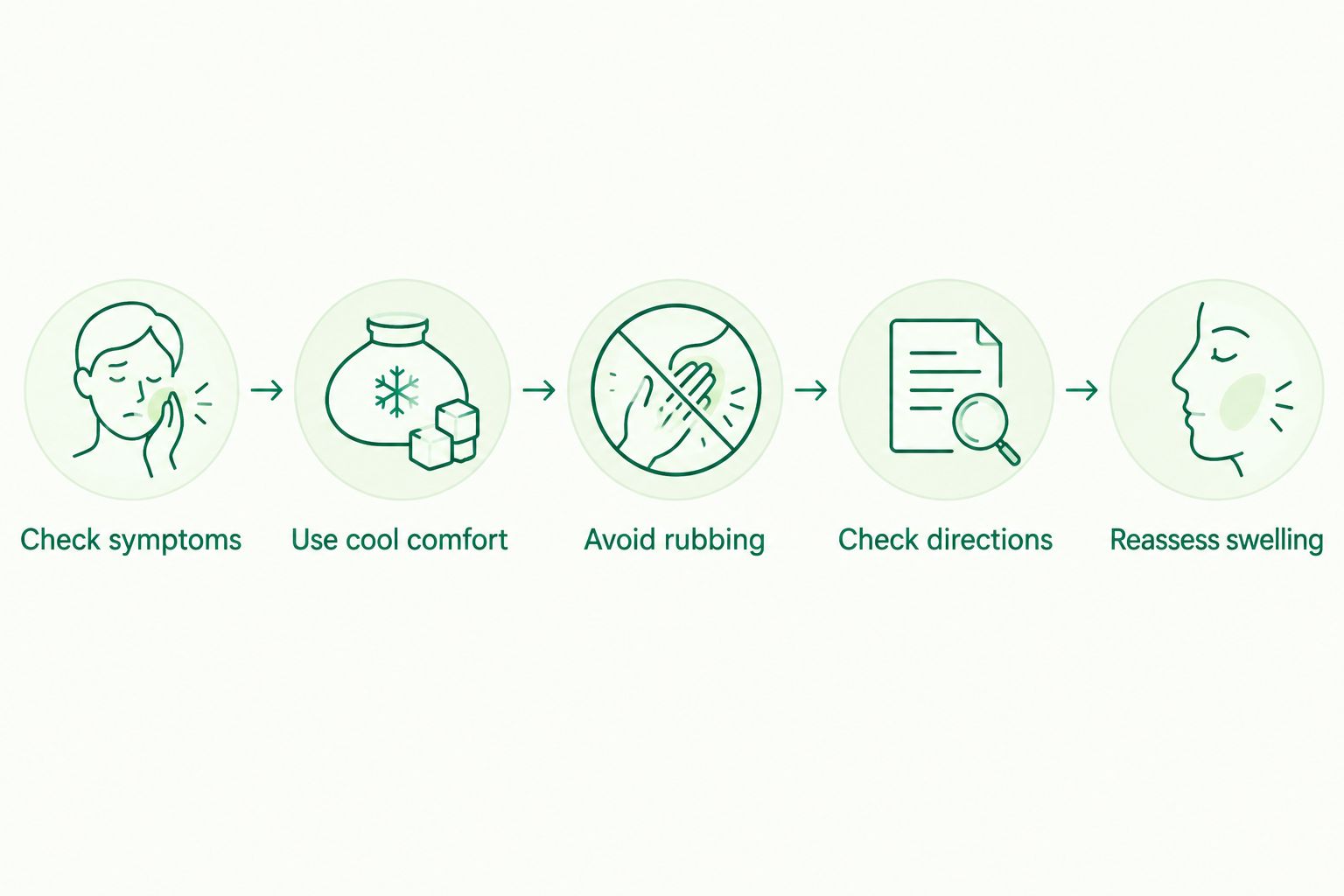
A cool compress has a practical advantage: it does not add another cosmetic ingredient to the area. Its limitation is equally important—it offers temporary comfort and is not a diagnosis or a treatment for every cause of swelling.
Keep homemade matcha mixtures out of this process. Kitchen preparations are not formulated or labeled as eye-area cosmetics, and loose particles can get into your eyes. You do not need a tea-based mask to use a clean, cool compress.
Can I put matcha toner pads under my eyes?
Facial toner pads are not automatically suitable as under-eye patches. Their shape, moisture, and botanical ingredients do not establish that they belong on your eyelids or close to the lash line. Use them only where the product directions permit.
The appeal is understandable: a damp pad feels cooling and looks similar to an eye patch. But cooling sensation and eye-area suitability are separate questions. Do not cut facial pads into eye patches or extend their contact time to create an unapproved use.
Will matcha skincare remove permanent under-eye bags?
Matcha skincare does not reposition the tissue responsible for structural under-eye bags. A topical moisturizer can improve surface dryness, but that is a different outcome from changing the shape beneath the skin.
If the contour bothers you consistently, a dermatologist or appropriately qualified eye-care specialist can assess the cause and discuss options. Bring photographs showing the pattern over time rather than assuming every change requires a stronger active ingredient.
Is puffiness the same as dark circles?
Puffiness is fullness or swelling; dark circles describe a darker appearance. Pigmentation, visible vessels, and shadows from hollows or bags can all contribute to darkness. You can have either concern without the other.
This matters when evaluating results. A change in lighting can make a shadow look better without any change in swelling. Likewise, improved skin hydration can soften fine lines without changing pigment or the under-eye contour.
Where a matcha facial routine fits
Velvente matcha skincare is best for consumers seeking a vegan Korean facial routine, not a proven treatment for under-eye swelling. The brand's routine includes cleansing, toner pads, and cream, with Rose PDRN, Jeju matcha, and white truffle in its stated ingredient positioning.
For your 2026 routine, keep facial care and targeted eye care separate unless product directions explicitly connect them. A cleanser removes impurities; a moisturizer addresses moisture needs. Neither role establishes a depuffing benefit.
| Product | Best for | Stated facial-care role | Limitation for this question |
|---|---|---|---|
| Foam Cleanser | A rinse-off facial cleansing step | A low-pH foam described for removing makeup, oil, and impurities | A cleansing claim is not evidence of reduced under-eye puffiness |
| Anti-Aging Cream | Consumers seeking a rich facial moisturizer | A rich formula described for moisturizing and improving the appearance of tone and firmness | Facial moisturizing claims do not establish eyelid suitability or swelling reduction |
Velvente's product descriptions provide a reason to consider these products for their stated facial-care roles. They do not establish a specific under-eye depuffing result. Choose according to your skin's needs and the directions, not as a substitute for evaluating swelling.


A shorter routine also makes unwanted reactions easier to investigate. Introduce products separately rather than changing your cleanser, moisturizer, and eye care together. If discomfort starts, stop the suspected product instead of layering another soothing formula over it.
When should you seek medical advice?
Seek urgent medical care for swelling with vision changes, significant eye pain, or fever. Severe swelling, marked redness, or sudden one-sided symptoms also require prompt assessment. Swelling with breathing difficulty is an emergency.
For recurring puffiness without urgent symptoms, arrange an assessment if it persists, worsens, or comes with irritation. A clinician can distinguish common cosmetic concerns from conditions that need treatment. Skincare should not delay that evaluation.
If a new cosmetic causes burning, itching, or swelling, stop using it. Follow its exposure instructions if it enters your eyes and seek medical advice when symptoms continue. Do not interpret eyelid swelling as a necessary adjustment or a sign that an active ingredient is working.
FAQ
Does matcha skincare actually help under-eye puffiness?
Matcha skincare is not an established treatment for under-eye puffiness. Judge a finished formula by evidence for swelling reduction and its intended application area, not by matcha alone.
Is a caffeine eye cream the same as a matcha face cream?
A caffeine eye cream and a matcha face cream are not interchangeable. Matcha does not disclose caffeine delivery, and a facial cream is not automatically intended for eyelids.
Can I leave toner pads under my eyes overnight?
Do not leave facial toner pads under your eyes overnight unless the product explicitly directs that use. Follow the labeled application area and contact instructions.
Will drinking matcha get rid of eye bags?
Drinking matcha is not an established treatment for under-eye bags. Persistent bags can reflect structural changes that a beverage does not correct.
Can Velvente cream be used on swollen eyelids?
Do not assume Velvente Anti-Aging Cream is intended for swollen eyelids. Follow its current directions and seek medical advice for persistent or concerning swelling.
Does vegan skincare prevent eye-area allergies?
Vegan skincare does not rule out irritation or allergy. Plant-derived ingredients and other formula components can still trigger reactions.
Should I use a cool compress or a face cream first?
For mild temporary puffiness, a clean cool compress avoids adding another cosmetic to the area. Use skincare afterward only as directed, and seek care for pain, vision changes, or worsening swelling.
One last thing
Check your lighting before judging a depuffing result. Overhead light emphasizes under-eye shadows, while frontal light softens them. Compare the same angle, expression, and lighting when tracking your appearance; otherwise, a photographic difference can look like a treatment result.
For 2026, keep the goal precise: comfortable skin is one outcome, smoother texture is another, and reduced swelling is a third. Choose care for the outcome you actually need. No ingredient name makes those results interchangeable.


