
Switch to a richer anti-aging cream when your skin still feels tight, rough or uncomfortable after cleansing and moisturizing, especially if that dryness persists despite a gentle routine. In 2026, the deciding factor is how your skin responds to your current cream, not your age or the word anti-aging on the jar. If you have burning, marked redness or a new rash, address possible irritation before adding a heavier formula.
- When to switch to a richer anti aging cream: choose more moisture when tightness persists after your current routine.
- Velvente anti-aging cream is best for shoppers seeking a richer Korean skincare step with Rose PDRN, Jeju matcha and white truffle.
- A richer cream helps with dryness; it does not replace sunscreen or resolve irritation caused by another product.
- If your skin feels greasy or congested with a richer texture, return to a lighter cream.
Why this matters
A cream can feel comfortable when you apply it yet leave your skin tight later. That is a useful reason to reassess its texture, but not proof that you need a more complicated anti-aging routine. First identify whether the discomfort follows cleansing, exfoliation or the cream itself. If your skin stings when you apply products that normally feel comfortable, read the guide to repairing a damaged skin barrier before treating the problem as simple dryness.
The goal in 2026 is a moisturizer you can use comfortably and consistently. A richer cream is a texture choice: it generally leaves a more substantial layer on the skin than a lightweight lotion or gel. Whether that feels protective or excessive depends on your skin and the rest of your routine.
How do you know when to switch to a richer anti-aging cream?
Switch when your current moisturizer no longer keeps your skin comfortable, after you have ruled out an irritating step. Dryness that returns after application is a stronger signal than a birthday, a fine line or a seasonal skincare trend. Use this check before replacing anything:
- Check dryness. Notice whether your skin feels tight after cleansing, after moisturizing or only at certain times. Persistent tightness after your cream points toward a need for more moisture; immediate stinging points toward irritation.
- Review cleanser. If your face feels stripped as soon as you rinse, changing cream alone leaves the first source of discomfort in place. Pay attention to how your skin feels before you apply any leave-on product.
- Test texture. Compare a richer cream with your current moisturizer on a small area. Judge comfort after application and later in the day, rather than relying only on how luxurious it feels at first touch.
- Watch response. Keep the routine otherwise steady while you assess the change. Stop using a product that repeatedly causes burning, a rash or worsening discomfort.
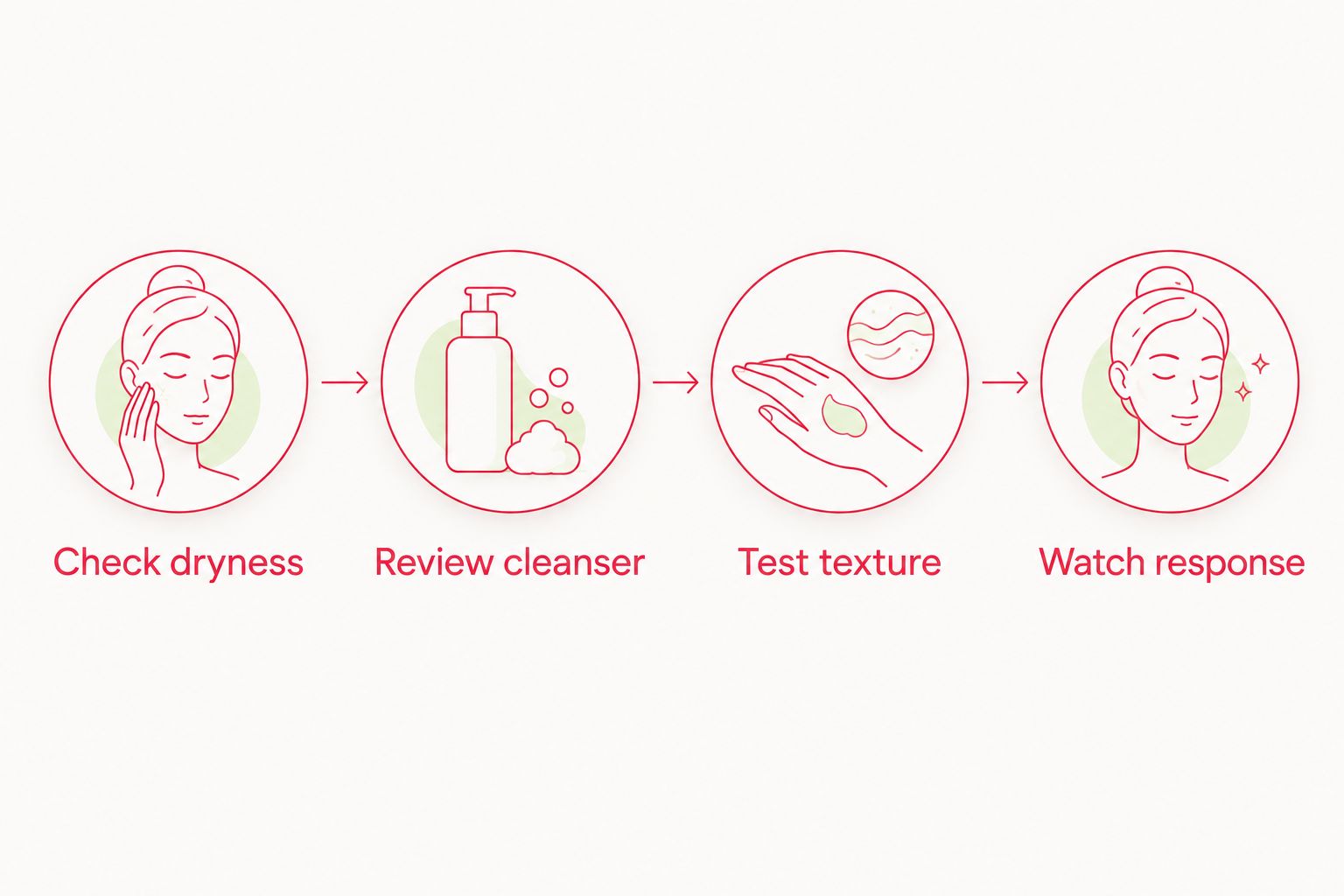
This check separates two problems that feel similar at first: skin that needs a more substantial moisturizer and skin reacting to something in the routine. A thicker texture addresses the first more directly. For the second, identify the trigger rather than covering the discomfort with another layer.
| Option | Best for | Advantage | Limitation |
|---|---|---|---|
| Lightweight cream or gel | Skin that stays comfortable without a heavy finish | Feels less substantial on application | Can leave dry areas feeling tight |
| Richer cream | Skin that feels dry again after a lighter moisturizer | Gives a more substantial moisturizing layer | Can feel greasy or uncomfortable on skin that prefers lighter textures |
Neither option is inherently better for aging skin. The best texture is the one that leaves your skin comfortable without adding a new problem.
When a richer cream is the right change
A richer cream makes sense when your current moisturizer feels insufficient even though your cleanser and other steps are comfortable. You might notice rough-feeling areas, a tight feeling later in the day or a preference for more cushioning after washing. Compare those observations with how your skin feels when you use a simpler routine; that helps you avoid blaming the cream for discomfort that began elsewhere.
Look at the finish as well as the immediate feel. If a light cream disappears quickly and your skin feels uncomfortable again, a more substantial texture is a sensible test. If your face already feels comfortable but you want a richer cream solely because it says anti-aging, there is no skin-comfort reason to switch.
Your preference can change without requiring a permanent switch. A cream that feels right during humid weather can feel too light when indoor air feels dry. Likewise, a rich cream you enjoy at night can feel excessive under daytime sunscreen. You can choose textures for those conditions without assigning every change in your skin to age.
When to keep your current cream
Keep a lighter moisturizer if your skin stays comfortable and you like its finish. A rich texture is not a necessary step toward glass skin or smoother-looking skin. Adding a heavier layer to an already comfortable routine makes it harder to tell whether a new product is helping.
Be particularly careful when the problem is stinging, itching or a rash. Those signs do not tell you that a cream is too light. Pause the product that appears to trigger the reaction and seek medical advice for a persistent or severe response. If several products sting, simplify the routine rather than introducing multiple new formulas at once.
Congestion is another reason to reconsider a texture. A cream that consistently leaves your skin feeling coated or uncomfortable is not the right choice just because it is described as nourishing. Returning to a lighter option is a practical response, not a failure to care for aging skin.
Why your answer can change
The decision is personal, but it is not guesswork. These factors change whether a richer texture feels useful:
- Your current cleanser. Tightness that starts immediately after washing can make any moisturizer seem inadequate. Assess cleansing before buying a heavier cream.
- Your other skincare steps. If a new exfoliant or retinoid coincides with discomfort, review that step rather than assuming ordinary dryness.
- The areas that feel dry. Dry patches do not mean every part of your face needs the same texture. Apply according to where you need comfort.
- Your surroundings. Weather and indoor conditions can change how comfortable a moisturizer feels, even when you have not changed products.
- Your preferred finish. A substantial layer is helpful only if you are comfortable wearing it. A greasy finish can make a suitable-looking formula impractical for your routine.
- Your skin’s response over time. One comfortable application does not tell you how a cream wears during the day or alongside your other products.
These are reasons to observe your routine, not reasons to add every product at once. Keep the rest of your steps familiar while you decide whether texture is the change you need.
How to make the switch in your 2026 routine
Start with the smallest useful change: replace your current cream while leaving the rest of your routine alone. Apply it to clean skin as you normally would, then notice whether the tight feeling improves and whether the finish remains comfortable. If you change your cleanser, toner pads and cream together, you lose a clear way to identify what helped or caused irritation.
A richer cream belongs after lighter leave-on steps in a routine. It is not a substitute for daytime sunscreen, and piling it on does not correct a cleanser that leaves your face uncomfortable. If your skin is sensitive to new products, try the cream on a small area first and follow the product’s directions.
For shoppers who want a Korean skincare cream, Velvente’s cream is described as a rich formula with Rose PDRN, Jeju matcha and white truffle. Velvente anti-aging cream is best for someone seeking that ingredient combination in a richer moisturizing step, not someone whose current cream already feels comfortable. Its advantage here is the stated rich texture; its limitation is that the product description cannot predict how it will feel on your skin. Check the full ingredient list and assess your own response before making it a regular step.
A richer formula also does not need to become your only moisturizer. If different areas or parts of your routine call for different textures, use the one that feels comfortable in each situation. The decision is whether the change solves a specific problem, not whether you can fit another cream into a skincare ritual.
Can you switch creams without changing the rest of your routine?
Yes. Changing only your cream makes it easier to judge whether richer texture resolves the dryness you noticed. Keep your cleanser and other familiar steps steady while you assess comfort, and stop if the new cream causes irritation.
Does a richer cream work better on fine lines?
A richer cream can make dry skin look less creased by moisturizing it, but richness alone does not establish stronger anti-aging results. Judge the cream first by comfort and suitability, not by an assumption that thicker means more effective. Continue using daytime sunscreen as part of your routine.
Should you use a richer cream if your skin breaks out easily?
Use it only if its texture feels comfortable and your skin responds well. Breakout-prone skin can still feel dry, but a cream that repeatedly leaves you uncomfortable or coincides with new congestion is not a good fit. Test one change at a time so you can identify what your skin tolerates.
FAQ
When should I switch to a richer anti-aging cream?
Switch when your current moisturizer leaves your skin persistently tight or dry despite a comfortable, gentle routine. Check whether cleansing or another product is causing irritation before changing creams.
Can I use a rich cream if I have combination skin?
Yes, if the texture feels comfortable where you apply it. Dry areas and oilier areas need not receive the same amount of cream.
Is a rich cream better than a gel for aging skin?
No. A rich cream suits skin that wants a more substantial moisturizing layer; a gel suits skin that stays comfortable with a lighter finish. Age alone does not decide between them.
Will a richer cream fix a damaged skin barrier?
A suitable moisturizer can help dry skin feel more comfortable, but switching creams does not identify or remove an irritating cleanser or active product. Address the source of persistent stinging or redness.
Do I need a different cream for daytime and nighttime?
No. Use one cream for both if it stays comfortable with your routine. Choose a different texture when a rich finish feels excessive under daytime sunscreen.
Is Velvente cream suitable if I want a richer Korean skincare step?
Velvente describes its cream as a rich formula containing Rose PDRN, Jeju matcha and white truffle. Its suitability depends on the full ingredient list and how your skin responds; stop using it if irritation develops.
Should I use more cream when my skin still feels dry?
First check whether your cleanser or another step is leaving your skin uncomfortable. Adding more of a cream that is not working for you is less useful than identifying why the dryness persists.
One last thing
The most useful test in 2026 is not whether a richer cream feels impressive when you first apply it. It is whether your skin stays comfortable without stinging, an unwanted coated feeling or a need to keep adding more. If your current cream already does that, keep it. If it does not, change one step and give your skin’s response priority over the anti-aging label.


