
A foam cleanser can strip your skin barrier, but the foam itself isn't the problem. The pH of the formula decides whether a foam cleanser protects your barrier or breaks it down, and most drugstore foaming cleansers sit far above the skin's natural range to do it.
- Foam cleansers above pH 7 strip the skin barrier faster than low-pH formulas near skin's natural 4.5-5.5 range.
- Velvente's Matcha PDRN Foam Cleanser is formulated at a low pH to clean without breaking down the lipid layer.
- Hot water, long wash times, and over-cleansing strip the barrier even with a barrier-safe foam.
- Double cleansing at night is fine for most skin types when the second step is a low-pH foam.
Why this matters
Skin barrier damage doesn't show up as a rash the first time you use a high-pH foam cleanser. It shows up weeks later as tightness after washing, sudden sensitivity to products you've used for years, and a dull, dehydrated look that no amount of moisturizer fixes. By the time you notice it in 2026, the barrier has already been compromised for a while.
People blame the wrong step. They cut moisturizer or switch serums when the actual issue is happening twice a day at the sink. Getting the right skin barrier repair products into a routine only works if the cleanse step stops undoing the repair.
Can a foam cleanser strip your skin barrier?
Yes, when the formula's pH sits well above skin's natural 4.5-5.5 range. High-pH surfactants dissolve the same lipids that hold water in the skin, which is exactly what makes them feel so "clean" and squeaky right after rinsing. Low-pH foam cleansers use gentler, amino-acid-based surfactants that lift dirt and oil without pulling those lipids apart.
| Cleanser type | Typical pH | Barrier risk | Best for |
|---|---|---|---|
| Low-pH foam (gel-to-foam) | 4.5-5.5 | Low | Daily use, combination and sensitive skin |
| Traditional soap-based foam | 9-10 | High | Not recommended for compromised or reactive skin |
| Cream or oil cleanser | 5-6 | Low | Dry, mature skin, first step of a double cleanse |
That squeaky-clean feeling right after rinsing is the tell. If your skin feels tight within a minute of drying off, the cleanser's pH is the first thing to check, not your moisturizer.
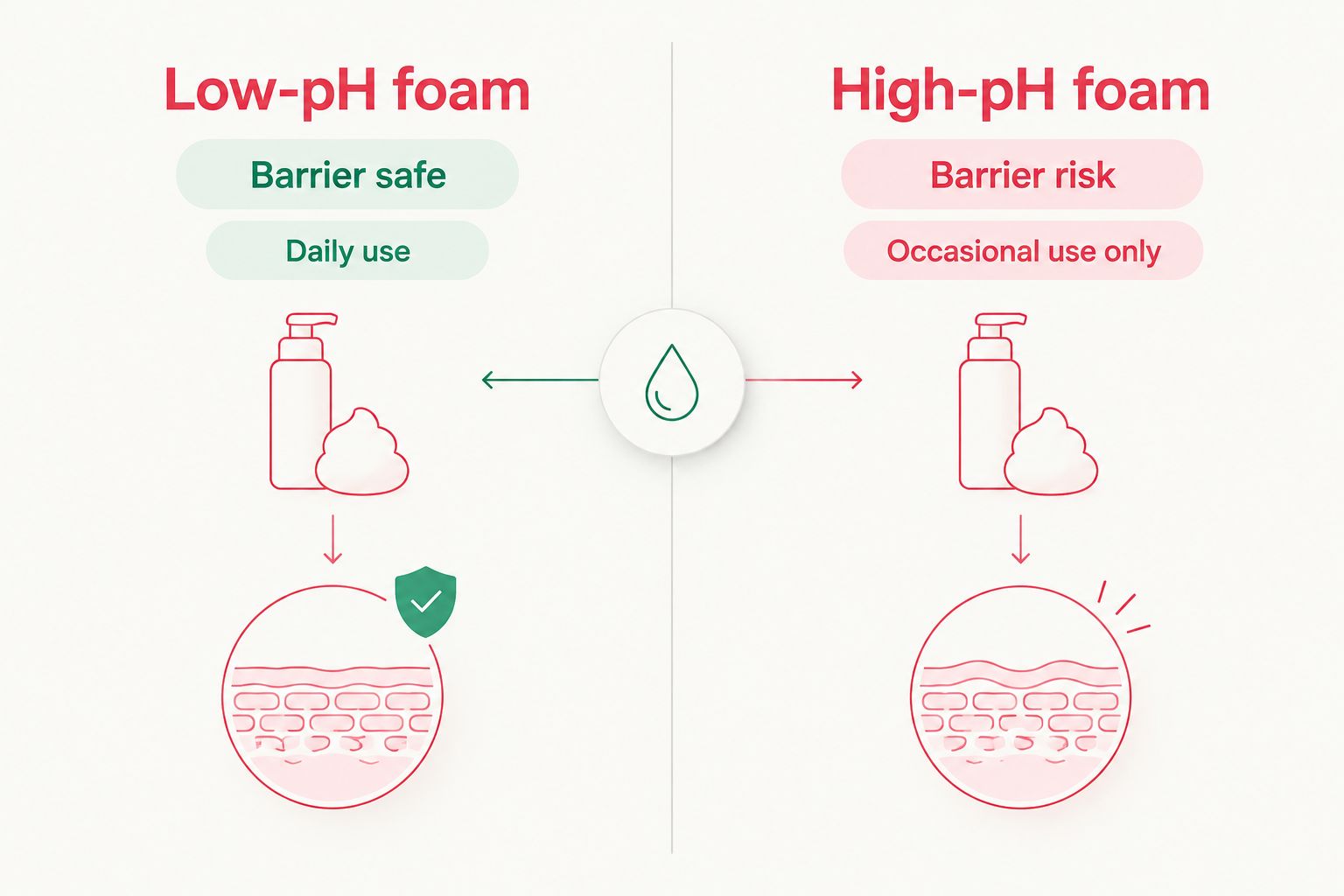
Low-pH foam cleansers (pH 4.5-5.5): barrier-safe
A foam cleanser formulated in this range cleans at the same acidity as healthy skin, so the barrier's own lipids and the skin's protective acid mantle stay intact. This is the range most Korean foam cleansers, including the Foam Cleanser formulated with Matcha and Rose-Derived PDRN, are built around, because low-pH cleansing is a foundational rule in K-beauty formulation, not a marketing add-on.
Verdict: safe for daily, twice-a-day use on most skin types.
High-pH soap-based foams (pH 9-10): the ones that strip skin
Older bar soaps and many mass-market foaming face washes sit in this range because high pH makes lather easier to produce cheaply. The tradeoff is a cleanser that removes surface oil along with the lipids your barrier needs to hold moisture.
Verdict: skip on compromised, reactive, or aging skin; fine only for occasional deep-clean use on resilient, oily skin.
Why skin barrier stripping varies from person to person
The same foam cleanser can feel fine on one person and leave another person tight and flaky. A handful of factors decide the outcome:
- Formula pH — the single biggest variable; anything reliably above 7 works against the barrier over time
- Cleansing duration — massaging foam for 60+ seconds pulls out more lipid than a 15-second rinse
- Water temperature — hot water speeds up lipid breakdown regardless of the cleanser's pH
- Cleansing frequency — using a foam cleanser both morning and night doubles the exposure
- Existing barrier health — already-compromised skin loses lipids faster than a healthy barrier does
- Surfactant type — sulfate-heavy foams strip more aggressively than amino-acid-based foams even at similar pH
“The foam doesn't strip your barrier - the pH behind it does.”
Skin type changes how forgiving any of this is. Oily, resilient skin can tolerate an occasional high-pH foam without much fallout, while sensitive or already-compromised skin shows damage within days. If you're building a routine for reactive skin, the best Korean foam cleansers for sensitive skin in 2026 narrows the field to formulas that stay low-pH by design.
Is double cleansing bad for your skin barrier?
Double cleansing is not bad for the barrier as long as the second, water-based step is a low-pH foam. The first oil-based step removes makeup and SPF without touching the barrier, and the foam step only becomes a problem if it's a high-pH formula used on top. See the full breakdown on whether double cleansing with a Korean foam cleanser is necessary for when to skip the second step entirely.
How do you know your skin barrier is damaged?
A damaged barrier shows up as persistent tightness after cleansing, stinging when you apply products that never used to sting, and visible flaking that isn't just dryness. Redness that flares with weather changes or new products is another common sign, and it tends to worsen if the same high-pH cleanser stays in rotation.
Can you use a foam cleanser twice a day?
A low-pH foam cleanser is fine to use twice a day for most skin types because it cleans at skin's own acidity. A high-pH foam cleanser used twice daily compounds barrier stress fast, so cutting it back to once a day, at night only, reduces the damage while you switch formulas.
Swapping in a low-pH option is the fix, not cutting foam cleansers entirely. Velvente's Matcha PDRN Foam Cleanser is formulated as a low-pH foam specifically to remove makeup, oil, and impurities while calming redness rather than triggering it, which matters if your skin is already showing tightness or flaking from a previous cleanser.

FAQ
Can a foam cleanser strip your skin barrier?
Yes, if the formula's pH sits well above skin's natural 4.5-5.5 range. Low-pH foam cleansers clean at the same acidity as healthy skin and don't break down the lipid barrier the same way.
What pH should a foam cleanser be for sensitive skin?
A foam cleanser for sensitive skin should sit between 4.5 and 5.5, matching skin's natural acid mantle. Anything reliably above 7 strips lipids faster than sensitive skin can replace them.
Is low-pH cleanser better than high-pH cleanser?
Low-pH cleanser is better for barrier health because it cleans without pulling apart the lipids that hold moisture in skin. High-pH cleansers lather more easily but strip that same lipid layer over repeated use.
How much does a Korean foam cleanser cost in 2026?
Korean foam cleanser prices vary by brand and formula in 2026; check current pricing on the product page rather than relying on older estimates. Cost breakdowns across a full routine are covered in a separate 2026 pricing guide.
Can you use a foam cleanser every day?
Yes, a low-pH foam cleanser is designed for daily use, morning and night, without damaging the barrier. A high-pH foam cleanser used daily is more likely to cause tightness and flaking over time.
Does foaming mean a cleanser is stripping?
No, foam itself doesn't strip skin; the pH and surfactant type behind the foam determine that. A low-pH foam cleanser lathers the same way a high-pH one does without the barrier damage.
What are signs your foam cleanser is too harsh?
Tightness within a minute of rinsing, stinging when you apply serum afterward, and visible flaking are the main signs. If these show up consistently, the cleanser's pH is the first thing to check.
One last thing
The tightness test takes ten seconds and tells you more than any ingredient list: rinse, pat dry, and check if skin feels tight within 60 seconds. If it does, every day, that's a high-pH formula talking, not "clean" skin, and no amount of moisturizer afterward fully undoes what the cleanse step just did.


