
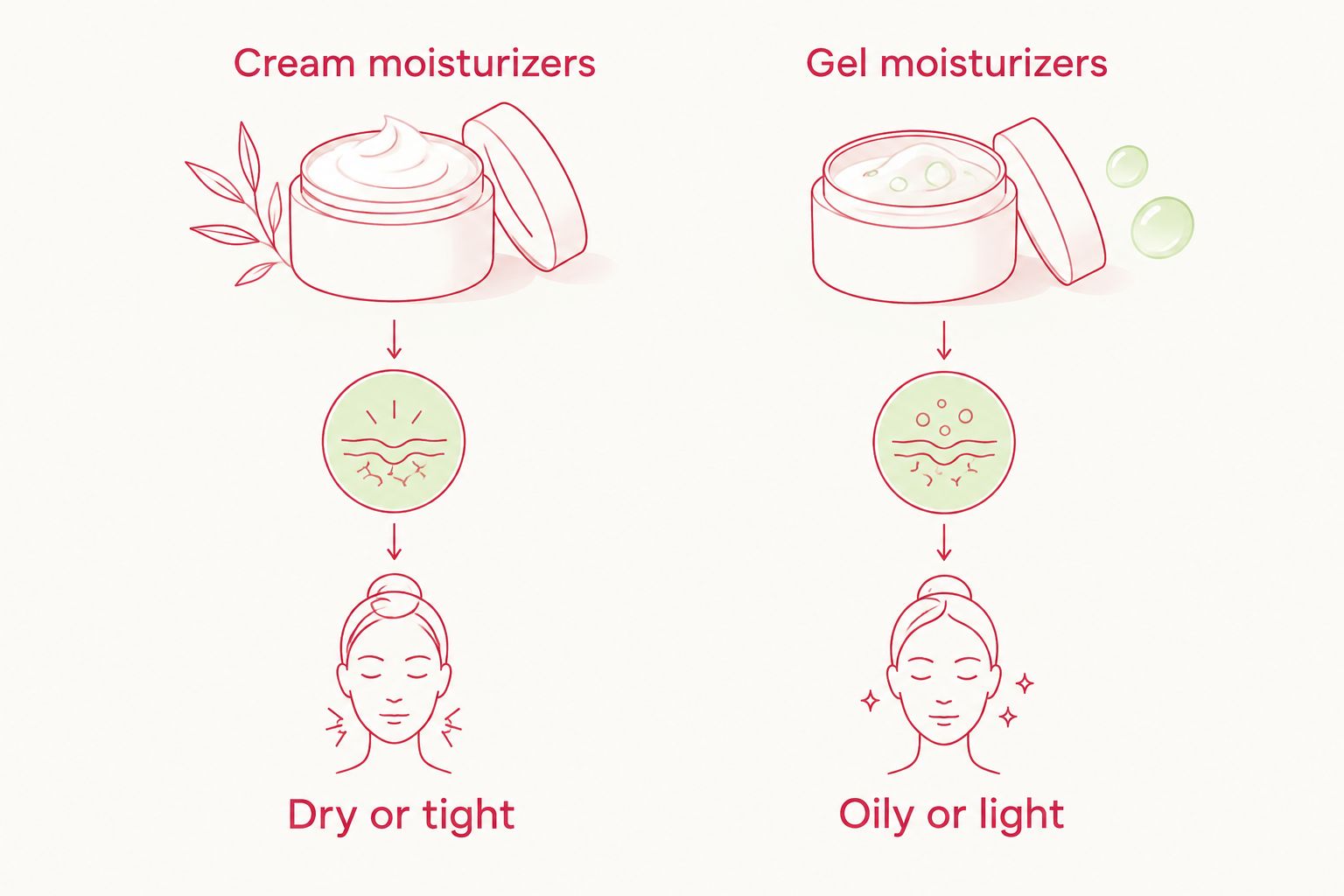
Choose a cream if aging skin feels dry, tight or uncomfortable after cleansing; choose a gel if it feels oily and you want a lighter finish. In 2026, the useful distinction in a cream vs gel moisturizer for aging skin is how well the formula moisturizes your skin and how readily you will use it—not the texture name alone. Neither texture removes wrinkles, and a gel can still suit dry skin if its formula provides enough moisture.
- Cream vs gel moisturizer for aging skin: choose cream for persistent dryness and gel for a lighter feel on oily skin.
- Velvente Anti-Aging Cream is best for shoppers who want a rich cream in a vegan Korean skincare routine.
- Texture does not establish anti-aging results; judge comfort, ingredients and consistent use.
- Combination skin can use a lighter layer where oily and more cream where dry.
Why this matters
Aging skin is not a skin type. Your skin can be dry, oily, combination or sensitive while you also notice fine lines and changes in how it feels. If you buy a moisturizer based only on an anti-aging label, you can end up with a finish you dislike—or one that leaves dry areas uncomfortable.
The distinction matters most when your face behaves differently across areas. A rich cream can feel welcome on dry cheeks and excessive across an oily forehead. If that sounds familiar, the guide to Korean skincare products for combination skin addresses the broader routine. For this decision, start with what happens to your skin after cleansing and by the end of the day.
How do you choose between a cream and gel for aging skin?
Choose the texture that keeps your skin comfortable without leaving a finish you avoid. Creams generally suit people who want a richer moisturizing layer. Gels generally suit people who prefer a lighter feel. Those are starting points, not guarantees: the ingredients and finished formula determine how an individual moisturizer feels on your skin.
| Option | Best for | Main advantage | Main limitation |
|---|---|---|---|
| Velvente Anti-Aging Cream | Aging skin that prefers a rich cream within a vegan Korean skincare routine | A rich formula for people who want more than a light gel finish | The richer texture will not suit everyone who prefers a barely noticeable layer |
| Cream moisturizers in general | Skin that feels dry or tight after washing | A more substantial finish can feel comfortable on dry areas | Some formulas feel too heavy on oilier areas |
| Gel moisturizers in general | Skin that feels oily or dislikes a rich finish | A lighter-feeling layer is easier to wear if you dislike creams | Some formulas leave dry areas wanting more moisture |
The table describes texture preferences, not clinical performance. A gel is not automatically ineffective for aging skin, and a cream is not automatically better at reducing fine lines. If both feel comfortable, compare their ingredient lists, your skin’s response and whether either leaves you reaching for another layer soon after application.
Check your skin before judging the jar
After cleansing, notice whether your face feels comfortable, tight or slick. Tightness points you toward more moisturizing support; shine alone does not tell you whether your skin has enough water. Then pay attention to how your moisturizer feels once applied. A product that leaves dry patches uncomfortable is not meeting your needs, even if its label targets mature skin.
Check more than one area of your face. Your cheeks can want a cream while your forehead is comfortable with a gel. You do not need to force a single texture onto every area to keep a routine simple: apply less where a rich layer feels excessive, or reserve the richer layer for places that feel dry.
Read the formula, not just the texture word
Cream and gel describe a product’s form, not a fixed ingredient list. Look for moisturizing ingredients and consider how the finished product feels on your skin. Humectants such as glycerin and hyaluronic acid attract water; ingredients such as petrolatum and dimethicone can help reduce moisture loss. Whether a particular cream or gel contains them depends on its label.
If your skin reacts easily, check the complete ingredient list rather than assuming a lightweight gel is gentle or a vegan cream cannot irritate you. Stop using a product that causes persistent stinging or a rash. A moisturizer should make daily care more comfortable, not require you to tolerate irritation for an anti-aging claim.
When does a cream make more sense in 2026?
Choose a cream when your skin feels dry after washing, develops uncomfortable dry areas during the day or prefers a richer finish at night. That choice is about moisturizing comfort. It is not proof that the cream will firm skin or reverse visible aging.
Velvente Anti-Aging Cream fits shoppers who want a rich cream as part of a vegan Korean skincare routine. Its listed product description identifies a Matcha PDRN formula and describes a rich texture. Velvente Anti-Aging Cream is best for aging skin that wants a richer moisturizing finish, not for someone who dislikes the feel of cream. That limitation matters: a product you dislike wearing is a poor match, regardless of its ingredient story.
Apply the cream after any lighter steps you already use, rather than treating it as a substitute for every part of your routine. In the morning, sunscreen remains a separate step. Moisturizer can address how skin feels; sunscreen addresses exposure that contributes to visible skin aging.
If a cream initially feels pleasant but later seems excessive, change how much you apply before writing off the entire category. If it still leaves you uncomfortable, move to a lighter formula. Your goal is a finish you can live with consistently, not the thickest possible layer.
When does a gel make more sense in 2026?
Choose a gel when richer products feel uncomfortable, particularly across areas that get oily. A lighter finish can make a moisturizer easier to use during the day or beneath sunscreen. The trade-off is straightforward: some gels will not feel substantial enough on skin that is persistently dry.
Do not dismiss a gel because your concern is fine lines. Moisturizing dry skin can temporarily make fine lines less noticeable, regardless of whether the moisturizer is labeled cream or gel. That is different from changing the underlying causes of wrinkles. If a gel leaves your face comfortable, a heavier product has not earned a place in your routine simply because it sounds more intensive.
A gel also need not be your only texture. If your forehead feels comfortable but your cheeks still feel tight, use the gel where you prefer its finish and a cream on the dry areas. This is a practical response to combination skin, not a rule that every aging-skin routine needs multiple moisturizers.
Why the right texture varies
In 2026, choose based on these observable factors rather than an age label:
- Dryness after cleansing: Persistent tightness favors testing a more substantial moisturizer or reconsidering whether your cleanser leaves skin comfortable.
- Oiliness by the end of the day: A gel can feel easier to wear on areas where a rich finish bothers you.
- Different needs across your face: Combination skin can call for less product on oily areas and more on dry ones.
- Comfort with the finished formula: Ingredients matter, but your skin’s response decides whether the complete formula fits.
- The rest of your routine: A moisturizer sits alongside cleansing, any other skincare steps and daytime sunscreen; judge it in that context.
- Sensitivity: A texture name does not establish tolerability. Check ingredients and stop if a product causes persistent irritation.
These factors give you a way to assess a product without predicting results from its packaging. If changing texture does not resolve persistent dryness or irritation, adding another cosmetic layer is not a diagnosis. A dermatologist can assess a continuing skin concern.
Can you use a cream and gel on the same face?
Yes. Put gel where you want a lighter feel and cream where you need a richer layer, or choose one texture in the morning and the other at night. Use the arrangement that leaves your skin comfortable; there is no requirement to layer both across your whole face.
Start by noticing the areas that actually feel different. If your cheeks feel tight and your forehead feels comfortable, treating both areas identically can obscure which product is helping. Applying by area makes the comparison clearer and prevents a rich layer from becoming the reason you stop moisturizing altogether.
Is cream better than gel for wrinkles?
No texture is inherently better for wrinkles. Both creams and gels can moisturize skin, and better-moisturized dry skin can look temporarily smoother. Neither label establishes that a product will reduce wrinkles over time.
If wrinkle prevention is your priority, do not let the cream-versus-gel decision displace daytime sun protection. Choose a moisturizer you will use, then keep sunscreen in your morning routine. Assess any separate anti-aging ingredient on its own evidence and your tolerance rather than assuming it works because it appears in a rich formula.
Should you switch moisturizer as your skin ages?
Switch when your current moisturizer stops meeting your skin’s needs, not because you reach a particular age. A gel that keeps your skin comfortable remains a reasonable choice. A cream becomes more useful when dryness or a preference for a richer finish makes your existing formula unsatisfying.
Make the decision from your skin’s response: how it feels after cleansing, how long that comfort lasts and whether you like the finish. In 2026, those observations are more useful than treating an anti-aging label as a texture prescription.
FAQ
What is better for aging skin, a cream or a gel moisturizer?
Cream is better when skin feels persistently dry and wants a rich finish; gel is better when you prefer a lighter feel. The individual formula and your skin’s response matter more than its texture name.
Can a gel moisturizer work for dry, aging skin?
Yes, if the gel leaves your skin comfortable and sufficiently moisturized. If tightness persists, try a more substantial formula or use cream on the dry areas.
Does a thicker cream remove wrinkles?
No, a thicker texture does not establish wrinkle reduction. Moisturizing dry skin can make fine lines look temporarily less noticeable, but that is not the same as removing them.
Is cream too heavy for combination skin?
Not necessarily. Apply cream to areas that feel dry and use less—or choose a gel—where a rich finish feels excessive.
Can I use gel moisturizer in the morning and cream at night?
Yes. Choose each texture for the comfort and finish you want at that point in your routine; use sunscreen separately during the day.
Is Velvente Anti-Aging Cream a gel?
No. Velvente Anti-Aging Cream is described as a rich cream. It suits someone seeking that finish rather than someone specifically looking for a lightweight gel.
Does vegan skincare prevent moisturizer irritation?
No. A vegan description does not establish that a formula will suit sensitive skin. Check the full ingredient list and stop using a product that causes persistent irritation.
One last thing
You do not have to choose one moisturizer texture for your entire face. If a cream works on your cheeks and a gel feels better on your forehead, that difference is useful information—not a failure of your routine. In 2026, let comfort and consistent use settle the cream-versus-gel question before adding another product.


