
You know a Korean skincare routine is working when your skin stays comfortable after cleansing and the concern you set out to address improves in consistent photos over time. A brief glow after application is not enough; persistent stinging, worsening redness or new breakouts are reasons to reassess the routine, not proof that it is working. In 2026, the clearest test is to track your skin against its own starting point.
- How to know if your skincare routine is working: compare consistent photos, skin comfort and your original concern.
- Velvente suits shoppers seeking a vegan Korean skincare routine, but no ingredient list guarantees an individual result.
- Rose PDRN, Jeju matcha and white truffle are ingredients to evaluate through results, not promises to assume.
- If irritation persists, change one step at a time instead of replacing the whole routine.
Why this matters
A Korean skincare routine can leave skin looking dewy immediately after you apply it. That finish tells you how the products sit on your skin, not whether they have improved dryness, uneven tone or the appearance of fine lines. To judge results, you need a starting point and a specific concern.
That distinction matters when reading a claim such as Velvente's visible results in 14 days. Treat 14 days as a checkpoint for your own observations, not a guarantee that every concern will change on that schedule. In 2026, photos taken under the same conditions will tell you more than trying to remember how your skin looked before you started. For a closer look at expectations, read how long it takes to see Korean skincare results.
How to know if a Korean skincare routine is working
Check comfort first, then compare the concern that made you start. These steps give you a repeatable way to make that judgment without adding a new product every time you look in the mirror.
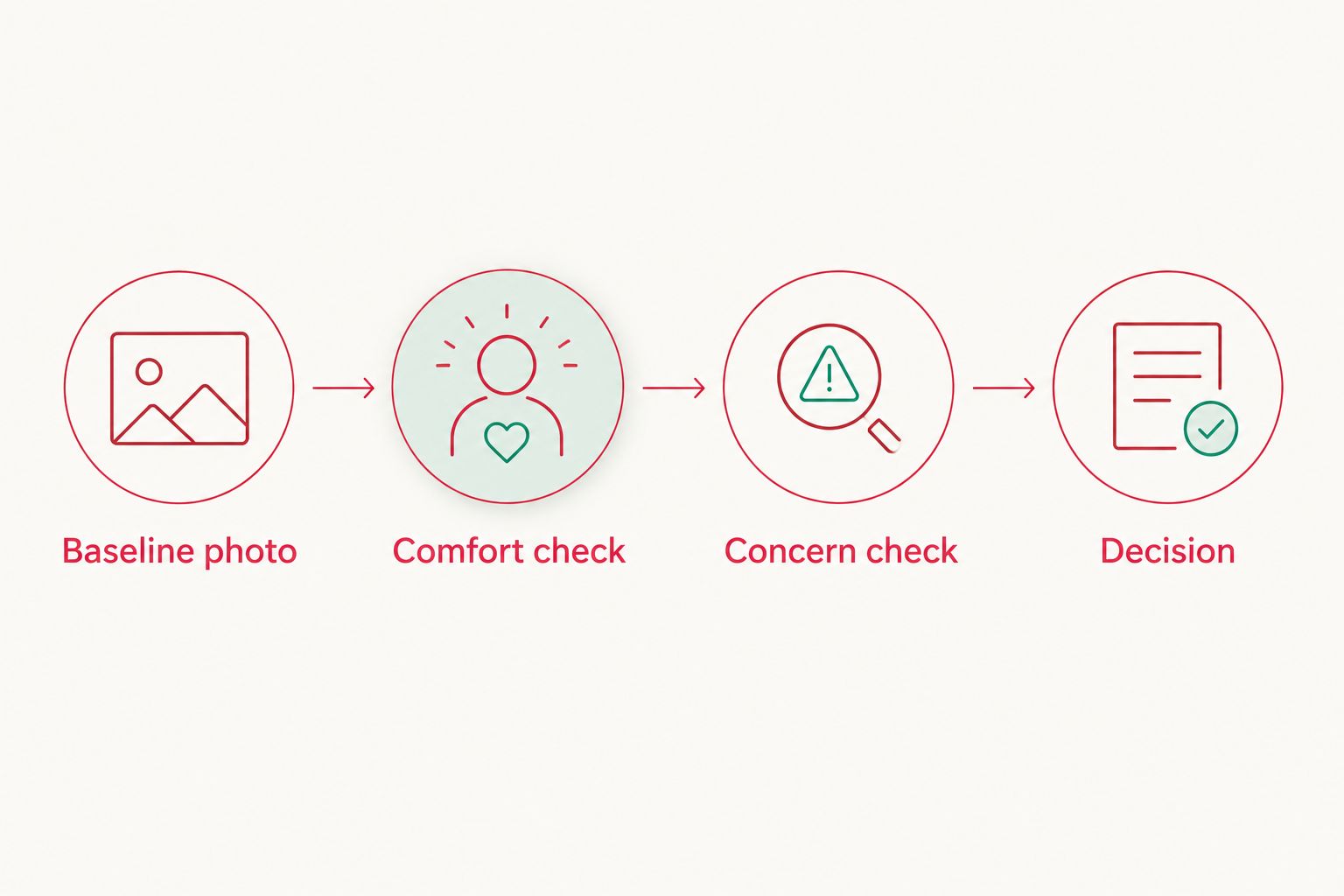
- Baseline photo: Before changing your routine, photograph your face in even lighting. Include the areas you want to assess, such as cheeks for dryness or the forehead for visible texture. Note what your skin feels like after washing and later in the day.
- Comfort check: After each use, notice whether cleansing leaves skin comfortable or tight. Record stinging, persistent redness, flaking and new breakouts rather than treating them as an expected stage of progress.
- Concern check: Take another photo every 7 days in the same place, at the same time of day and before applying products. Compare the specific concern you wrote down at the start. A change in lighting or freshly applied cream can make an otherwise fair comparison misleading.
- Decision: At 14 days, review your notes and photographs together. Keep a routine that feels comfortable and shows progress on your chosen concern. If irritation continues, pause the suspected step and seek advice from a dermatologist when symptoms are severe or do not settle.
The purpose of the 7-day photo schedule is consistency; it is not a promised result date. You can use a different interval, but keep the camera position and lighting as similar as possible. Compare like with like: bare skin against bare skin, not a freshly moisturized photo against one taken after cleansing.
What should you check at each step of the routine?
Velvente's Korean skincare routine includes vegan toner pads, a foam cleanser and a cream. Judge each step by what you can observe during use. The best routine for you is one your skin tolerates and that improves your stated concern; more steps are not evidence of better results.
| Routine step | Best for assessing | Positive sign to look for | Reason to reconsider |
|---|---|---|---|
| Velvente foam cleanser | How skin feels after washing | Skin feels clean without lingering tightness | Washing regularly leaves skin uncomfortable |
| Vegan toner pads | How skin responds after application | Skin feels comfortable after the step | Repeated stinging or worsening redness |
| Velvente cream | How skin feels between applications | Skin feels comfortable without immediate dryness | The step feels uncomfortable or does not address your concern |
These are observation points, not claims that a product will produce a particular result. A foam cleanser has an advantage when you want a cleansing step you can assess on its own; its limitation is that cleansing cannot, by itself, establish whether your full routine addresses visible fine lines. A cream gives you a way to assess comfort between applications, but a moisturized appearance right after use does not establish a lasting change. Toner pads add a distinct step to evaluate, though adding them makes it harder to identify the cause of a reaction if you start everything on the same day.
Which signs count as progress?
Skin feels comfortable after cleansing
Comfort is a useful early test because you can check it every time you wash. If your face repeatedly feels tight or stings afterward, do not dismiss that experience because the rest of the routine looks promising. Record when the feeling starts and whether it continues after the next step.
A comfortable cleanse does not prove that ingredients elsewhere in the routine have changed your skin. It tells you that the cleansing step is compatible with how your skin feels during use. Keep that finding separate from your longer-term goal.
Your original concern changes in comparable photos
Choose a concern you can describe plainly: visible dryness, uneven-looking texture, the appearance of fine lines or another reason you began the routine. Look at the same area in each photo. In 2026, a phone camera is sufficient for a personal comparison if you keep the conditions consistent; a filter or different lighting defeats the purpose.
Do not enlarge photos until ordinary texture looks like a problem you had never noticed. Compare the overall appearance at the same scale. If you are tracking breakouts, note whether the usual areas are changing rather than counting a single spot as a verdict on the whole routine.
The change lasts beyond application
Freshly applied skincare can make skin look smoother or more luminous. That effect is real as an appearance, but it does not tell you whether the concern has changed when the product is no longer freshly applied. Take your comparison photos before your routine, then assess how your skin feels through the day.
This is especially useful if your goal is a glass-skin look. A reflective finish immediately after cream is different from skin that looks consistently more even in repeat photos. Decide which outcome you want, then measure that outcome rather than treating both as the same result.
What does not mean your routine is working?
Ongoing irritation is not a success marker. Persistent burning, worsening redness or a pattern of new breakouts calls for a closer look at what you introduced. Stop assuming discomfort is a required path to skin renewal.
Nor does a lack of visible change after a single application mean failure. One use gives you information about feel and immediate appearance. It cannot tell you whether a concern visible in your baseline photo is improving over time. The opposite mistake is just as common: a pleasant first application is not enough to declare the whole routine effective.
If several products were introduced together, you also cannot reliably assign a good or bad change to one of them. In 2026, make the next decision smaller: identify the step that coincided with discomfort and assess it separately. Do not keep adding products to correct a reaction you have not identified.
Why skincare results vary
The same routine can produce different observations for different people. Check these factors before treating someone else's results as your benchmark:
- Starting concern: Comfort, visible dryness and the appearance of fine lines are different outcomes. Pick the one you actually want to change.
- Starting skin condition: Skin that already feels irritated gives you a different baseline from skin that feels comfortable. Record that difference before judging a new step.
- Consistency: If you use a product irregularly, your photos cannot show what steady use would have done. Note changes in use alongside changes in appearance.
- Other products: A new product outside the routine makes it harder to tell what caused a change. Keep a simple record of additions and removals.
- Photo conditions: Lighting, camera angle and freshly applied products can alter how texture and tone appear. Standardize the comparison before drawing a conclusion.
- Sun exposure: If uneven tone is your concern, protect exposed skin. The American Academy of Dermatology recommends broad-spectrum sunscreen with SPF 30 or higher and reapplication every 2 hours while outdoors.
Velvente is best for a shopper who wants a vegan Korean skincare routine centered on toner pads, a foam cleanser and a cream. Its limitation is the same as any routine's: its ingredients and positioning cannot tell you in advance how your individual skin will respond. Use your baseline, comfort notes and repeat photos to reach that verdict.
Related questions
How many days should I track my routine before deciding?
Use 14 days as your first review point, then judge the photos and comfort notes together. Velvente uses visible results in 14 days in its brand messaging, but that wording is not a promise about your particular concern. If your skin is persistently irritated before that point, do not wait for the review date to act.
Can a routine be working if I do not see an instant glow?
Yes. An instant glow is an application effect, while progress on your original concern requires a comparison with your baseline. If your skin remains comfortable and repeat photos show the change you wanted, a lack of immediate shine is not a reason to dismiss the routine.
What if my skin looks better but feels worse?
Treat worsening discomfort as a reason to reassess, even if a photo looks promising. A visible finish does not outweigh persistent stinging, tightness or redness. Identify what changed in your routine and get professional advice for severe or continuing symptoms.
FAQ
How do I know if my skincare routine is working?
Your skin should feel comfortable during use, and consistent photos should show improvement in the concern you chose at the start. Judge both together rather than relying on an immediate glow.
How can I tell if my Korean skincare routine is irritating my skin?
Persistent stinging, worsening redness or repeated discomfort after a step are reasons to reassess it. Severe or continuing symptoms warrant advice from a dermatologist.
Should I change my whole routine if I see a breakout?
No. Record when the breakout appeared and which products you introduced, then assess changes one step at a time. A single breakout cannot identify the cause of a reaction.
Do I need a skin-tracking app to see results?
No. Repeat photos and brief notes about comfort give you a usable record. Keep lighting, camera position and the point in your routine consistent.
Is a dewy finish proof that my skincare routine works?
No. A dewy finish shows how products look immediately after application, not whether your original concern has improved. Compare bare-skin photos over time instead.
When should I review a new skincare routine?
Review your photos and notes at 14 days as a personal checkpoint, not a guaranteed results deadline. Reassess sooner if a product causes persistent discomfort.
Is Velvente a good fit for a vegan Korean skincare routine?
Velvente is best for shoppers seeking a vegan Korean skincare routine with toner pads, a foam cleanser and a cream. Whether it suits your skin depends on comfort and progress against your own starting concern.
One last thing
The most useful result might be a negative one: finding that a particular step consistently leaves your skin uncomfortable. That observation gives you a clear next move, while an attractive photo taken immediately after application does not. In 2026, keep the evidence simple: the same concern, the same photo conditions and honest notes about how your skin feels.


