
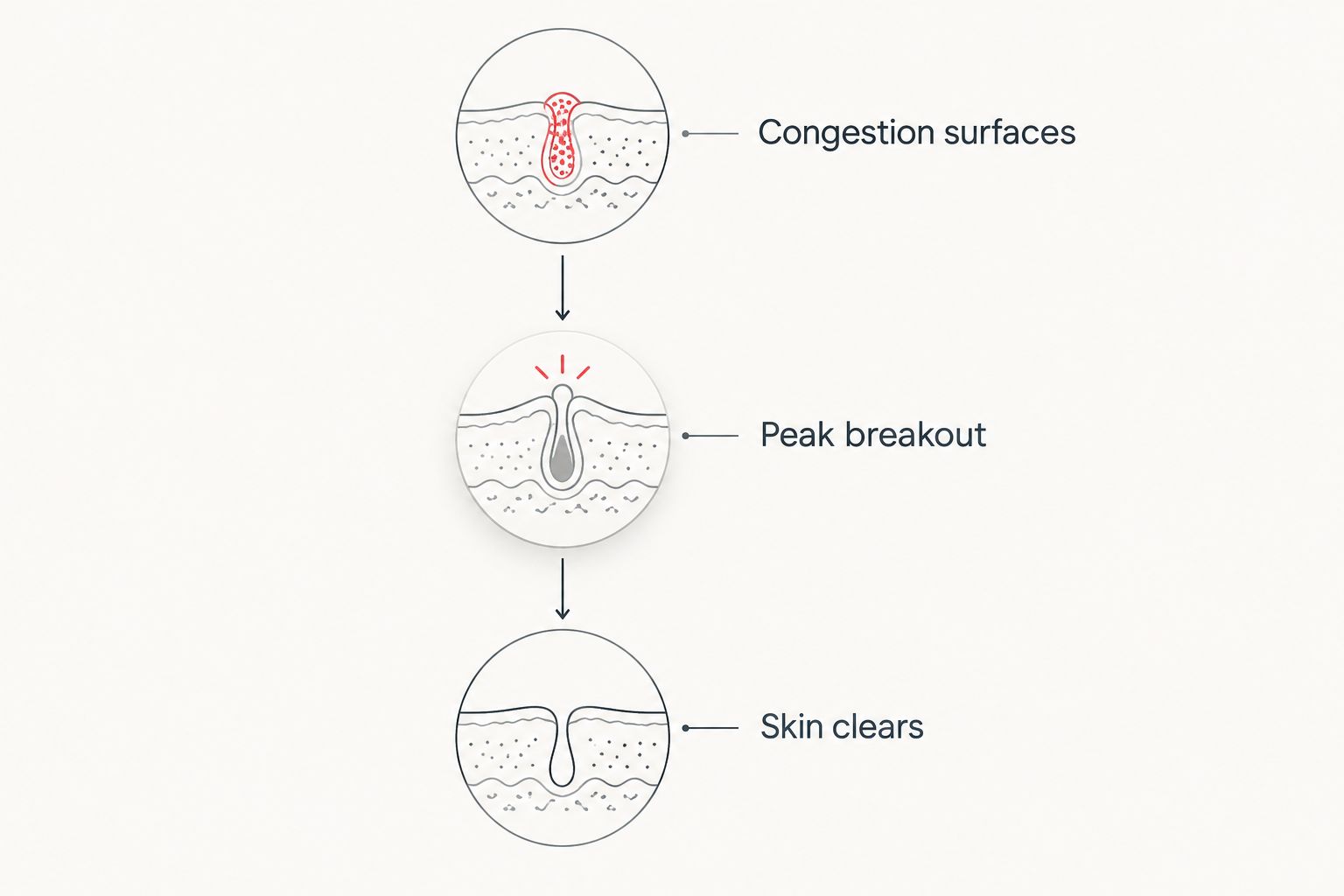
Yes, Korean skincare can cause purging, but only when a product contains an active ingredient that speeds up skin cell turnover, like a retinoid, AHA, BHA, or a high-percentage vitamin C. True purging clears within 4-6 weeks, roughly one full skin cycle, and shows up in the same spots where you already tend to break out. If a new product causes bumps in areas you've never had trouble with, or the breakout keeps building past six weeks, that's irritation or a reaction, not purging.
- Whether Korean skincare can cause purging depends on the active ingredient, not the country of origin.
- True purging clears within 4-6 weeks, matching one full 28-day skin cycle.
- Velvente's Rose-Derived PDRN toner pads and repair-focused cream aren't exfoliating actives, so they rarely trigger purging.
- New bumps outside your usual breakout zones after starting a product mean reaction, not purging.
Why this matters
"Purging" gets blamed for every new breakout, and that's costing people money and patience. Someone starts a new toner or serum, sees three new pimples by day 10, and either quits the product that would've helped or keeps using one that's actively hurting their barrier. Knowing the difference in 2026, when Korean skincare routines with PDRN, snail mucin, and heavy exfoliating acids are all marketed side by side under the same "K-beauty" label, is the only way to make that call correctly. If you're new to layering these products, a beginners guide to Korean skincare walks through introducing actives one at a time so you can actually tell what's causing what.
Does Korean skincare cause skin purging?
Only some of it does, and the ingredient list is the tell. Purging is a documented response to actives that accelerate cell turnover, pushing existing microcomedones (the invisible clogs already forming under your skin) to the surface faster than they'd surface on their own. Hydrating and repair-focused ingredients, the kind that dominate most K-beauty routines, don't do this.
| Factor | Skin purging | Regular breakout |
|---|---|---|
| Triggered by | Retinol, AHA/BHA, high-dose vitamin C | Any ingredient your skin reacts to |
| Location | Areas you already break out | New or unusual areas |
| Timeline | Resolves in 4-6 weeks | Continues or worsens past 6 weeks |
| Texture | Small, fast-cycling whiteheads | Cystic bumps, redness, itching |
| What stopping the product does | Purging returns if you restart it | Breakout calms down and stays calm |
If your new product doesn't contain an active from that first row, what you're seeing isn't purging by definition. It's either a fragrance, alcohol, or preservative reaction, or your skin adjusting to a new texture, which is a different problem with a different fix.
Which Korean skincare ingredients actually trigger purging
Retinaldehyde, retinol, glycolic acid, lactic acid, salicylic acid, and concentrated vitamin C serums are the usual suspects in K-beauty lines. These show up most often in Korean essence and ampoule products marketed for brightening or texture, not in barrier-repair steps.
PDRN (polynucleotide, often listed as Rose-Derived PDRN) is not on that list. It works by signaling tissue repair and hydration, not by exfoliating the surface layer, which is why it doesn't carry the same purging profile as retinol or acids. Velvente's toner pads use Rose-Derived PDRN alongside Jeju matcha for exactly this reason: the routine is built around calming and repair rather than aggressive turnover, so most people don't purge from it.
A foam cleanser rarely causes purging either, since it's rinsed off within a minute or two and doesn't stay on skin long enough to drive turnover. If your cleanser is leaving your face tight or reactive, the more likely issue is that it's stripping your skin barrier rather than triggering a purge cycle. Creams sit on the other end of the spectrum: a repair-focused formula like Velvente's cream, built around white truffle and Blue Complex 6-flower extract, is designed to calm and hydrate rather than exfoliate, so it's an unlikely purging trigger on its own.
Why purging severity varies from person to person
Not everyone who uses the same retinol serum purges the same way. A handful of factors change how visible and how long the reaction runs:
- Skin type — oily and acne-prone skin has more underlying congestion to push out, so purging looks more dramatic.
- Active concentration — a 0.3% retinol purges differently than a 1% strength.
- Introduction speed — starting an active every night instead of twice a week overwhelms turnover and extends the reaction.
- Existing barrier health — a compromised barrier reacts to everything, purging included, more visibly and for longer.
- Layering multiple actives — combining a new acid with a new retinol at the same time makes it hard to isolate the trigger and often worsens the response.
- Product pH and formulation — poorly buffered acids irritate the surface on top of any true purging, muddying the picture.
If you're layering several new steps at once, isolating the cause gets harder fast. A guide on PDRN paired with retinol covers how to sequence the two so you're not guessing which product caused what.
Start with a repair-first routine
Skip the guesswork on purging with a formula built around repair, not exfoliation.
How long does Korean skincare purging last?
Korean skincare purging typically lasts 4-6 weeks, matching one full skin cell turnover cycle of roughly 28 days. If a breakout from a new active hasn't started improving by week six, treat it as a reaction and stop the product rather than waiting it out.
Is it normal to break out when starting a new Korean skincare routine?
Some adjustment is normal, especially with exfoliating acids or retinol, but a true breakout that spreads to new areas is not something you should push through. Introducing one new step at a time over 2026, rather than a full 10-step routine on day one, makes it far easier to spot which product is responsible.
Does PDRN serum cause purging?
PDRN serum does not typically cause purging because it works through tissue repair signaling rather than surface exfoliation. Reactions to PDRN products are more often mild irritation from a fragrance or preservative in the formula than a purging cycle.
FAQ
Can Korean skincare cause purging?
Yes, but only from actives that speed cell turnover, like retinol or AHA/BHA — hydrating and repair ingredients like PDRN rarely cause it.
How do I know if it's purging or a breakout?
Purging shows up where you already break out and clears within 4-6 weeks; a breakout appears in new spots and gets worse over that same window.
Does a Korean foam cleanser cause purging?
Rarely — cleansers rinse off too quickly to drive the turnover effect that causes true purging.
How long should I wait out a suspected purge before stopping a product?
Give it 4-6 weeks; if there's no improvement by then, it's an irritation, not a purge, and the product should come off your routine.
Can I use PDRN and retinol together without purging?
Yes — PDRN doesn't accelerate turnover the way retinol does, so pairing them is more about timing irritation risk than purging risk.
Does purging happen with every new skincare product?
No — only products with an active that increases cell turnover can cause it; most hydrating and barrier-repair steps never trigger a purge.
Is purging worse on sensitive skin?
Sensitive skin often shows more visible irritation alongside purging, which makes the two harder to tell apart without slowing down product introduction.
One last thing
The fastest way to misread purging is starting five new products in the same week. Introduce one active at a time, give each one the full 4-6 week window, and the pattern tells you everything: clears on schedule and stays in your usual trouble spots, it's purging; spreads or lingers past six weeks, it's not.


