
Jeju matcha benefits skin mainly through concentrated catechins (including EGCG), the amino acid L-theanine, and chlorophyll — compounds that fight free-radical damage, calm redness, and support a stronger moisture barrier. What most product labels skip: the benefit only shows up when matcha sits high enough in the ingredient list and isn't diluted into a mostly-water base, which is common in cheaper green-tea-branded formulas in 2026.
- Jeju matcha's catechins and L-theanine calm redness and neutralize free-radical damage more than standard green tea extract.
- Volcanic mineral soil and shade-growing on Jeju Island raise chlorophyll and amino acid density in the leaf.
- Velvente pairs Jeju matcha with Rose-Derived PDRN in its cream and toner pad routine for combined calming and renewal effects.
- Matcha's position on the ingredient list matters more than its presence — low-listed matcha does very little.
- Matcha calms but doesn't replace targeted acne or exfoliating actives for oily or breakout-prone skin.
Why this matters
Green tea has been a skincare buzzword for two decades, but not all green tea is matcha, and not all matcha comes from Jeju. The island's volcanic basalt soil and shade-growing method change the leaf's chemistry before it's ever ground into powder, which is why formulators in 2026 specifically call out "Jeju matcha" instead of generic green tea extract. Knowing the difference tells you whether a product is doing real work or just borrowing a trend word.
How does Jeju matcha benefit skin?
Matcha's benefit comes from four overlapping mechanisms, not one single "active." Each does a different job, and a well-formulated product — like the Jeju Matcha cream in Velvente's routine — leans on all four rather than isolating one.
| Mechanism | Skin benefit | Best for |
|---|---|---|
| Catechins (EGCG) | Antioxidant defense against UV and pollution stress | Dull, environmentally stressed skin |
| L-theanine | Calms redness and cortisol-linked inflammation | Sensitive, reactive skin |
| Chlorophyll | Supports circulation and evens tone | Uneven, sallow-looking skin |
| Trace minerals (zinc, magnesium) | Reinforces barrier function | Dry, compromised skin |
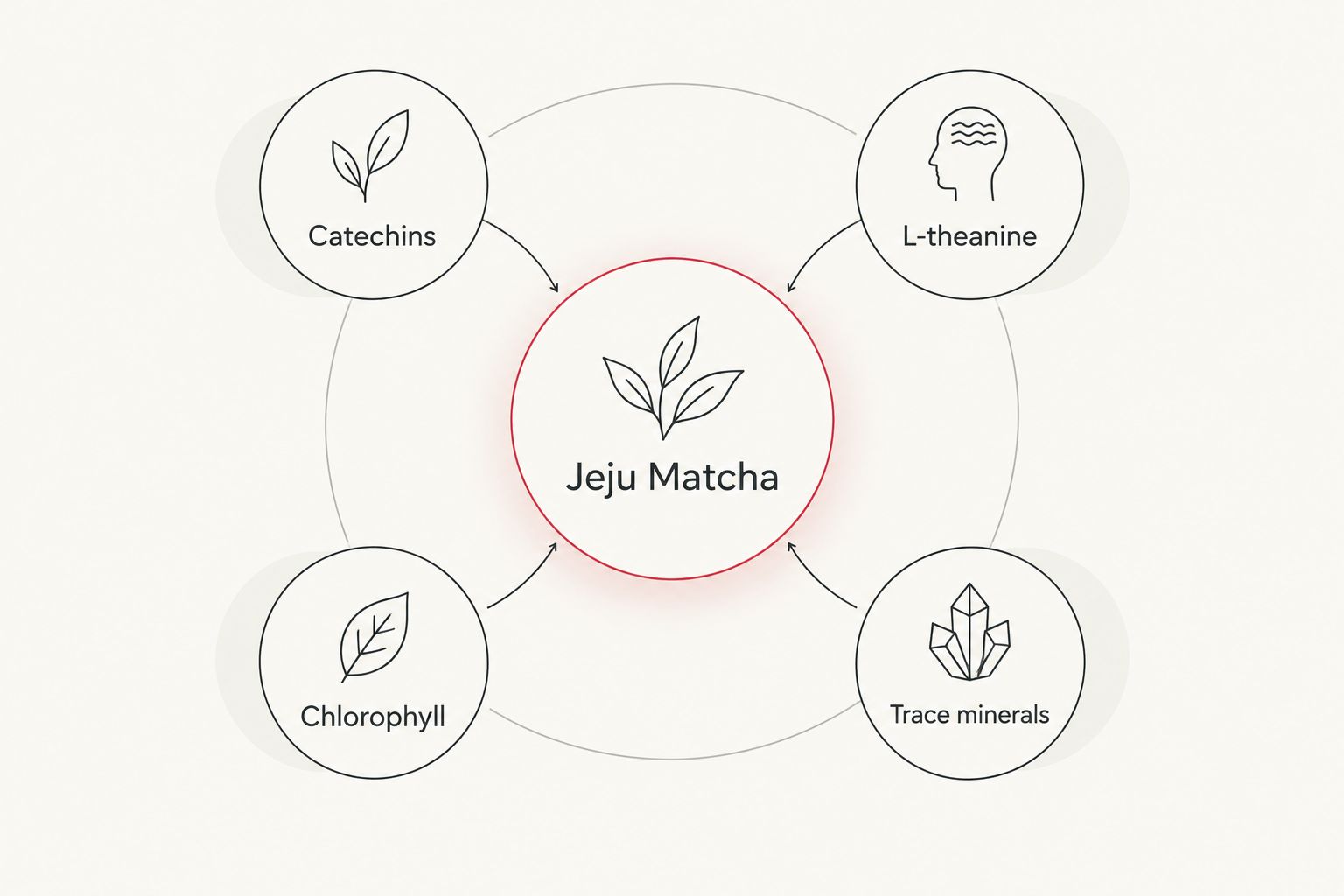
The catechin content is the headline driver — it's the same antioxidant family credited with matcha's reputation in food science, and it behaves the same way on skin as it does internally: mopping up oxidative stress before it breaks down collagen. The caveat is concentration. A serum with matcha listed near the bottom of the ingredient panel is contributing color and marketing, not measurable antioxidant defense.
Why Jeju specifically matters
Not all matcha is equal, and the growing region changes what ends up in the jar. A few factors explain why Jeju-grown matcha shows up specifically in premium K-beauty formulas rather than generic green tea extract:
- Volcanic basalt soil on Jeju Island is naturally mineral-dense, feeding the plant zinc and magnesium that carry through to the leaf.
- Shade-growing before harvest forces the plant to produce more chlorophyll and amino acids to compensate for lower light.
- Cooler island climate slows leaf growth, concentrating compounds instead of diluting them across faster growth.
- Whole-leaf powder processing retains far more of the leaf's compounds than a steeped tea bag, where most of the leaf is discarded.
- Strict Korean agricultural sourcing standards used by Jeju growers reduce pesticide residue concerns compared to unregulated matcha sources.
That's the reasoning behind guides like best Jeju ingredient skincare products ranking region-specific sourcing as a real differentiator, not a marketing footnote.
Where it shows up in a routine
Matcha works best layered early, before heavier creams seal it in. A typical placement: toner pads first for hydration and light antioxidant delivery, then a matcha-infused cream to lock the benefit in and add occlusive support. Velvente's foam cleanser clears the surface first so the matcha in later steps actually reaches skin instead of sitting on residual oil or makeup.
See the Jeju matcha cream in action
Check current formula details and how it fits a full routine.
Is Jeju matcha better than regular green tea extract for skin?
Jeju matcha delivers a denser dose of catechins and amino acids than regular green tea extract because matcha uses the whole, shade-grown leaf ground into powder, not a diluted steeped extract. Regular green tea skincare extract is typically brewed and filtered, which strips out a portion of the compounds matcha retains intact. Guides comparing formulas, like best matcha skincare products, consistently flag whole-leaf matcha sourcing as the differentiator worth checking on a label.
Does Jeju matcha help acne or oily skin?
Jeju matcha can help manage oily and acne-prone skin through its astringent, antioxidant catechin content, which calms inflammation tied to breakouts and helps regulate the look of excess shine. It isn't a substitute for exfoliating acids or targeted acne actives — matcha calms and defends, it doesn't unclog pores on its own.
Can Jeju matcha be combined with PDRN or retinol?
Yes, Jeju matcha layers well with Rose-Derived PDRN and with retinol because its calming, antioxidant profile buffers some of the irritation retinol can cause when both are used in the same routine. Standard layering order still applies: thinnest to thickest, with retinol going on last in a nighttime step. For anyone building that combination, can PDRN serum be used with retinol covers the sequencing in more detail.
FAQ
How does Jeju matcha benefit skin?
Jeju matcha benefits skin through concentrated catechins, L-theanine, and chlorophyll that fight free-radical damage, calm redness, and support the moisture barrier. The benefit depends on the matcha sitting high in the ingredient list, not just appearing on the label.
Is matcha the same as green tea in skincare?
No, matcha is whole shade-grown tea leaf ground into powder, while most green tea skincare extract is brewed and filtered, leaving behind some of the compounds. Matcha typically delivers a more concentrated dose per gram.
What does Jeju Island have to do with matcha quality?
Jeju Island's volcanic basalt soil is mineral-dense and its shade-growing method increases chlorophyll and amino acid content in the leaf. That combination is why 2026 K-beauty formulas call out Jeju sourcing specifically.
Can sensitive skin use Jeju matcha?
Yes, the L-theanine in matcha is specifically calming and is often recommended for reactive or redness-prone skin. Patch test any new formula regardless of the calming ingredients it contains.
Does Jeju matcha help with anti-aging?
Jeju matcha supports anti-aging indirectly by neutralizing oxidative stress that breaks down collagen over time. It works best paired with a renewal ingredient like Rose-Derived PDRN rather than used alone.
How long does it take to see results from Jeju matcha in a routine?
Antioxidant and calming effects from matcha are usually noticeable within a few weeks of consistent use in 2026 formulas, though visible texture or tone change takes longer and depends on the full routine around it.
Can Jeju matcha be used with a vegan skincare routine?
Yes, matcha is plant-derived and fits naturally into vegan formulas, which is why brands built around vegan K-beauty routines feature it prominently in 2026 lineups.
Does the amount of matcha in a product matter?
Yes, concentration matters more than presence — a product listing matcha near the bottom of the ingredient panel is contributing far less benefit than one where it's listed among the first ingredients.
One last thing
The part most shoppers miss: matcha's edge over regular green tea isn't a secret extra ingredient, it's a processing choice. Shade-growing the plant before harvest and grinding the whole leaf into powder — instead of steeping and discarding it — is what concentrates the chlorophyll and amino acids that make Jeju matcha worth seeking out on a 2026 ingredient label. Check where matcha sits on the list before checking anything else the marketing says.


