
Best overall: a urea moisturizer. Best for persistent rough texture: a lactic acid body lotion. Best minimalist option: a plain barrier cream. The best Korean skincare products for keratosis pilaris in 2026 are products chosen for their moisturizing and exfoliating ingredients—not their country of origin or glass-skin claims.
- The best Korean skincare products for keratosis pilaris prioritize moisturization and targeted exfoliation over elaborate routines.
- Urea moisturizers are the default choice for dry, rough keratosis pilaris; lactic acid targets persistent texture.
- Velvente Korean skincare belongs in a supporting routine, not as a proven treatment for keratosis pilaris.
- Skip scrubbing and overlapping exfoliants; painful, inflamed, or uncertain bumps need a dermatologist.
Why this matters
Keratosis pilaris develops when keratin plugs hair follicles, creating small, rough bumps. It commonly affects the upper arms, thighs, buttocks, and cheeks. It is not simply dirt, clogged facial pores, or a sign that you need stronger cleansing.
Velvente Korean skincare is best considered a supporting routine, not a targeted keratosis pilaris treatment. Its Rose PDRN, Jeju matcha, and white truffle positioning addresses skin renewal and anti-aging; those ingredients are not substitutes for established keratosis pilaris care.
If your skin already burns when you apply products, start with the principles in this damaged skin barrier guide. Adding more exfoliation to irritated skin is the wrong next move.
What makes the best Korean skincare for keratosis pilaris?
For this 2026 guide, the ranking prioritizes ingredient roles rather than unverified product performance. The first three picks are formula types to look for on Korean skincare labels; the final two are supporting products, not bump-removing treatments.
- Relevant ingredients: Urea, lactic acid, and salicylic acid have established roles in keratosis pilaris care.
- Moisturizing support: A treatment should address dryness as well as roughness. An exfoliant alone does not complete the routine.
- Application site: A facial toner is not automatically suitable for treating large areas of your arms or thighs.
- Skin tolerance: Burning, persistent redness, and peeling are reasons to stop, not signs that a treatment is working harder.
- Clear directions: Choose products with instructions that specify where and how to use them. Do not infer strength from ingredient names alone.
- Routine simplicity: One targeted treatment is easier to assess than several overlapping acids, pads, and scrubs.
The best options at a glance
This table separates treatments for rough bumps from products that support cleansing and moisturization. It does not rank individual formulas by clinical effectiveness.
| Ranked option | Best for | Standout role | Key limitation |
|---|---|---|---|
| Urea moisturizer | Dry, rough body skin | Moisturization with concentration-dependent keratolytic action | Strength and tolerance vary by formula |
| Lactic acid body lotion | Persistent surface roughness | Chemical exfoliation with moisturizing support | Can sting irritated skin |
| Salicylic acid body treatment | Follicular roughness without marked dryness | Helps loosen accumulated dead skin | Can cause dryness; broad-area use needs caution |
| Velvente Cream | An existing facial moisturizing step | Cream step within the brand's Korean routine | Not established as a targeted KP treatment |
| Velvente Cleanser | An existing facial cleansing step | Foam cleansing within the brand's Korean routine | Rinse-off cleansing does not treat follicular plugs |
1. Urea moisturizer: best for dry, rough body skin
A urea moisturizer is the strongest starting category when keratosis pilaris feels both bumpy and dry. Urea helps retain water, while its ability to soften thickened skin depends on concentration and formulation. Read the label rather than assuming every urea cream performs the same job.
Best for: Rough upper arms or thighs accompanied by dryness, provided the product is intended for those areas.
Urea moisturizer pros:
- Addresses dryness alongside rough texture.
- Combines moisturizing and skin-softening functions in one step.
- Supports a simpler routine than layering separate exfoliating products.
Urea moisturizer cons:
- Can sting cracked or irritated skin.
- Different concentrations are not interchangeable.
- A body formula is not automatically appropriate for your face.
Choose a product whose directions match your treatment area. Do not jump to a stronger formula just because your bumps have been present for years; persistent keratosis pilaris does not justify ignoring irritation.
Verdict: Buy a clearly labeled urea moisturizer for dry body KP; hold if your skin is cracked or inflamed.
2. Lactic acid body lotion: best for persistent surface roughness
Lactic acid is an alpha hydroxy acid used to exfoliate dead skin. In a moisturizing body formula, it targets rough texture while helping keep the treatment from becoming an exfoliation-only routine. The finished formula matters more than an AHA claim on the front label.
Best for: Established body keratosis pilaris that remains rough despite consistent moisturization.
Lactic acid body lotion pros:
- Targets accumulated surface skin without abrasive scrubbing.
- Can combine exfoliation and moisturization.
- Offers a treatment role distinct from a regular cleanser or toner.
Lactic acid body lotion cons:
- Can sting after shaving or on irritated skin.
- Overuse can cause redness and peeling.
- Alpha hydroxy acids can increase sun sensitivity.
Follow the product's directions and protect exposed treated skin. FDA guidance on alpha hydroxy acids advises sunscreen, protective clothing, and limiting sun exposure during use and for a week afterward. A broad-spectrum sunscreen with SPF 30 or higher is the American Academy of Dermatology's general recommendation.
Verdict: Buy for persistent body roughness; skip application to freshly shaved or irritated skin.
3. Salicylic acid body treatment: best for follicular roughness
Salicylic acid is another ingredient used in keratosis pilaris care to help remove accumulated dead skin. Choose a formula explicitly intended for the area you want to treat. A facial acne treatment is not automatically a good product for covering both thighs.
Best for: Follicular roughness when dryness is not the dominant problem and the product's directions permit body use.
Salicylic acid body treatment pros:
- Provides targeted chemical exfoliation.
- Avoids the friction of brushes and granular scrubs.
- Offers an alternative when a different exfoliant is unsuitable.
Salicylic acid body treatment cons:
- Can increase dryness and irritation.
- Requires caution on large areas or damaged skin.
- Needs additional guidance for children and during pregnancy.
Do not use salicylic acid simply because your bumps resemble acne. Keratosis pilaris and acne need different assessments, and tender pustules deserve medical attention. Avoid adding a salicylic acid toner on top of an exfoliating body lotion without checking the combined routine.
Verdict: Hold until the formula, treatment area, and directions fit; skip overlapping acid treatments.
4. Velvente Cream: best for an existing facial moisturizing step
Velvente Cream is a cream step within a Korean skincare routine positioned around Rose PDRN, Jeju matcha, and white truffle. Treat its role here as moisturization, not as evidence that it removes keratosis pilaris plugs. Anti-aging positioning does not establish effectiveness against a follicular condition.
Best for: Someone already using the cream comfortably on facial skin who needs to distinguish moisturizing support from targeted KP treatment.
Cream pros:
- Provides a dedicated cream step in the routine.
- Fits a simple cleanse-and-moisturize structure.
- Offers a supporting role separate from chemical exfoliation.
Cream cons:
- Is not established here as a urea, lactic acid, or salicylic acid treatment.
- Skin-renewal positioning does not demonstrate KP-specific results.
- Facial use does not establish suitability for widespread body treatment.
For your 2026 routine, keep a well-tolerated moisturizer if it serves your skin comfortably. Do not replace a targeted body treatment with a facial cream solely because the ingredient story sounds more advanced. Check the current ingredient list and application directions before introducing it.
Verdict: Hold as a supporting facial moisturizer; skip it as your sole targeted KP treatment.
5. Velvente Cleanser: best for an existing facial cleansing step
Velvente Cleanser is a foam cleanser in the brand's Korean skincare routine. Its job is cleansing, not dissolving persistent keratin plugs through washing alone. A foam texture also does not tell you whether a finished formula will feel comfortable on your skin.
Best for: Someone already using the cleanser without tightness or stinging who wants a restrained facial routine.
Cleanser pros:
- Provides a defined cleansing step.
- Fits a routine without a separate cleansing brush.
- Can remain separate from your targeted leave-on treatment.
Cleanser cons:
- Rinse-off cleansing is not a substitute for KP treatment.
- More washing does not mean smoother follicles.
- Comfort and suitability depend on the finished formula and your response.
Use your hands rather than a rough washcloth, and rinse without rubbing the bumps. If your skin feels tight afterward, reassess the cleanser and washing method instead of adding another active ingredient. Persistent roughness is not evidence that you failed to cleanse thoroughly.
Verdict: Hold if already well tolerated; skip buying a cleanser solely to treat keratosis pilaris.
How we ranked these options
This 2026 ranking puts ingredients recognized in American Academy of Dermatology keratosis pilaris guidance ahead of general renewal claims. Urea takes the default slot for dry roughness; lactic acid and salicylic acid occupy distinct exfoliating roles. Cream and cleanser sit lower because they support a routine without replacing targeted treatment.
The criteria are ingredient relevance, moisturizing support, treatment area, tolerance, and clear directions. This is a decision guide, not a claim that individual Korean formulas have been clinically compared.
Build a routine that does not make the bumps angrier
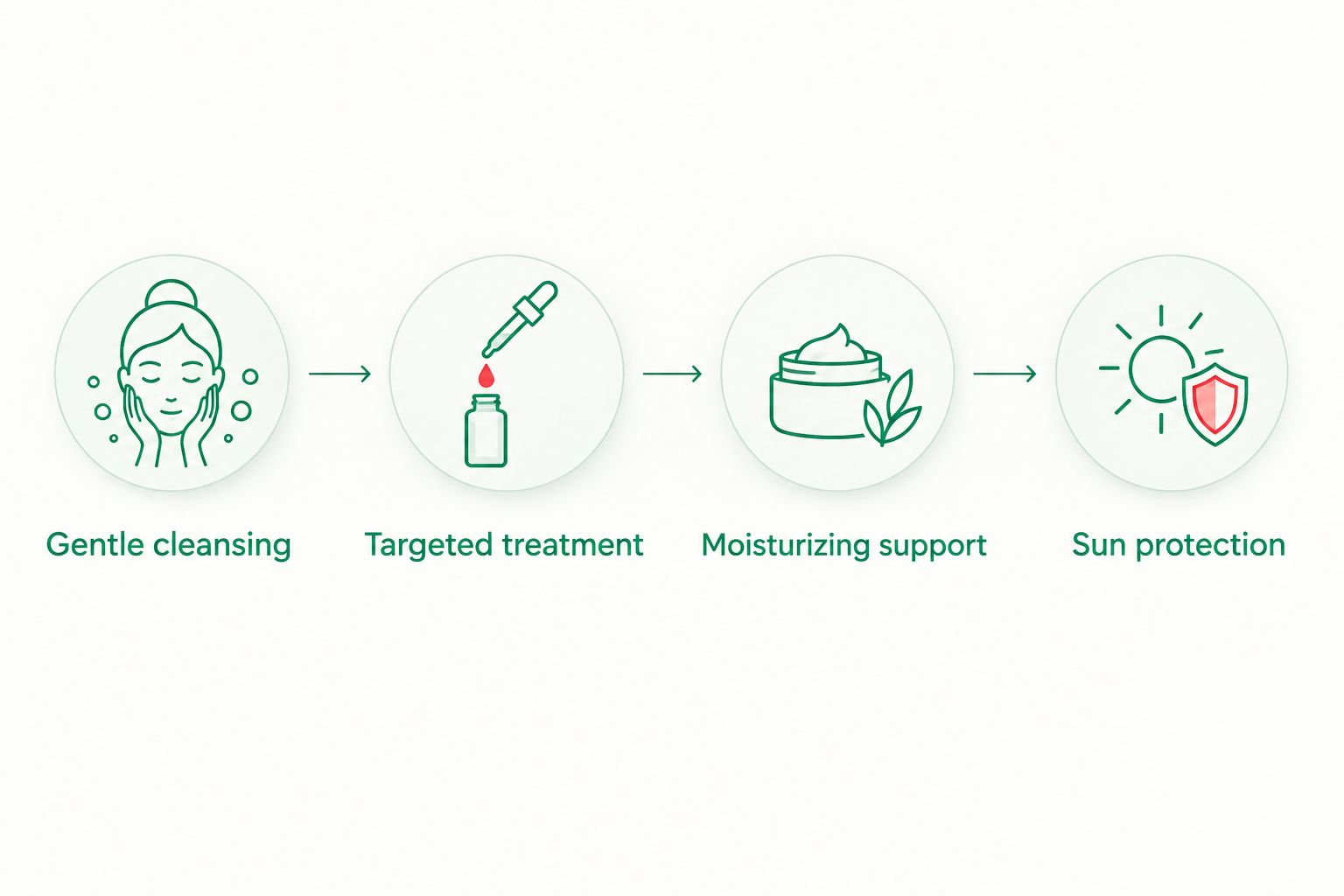
Use the following sequence as a framework, then follow your treatment's specific directions. Keep facial and body routines separate when their products have different intended uses.
- Gentle cleansing: Use warm rather than hot water. The American Academy of Dermatology advises limiting bathing to 10 minutes or less for keratosis pilaris self-care.
- Targeted treatment: Use one suitable exfoliating or keratolytic product as directed. Do not automatically combine acid lotion, toner pads, and a scrub.
- Moisturizing support: Apply moisturizer while skin remains damp. AAD guidance recommends moisturizing within 5 minutes of bathing and at least 2 times daily.
- Sun protection: Protect exposed skin, especially when using an AHA. Choose broad-spectrum SPF 30 or higher.
A separate moisturizer is not always necessary if your treatment already supplies adequate moisturization. Judge the routine by comfort as well as texture: increasing burning or persistent redness means the routine needs adjustment, even if the bumps feel temporarily smoother.
Which option should you choose in 2026?
Choose a urea moisturizer first for dry, rough body KP. Choose a lactic acid body lotion when surface roughness remains the main issue, or consider a salicylic acid body formula when its directions and your skin's tolerance fit.
For facial bumps, confirm the diagnosis before copying a body-treatment routine. Rosacea, acne, and other conditions can resemble KP, and body-strength treatments are not automatically appropriate for cheeks.
Keep tolerated Korean skincare as support. Do not make PDRN, matcha, white truffle, or the promise of glass skin your deciding criterion for treating follicular roughness.
FAQ
What's the best Korean skincare ingredient for keratosis pilaris?
Urea is a useful starting ingredient when keratosis pilaris is both rough and dry. Lactic acid and salicylic acid are other established options; choose the finished formula by treatment area, directions, and tolerance.
Can Korean skincare cure keratosis pilaris?
Korean skincare does not provide a permanent cure for keratosis pilaris. Suitable moisturizers and exfoliating treatments can improve its appearance, but ongoing care is often needed.
Is Rose PDRN better than lactic acid for keratosis pilaris?
Rose PDRN is not an established replacement for lactic acid in keratosis pilaris care. Ingredient positioning around skin renewal does not demonstrate that a product treats keratin plugs.
Should I use Korean toner pads on the bumps every day?
Do not use toner pads daily on keratosis pilaris simply because they are part of a Korean routine. Check their ingredients, intended treatment area, and directions; rubbing and overlapping exfoliants can worsen irritation.
Can I use a body exfoliating lotion on my cheeks?
Do not apply a body exfoliating lotion to your cheeks unless its directions explicitly permit facial use. Facial bumps also need the correct diagnosis before treatment.
How long does keratosis pilaris take to improve?
Improvement is gradual, and no single timeline applies to every product or person. Consistent moisturization and appropriate treatment matter more than a rapid-result promise; persistent symptoms deserve a dermatologist's assessment.
When should I see a dermatologist about rough bumps?
See a dermatologist when bumps are painful, markedly inflamed, spreading unexpectedly, or uncertain in diagnosis. Also seek advice if an appropriate routine fails to help or repeatedly causes irritation.
One last thing
Do not judge a KP routine only by how completely it removes the bumps. Reducing dryness without causing irritation is meaningful progress, and making naturally rough skin burn is not an improvement.
Your most useful 2026 adjustment is often subtraction: remove the scrub, stop stacking acids, and keep the moisturizer. If texture persists despite appropriate care, seek a diagnosis rather than building a longer routine.


