
PDRN and salmon DNA skincare are not automatically the same thing: PDRN (polydeoxyribonucleotide) is a category of purified DNA fragment used for skin repair, and salmon (or trout) sperm cells are simply the most common raw material that ingredient suppliers use to extract it. Not every PDRN product uses fish DNA — plant-fermented and rose-derived versions exist that deliver the same fragment structure without an animal source. The catch buyers miss: a product can say "PDRN" on the label and still be either one, so the sourcing only shows up in the fine print or the brand's own vegan claim.
- PDRN is a DNA-fragment ingredient class, not a single fixed source — is PDRN the same as salmon DNA skincare depends on how the brand sourced it.
- Most clinical and injectable PDRN (like the Korean salmon-DNA treatments) is extracted from salmon or trout sperm cells.
- Rose-derived PDRN, used in Velvente's toner pads and cream, is a vegan alternative built without animal tissue.
- Sourcing changes vegan status and allergen risk, not the basic mechanism the ingredient is chosen for.
Why This Matters
Skincare shoppers searching "PDRN" usually land on two very different products: a salmon-DNA serum marketed as a K-beauty injectable dupe, and a vegan toner pad that also lists PDRN on the ingredient panel. Both work, both use the same three-letter acronym, and both get bucketed under the loose label "Korean DNA skincare" — but if you're avoiding animal-derived ingredients, the sourcing is the only detail that matters.
The Rose PDRN behind Velvente's toner pads is a plant-based version built for exactly this gap: shoppers who want the polynucleotide category without a fish-derived ingredient list. Knowing the difference before you buy saves you from either overpaying for a salmon-based serum when you wanted vegan, or assuming a vegan pad can't be a real PDRN product.
Is PDRN the Same as Salmon DNA Skincare?
Short answer: PDRN is the ingredient family, salmon DNA is one raw-material source inside that family — not a synonym for it. The confusion started because the original commercial PDRN, developed for wound healing and later adapted into Korean injectables and serums, was extracted from salmon and trout milt. That history is why "PDRN" and "salmon DNA" get used interchangeably in casual reviews, even though the acronym itself says nothing about the source.
| Feature | Salmon-Derived PDRN | Rose-Derived (Vegan) PDRN |
|---|---|---|
| Raw material | Salmon or trout sperm cells | Plant fermentation, no animal tissue |
| Vegan status | No | Yes |
| Common format | Injectable, ampoule, serum | Toner pads, cream, serum |
| Typical claim | Wound repair, collagen support | Skin renewal, anti-aging, barrier support |
| Allergen consideration | Fish-derived, relevant for fish allergies | No fish-protein exposure |
The mechanism both versions are chosen for — signaling skin cells to repair and regenerate — is the same reason PDRN entered skincare in the first place. What changes with sourcing is what's actually in the bottle, not the job the ingredient is asked to do.
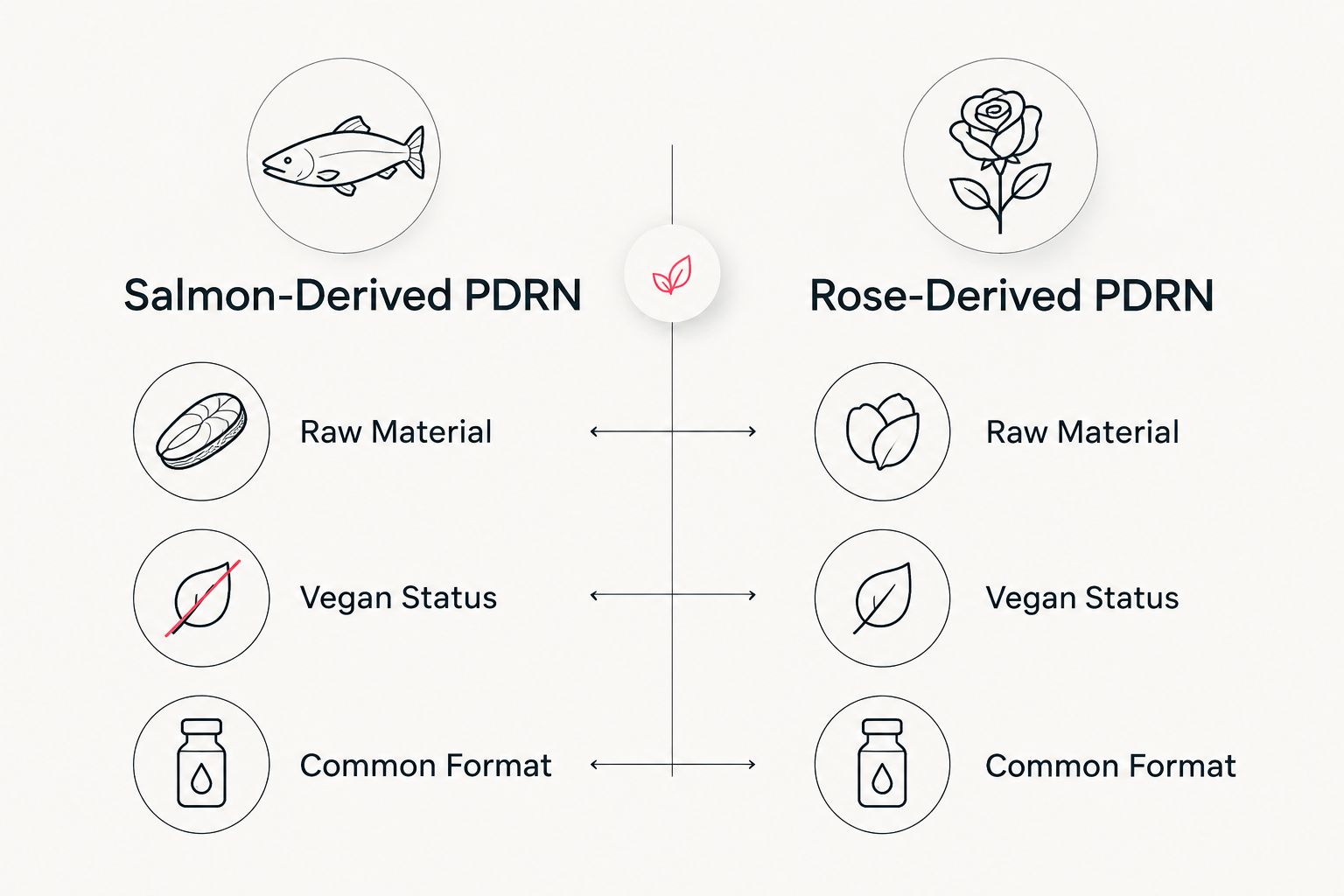
Salmon-Derived PDRN: What It Is
This is the version most people picture when they hear "PDRN skincare" or "salmon DNA skincare." It's extracted and purified from salmon (sometimes trout) sperm cells, then formulated into injectables used in Korean med-spa treatments or into over-the-counter serums and ampoules. This is an animal-derived ingredient, full stop, regardless of how a brand words its marketing copy.
- Best for: shoppers who aren't avoiding animal-derived ingredients and want the original, most-studied PDRN format
- Skip if: you keep a strict vegan or vegetarian skincare shelf, or you have a known fish-protein allergy
Rose-Derived PDRN: What It Is
Rose-derived PDRN is built through plant fermentation rather than animal extraction, aiming at the same polynucleotide function without sourcing from fish tissue. Velvente formulates its vegan toner pads and cream around Rose-Derived PDRN, paired with Jeju matcha and white truffle extract, specifically so the routine can carry a full vegan claim.
- Best for: shoppers who want a PDRN-based routine but need it verifiably vegan and cruelty-free
- Skip if: you're specifically seeking out the original salmon-sourced formulation used in clinical studies
Why PDRN Sourcing Varies
A handful of factors decide whether a brand ends up with salmon-derived or plant-derived PDRN in its formula:
- Target claim: brands chasing a vegan or cruelty-free badge default to plant-fermented sourcing
- Regulatory channel: injectable-grade PDRN sold through med-spas is more often salmon-derived because that's the studied, approved format in that channel
- Supply chain: fish-derived PDRN has an established extraction pipeline; plant-fermented versions are newer and less standardized across suppliers
- Formulation format: ampoules and injectables lean salmon-derived; toner pads, cleansers, and creams have more room to use vegan alternatives
- Price positioning: sourcing method affects manufacturing cost, which shows up in how a brand positions the product on shelf
“PDRN describes what the ingredient does, not where it comes from.”
Is Salmon DNA Skincare Safe to Use?
Salmon-derived PDRN is generally considered safe for topical and injectable use in the format it's approved for, but it carries a fish-derived allergen risk that plant-based versions don't. If you have a known fish or seafood allergy, that's the specific reason to check sourcing before buying any PDRN product, salmon-derived or not.
Is Rose PDRN as Effective as Salmon PDRN?
Rose-derived PDRN is formulated to target the same skin-renewal and repair signaling that salmon-derived PDRN is known for, though the two use different raw materials to get there. Velvente builds its Rose PDRN into a full routine — cream and vegan toner pads — rather than a single injectable dose, which changes how and how often the ingredient reaches the skin compared to a clinic treatment.
Can You Use PDRN Skincare If You're Pregnant?
Whether any PDRN product, salmon-derived or vegan, is appropriate during pregnancy depends on the specific formulation and concentration, which is why it's worth reading the full breakdown on PDRN and pregnancy before adding it to a routine rather than assuming all PDRN products are treated the same.
Try Vegan Rose PDRN Skincare
See the cream built around Rose-Derived PDRN, Jeju matcha, and white truffle.
FAQ
Is PDRN the same as salmon DNA skincare?
No — PDRN is an ingredient category, and salmon DNA is just the most common raw material used to make it. Plant-fermented, rose-derived PDRN exists as a vegan alternative built for the same skin-renewal function.
What is PDRN used for in skincare?
PDRN is used to signal skin cells toward repair and regeneration, which is why it shows up in anti-aging serums, toner pads, and post-procedure recovery products. Its main appeal is targeting collagen support and barrier repair rather than acting as a surface hydrator.
Is all PDRN skincare vegan?
No, most commercial and clinical-grade PDRN is derived from salmon or trout sperm cells, which is animal-derived. Vegan formulas exist but use plant-fermented sourcing, like the Rose-Derived PDRN in Velvente's toner pads and cream.
Does rose PDRN work the same way as salmon PDRN?
Rose-derived PDRN targets the same skin-renewal signaling that salmon-derived PDRN is known for, using a different raw material to get there. The two aren't chemically identical, but they're formulated toward the same category of result.
Can people with fish allergies use PDRN skincare?
People with fish or seafood allergies should avoid salmon-derived PDRN products and look for plant-fermented, vegan PDRN instead. Checking the ingredient sourcing, not just the acronym on the label, is the only reliable way to confirm this.
Is PDRN better than retinol for anti-aging?
PDRN and retinol work through different mechanisms — PDRN focuses on repair signaling while retinol drives cell turnover — so they're not direct substitutes. Some routines combine both rather than choosing one over the other.
How do I know if a PDRN product is salmon-derived or vegan?
Check the ingredient list for a vegan or cruelty-free certification claim, since "PDRN" alone on the label doesn't disclose the source. Brands using plant-fermented PDRN typically state it explicitly, like Rose-Derived PDRN, because it's a selling point for vegan shoppers.
One Last Thing
The fastest way to spot which PDRN you're buying is to search the ingredient list for the word "vegan" or a named plant source — salmon-derived formulas almost never volunteer that label because it isn't a selling point for them. If a PDRN product doesn't say vegan anywhere on the packaging or product page in 2026, treat it as animal-derived until the brand states otherwise.


