
Rose-Derived PDRN can reduce the look of fine lines by activating the skin's own repair and collagen-building processes, with visible smoothing typically building over two to three weeks of daily use. It softens texture-driven fine lines caused by dehydration and slowed cell turnover, but it won't relax expression lines caused by repeated muscle movement the way a neuromodulator does.
- Rose-Derived PDRN can reduce fine lines by supporting collagen synthesis and skin repair, not by numbing or filling.
- Smoothing shows up first as better texture and light reflection, then softer lines, over roughly two to three weeks.
- It works on dehydration-driven and turnover-driven lines, not on expression lines from muscle movement.
- Consistency matters more than dose: daily use, sun protection, and a stable routine drive most of the visible change.
- Velvente pairs Rose-Derived PDRN with Jeju matcha and white truffle in its toner pads and cream for a full renewal routine.
Why This Matters
PDRN, or polydeoxyribonucleotide, has a long track record in dermatology for wound healing and tissue repair because it signals fibroblasts to keep producing collagen and repairing tissue. The vegan, rose-derived version used in Velvente's routine works on the same signaling pathway without an animal-sourced ingredient, which matters if you've been avoiding salmon-DNA PDRN products for that reason.
Fine lines fall into two buckets: dynamic lines from muscle movement, and static or texture lines from dehydration, sun exposure, and slower cell turnover as skin ages. PDRN targets the second bucket. If you want to know how long PDRN takes to show results, the honest answer is measured in weeks, not days, and that timeline holds whether the source is animal-derived or the rose-based version Velvente formulates with.
Does Rose PDRN Reduce Fine Lines?
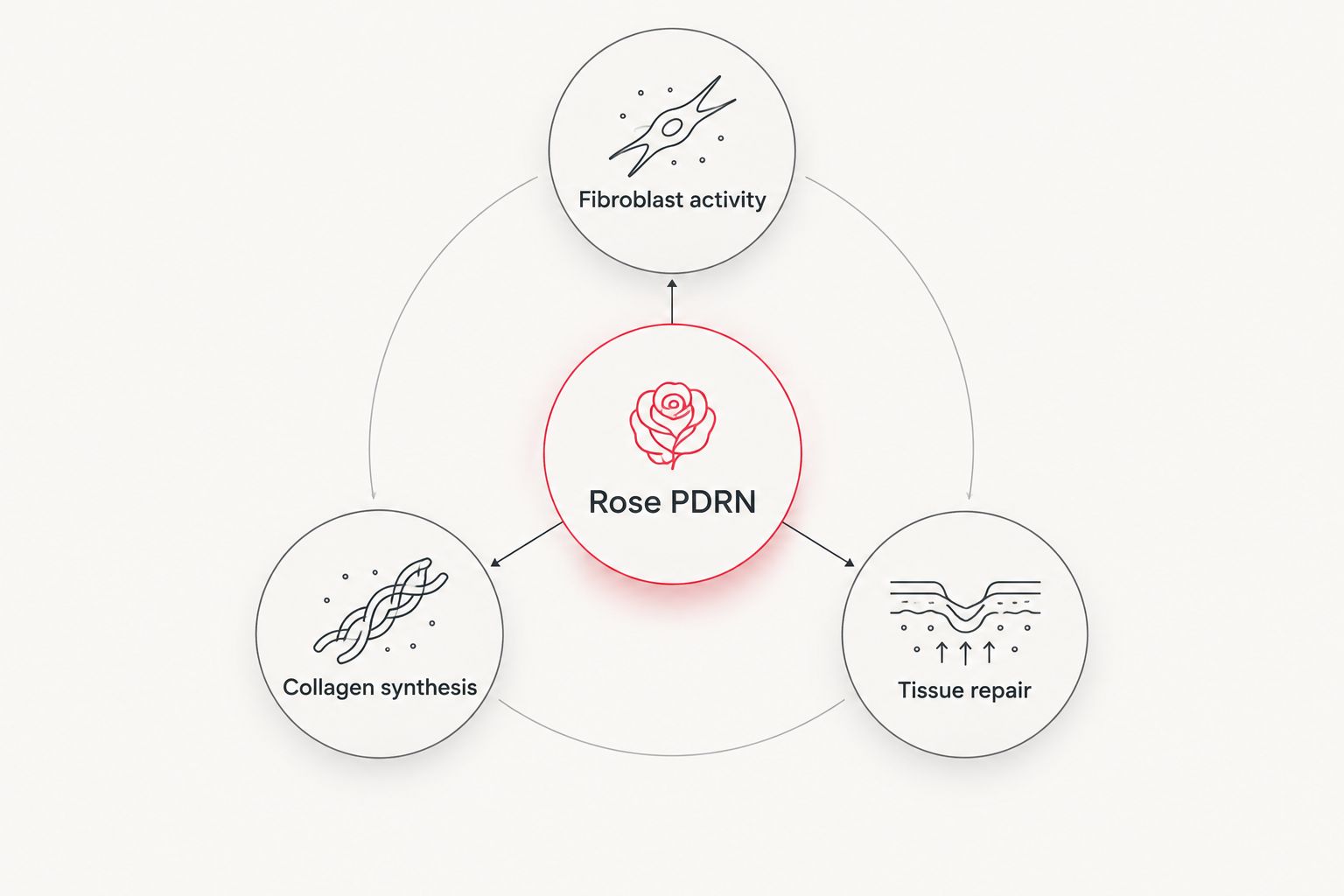
Yes, on the mechanism level: Rose-Derived PDRN encourages fibroblast activity, which is the cell type responsible for making collagen and elastin. More fibroblast activity means better structural support under the skin's surface, which is what makes fine lines look shallower over time. It's a repair-and-rebuild ingredient, not a smoothing agent that sits on top of skin.
Here's how it stacks up against the other ingredients people reach for when fine lines show up:
| Ingredient | Mechanism | Best for | Typical timeline |
|---|---|---|---|
| Rose-Derived PDRN | Stimulates fibroblasts, supports collagen synthesis and tissue repair | Texture, dehydration lines, post-procedure skin | 2-3 weeks for visible change |
| Retinol | Speeds cell turnover, thickens the dermis over time | Deeper wrinkles, uneven tone | 6-12 weeks, often with irritation |
| Peptides | Signal collagen production, gentler than retinol | Early fine lines, sensitive skin | 4-8 weeks |
| Vitamin C | Antioxidant, supports collagen and brightens tone | Dullness, dark spots, mild firming | 4-6 weeks |
Verdict: Rose-Derived PDRN is the pick for texture-driven fine lines and sensitive or post-procedure skin that can't tolerate retinol's irritation curve.
Why Results With Rose PDRN Vary
Not everyone sees the same timeline or the same amount of visible change. A few factors decide how much a fine-line result actually shows up:
- Consistency of use — skipping days resets the fibroblast signaling cycle, so daily application matters more than a strong single dose.
- Baseline collagen levels — skin that's already thin or heavily sun-damaged takes longer to show a visible lift.
- Skin barrier condition — a compromised barrier absorbs actives inconsistently; repairing the skin barrier first often speeds up how fast PDRN results show.
- Sun protection — unprotected UV exposure breaks down new collagen about as fast as PDRN builds it.
- Layering with other actives — retinol, strong acids, or heavy exfoliation can compete with PDRN for skin tolerance if introduced at the same time.
- Formulation concentration — not all PDRN products carry the same active load, and vegan rose-derived versions vary by brand.
Start a Rose PDRN routine
Pair Rose-Derived PDRN with Jeju matcha and white truffle in one nightly step.
Related Questions
Can PDRN Serum Be Used With Retinol?
Yes, PDRN serum can be used with retinol, but not applied at the exact same time on freshly irritated skin. Most routines separate the two by alternating nights or applying PDRN first to support repair while retinol handles turnover.
How Long Does PDRN Take to Show Results?
PDRN typically takes two to three weeks of consistent use to show visible change in texture and fine lines, with fuller results building over a full month or more. The timeline depends on baseline skin condition and how often the product is actually applied, not just the ingredient itself.
Is a PDRN Serum Worth It in 2026?
A PDRN serum is worth it in 2026 for anyone dealing with texture-driven fine lines, post-procedure recovery, or a compromised skin barrier, since the ingredient's repair mechanism is well-documented in dermatology. It's less worth it for someone chasing deep expression lines, where retinol or a dermatologist-administered treatment does more.
“Fine lines respond to consistent collagen support, not an overnight fix.”
FAQ
Can Rose PDRN reduce fine lines?
Rose-Derived PDRN can reduce the visible appearance of fine lines by supporting fibroblast activity and collagen synthesis, with results building over two to three weeks. It works best on texture and dehydration-driven lines, not on deep expression lines from muscle movement.
Is Rose PDRN better than retinol for fine lines?
Rose-Derived PDRN is gentler and better tolerated by sensitive skin, while retinol works faster on deeper wrinkles but carries a longer irritation curve. Neither replaces the other; they target different depths of aging.
How often should you use a Rose PDRN toner pad?
Most PDRN toner pad routines call for once or twice daily use, applied to clean skin before serum or cream. Skipping days slows the fibroblast signaling PDRN relies on.
Does vegan PDRN work the same as animal-derived PDRN?
Vegan, rose-derived PDRN targets the same fibroblast and collagen pathways as animal-sourced PDRN, without using salmon or trout DNA. The mechanism is the same; the source material is different.
Can PDRN help with post-procedure skin?
PDRN is commonly used to support skin recovery after procedures because it accelerates tissue repair signaling. It's often recommended alongside gentle, low-irritation routines during healing.
What ingredients pair well with Rose PDRN for anti-aging?
Jeju matcha and white truffle extract pair well with Rose-Derived PDRN because they add antioxidant support and mineral content alongside PDRN's collagen-building effect. Together they cover repair, protection, and firmness in one routine.
Will Rose PDRN work on deep wrinkles?
Rose-Derived PDRN has limited effect on deep, expression-driven wrinkles since those form from repeated muscle movement rather than dehydration or slow turnover. Retinol or in-office treatments address that category more directly.
One Last Thing
PDRN's fibroblast-signaling mechanism is the same reason it shows up in post-procedure and clinical skin recovery settings, not just anti-aging serums, which is a stronger signal of real biological activity than most marketing claims for anti-aging actives. If fine lines are your main concern in 2026, pair Rose-Derived PDRN with daily sun protection before adding anything else — new collagen breaks down under UV exposure about as fast as PDRN builds it, so skipping SPF quietly cancels out the ingredient's work.


