
A Korean cream is built to be your moisturizer, not an extra step before one — if your cream carries humectants and occlusives (Rose-Derived PDRN, ceramide-type emollients, or a rich butter base), a separate moisturizer layered on top is usually redundant for normal-to-combination skin in 2026. The exception is skin that's genuinely dry, lives through a harsh winter climate, or runs a heavy actives routine that strips the barrier faster than one cream layer can replenish — that skin benefits from a thin extra moisturizer on top.
- A Korean cream doubles as the moisturizer step for most skin types — a separate moisturizer on top is usually redundant.
- Very dry skin, cold climates, or heavy retinol/acid routines are the main reasons to add a lightweight extra layer in 2026.
- Velvente's Anti-Aging Cream is formulated to plump, firm and repair the barrier as a standalone final step.
- Layering order matters more than product count — cream goes after toner pads and serum, before SPF.
Why this matters
Western routines split hydration into a lightweight "moisturizer" and treat cream as optional extra richness. Korean routines flip that: the cream is the moisturizer, and it's formulated to be the last hydrating step before sunscreen or sleep. Confusing the two leads people to stack two heavy, occlusive products back-to-back, which wastes money and can actually clog pores rather than help skin.
The real question isn't "cream or moisturizer" — it's whether your specific cream has enough humectant and occlusive power to lock in everything applied underneath it. Velvente's Anti-Aging Cream is built around Rose-Derived PDRN, Jeju matcha and a rich base meant to plump, firm and repair the barrier in one layer, which is the standard a Korean cream needs to meet if it's going to skip the extra moisturizer step.
Is a Korean cream enough without a moisturizer?
Most of the time, yes — a well-formulated cream covers the same job a separate moisturizer would do, just with a heavier, more occlusive texture designed to sit as the final step. The table below breaks down when a cream-only approach holds up versus when it doesn't.
| Approach | Best for | Pros | Cons | Verdict |
|---|---|---|---|---|
| Cream only | Normal, combination, oily skin | Fewer products, less risk of pilling, cream's occlusives already seal in hydration | Not enough for very dry or barrier-compromised skin | Buy |
| Cream + light moisturizer layer | Very dry skin, winter climates, retinol/acid users | Extra humectant boost, reinforces barrier repair overnight | Can feel heavy, higher chance of product pilling if textures clash | Situational |
| Moisturizer only, no cream | Anyone skipping the Korean-style final step | Lighter feel | Skips the actives (PDRN, matcha) most people buy a Korean routine for | Skip |
The middle row is where most "should I add a moisturizer" questions actually live. If your skin still feels tight 20-30 minutes after your cream, that's the barrier telling you it needs one more humectant pass, not proof the cream failed.
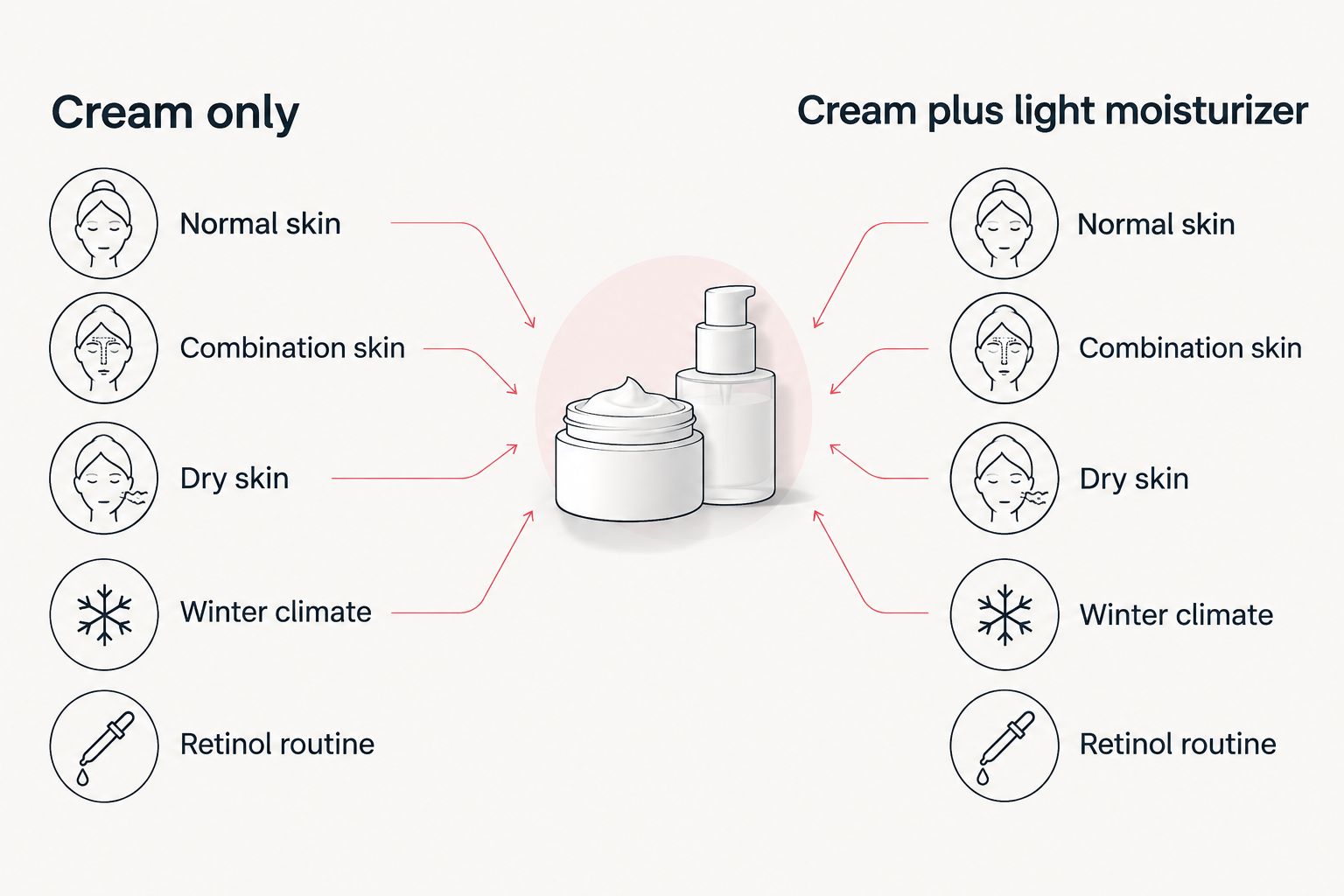
Normal to combination skin: skip the separate moisturizer
If your skin sits in the normal-to-combination range, a rich Korean cream applied after toner pads and serum is doing the full moisturizing job already. Adding a second moisturizer on top mostly just sits there unabsorbed, and in humid months it can contribute to congestion around the T-zone. The fix here is application, not addition — press the cream in rather than swipe it on, and give it a minute before sunscreen.
Dry or mature skin: add a thin extra layer
Dry and mature skin loses water faster than a single cream layer can replace overnight, especially through 2026's colder months when indoor heating strips moisture out of the air. A thin humectant-forward layer on top of the cream — not another rich cream, just something lighter — closes that gap without smothering the skin. This is also where retinol or vitamin C users tend to need the extra step, since actives increase water loss while they work.
Why the answer varies by person
A handful of specific factors decide whether your cream alone is enough:
- Skin type — oily and combination skin usually get full coverage from cream alone; dry and mature skin often need a boost.
- Climate and season — indoor heating in winter and low humidity both increase how fast a single layer evaporates.
- Active ingredients in your routine — retinol, AHAs and BHAs speed up water loss, which raises how much moisture the last step needs to replace.
- Cream texture and formulation — a lightweight gel-cream won't seal in hydration the way a rich, occlusive cream does.
- Cleansing method — double cleansing or hot water washing strips more oil, which raises the bar for what the final step needs to restore.
- How the rest of the routine is layered — skipping toner pads in the routine means the cream is compensating for a missing hydration step, not just doing its own job.
“If your cream already carries PDRN and ceramide-type emollients, stacking a separate moisturizer on top is diluting the actives you paid for, not adding protection.”
Related questions
Does the order of cream and moisturizer matter if I use both?
Cream goes last among your hydrating steps, right before sunscreen in the morning or as the final step at night — a lighter moisturizer, if you're using one, goes underneath the cream, not on top of it. Applying it in reverse order traps the cream's actives before they can absorb, which wastes the formula.
How long before I see results from a Korean cream alone?
Velvente positions its routine around visible results in 14 days, with the cream working alongside the toner pads and cleanser rather than as a standalone product. Full detail on realistic timelines by skin concern is in how long Korean skincare results take to show.
Is it worth using a heavier cream in winter instead of adding a moisturizer?
Yes for most dry or normal skin — switching to a richer cream texture for winter 2026 usually solves the tightness problem without adding a full extra step to the routine. It's simpler than layering two separate products and easier to keep track of.
Can oily skin skip both cream and moisturizer?
No — oily skin still loses water and needs a humectant step, it just needs a lighter cream texture rather than a rich, heavy one. Skipping hydration entirely tends to trigger more oil production, not less.
FAQ
Is a Korean cream enough without a moisturizer in 2026?
For normal, combination and oily skin, yes — a well-formulated Korean cream is built to be the final moisturizing step on its own. Dry, mature or actives-heavy routines usually need one thin extra layer.
What's the difference between a Korean cream and a Western moisturizer?
A Korean cream is formulated as the last, richest step in a routine, while a Western moisturizer is often the only hydrating product used. They overlap in function, so using both back-to-back is usually redundant.
Do I need a separate moisturizer if I use PDRN cream?
Most people don't — a PDRN-based cream like Velvente's Anti-Aging Cream already combines humectant and repair ingredients meant to finish the routine. Add a light layer only if skin still feels tight after 20-30 minutes.
Can adding a moisturizer on top of cream cause breakouts?
It can for oily and combination skin, since two occlusive layers stacked together raise the chance of clogged pores. Dry skin usually tolerates the extra layer without issue.
Should I use a lighter cream in summer and skip the moisturizer entirely?
Yes for most skin types — switching to a lighter cream texture in warmer months covers hydration needs without an extra product. Reintroduce a richer cream or extra layer once humidity drops.
Does skipping a separate moisturizer affect how PDRN or matcha absorb?
No — cream is meant to seal in the actives applied before it, so skipping an unnecessary extra moisturizer actually protects that absorption rather than hurting it.
How do I know if my cream isn't enough on its own?
Tightness, flaking or dullness returning within an hour of applying cream signals it isn't enough on its own. That's the point to add one thin humectant layer, not switch products entirely.
One last thing
The most common mistake isn't skipping a moisturizer — it's applying a rich Korean cream in too thin a layer and then reaching for a separate moisturizer to compensate. Use a proper amount of cream (most people under-apply), press it in rather than rub, and give it a full minute before judging whether skin still feels tight. Fix the application first in 2026 before adding another product to the routine.


