
Care for large pores on dry skin by using a gentle cleanser, applying moisturizer while your skin is slightly damp, and wearing broad-spectrum SPF 30 or higher every day. Add pore-focused treatments only after tightness, flaking, and stinging have settled. Skincare can make pores look less noticeable, but it cannot permanently close them.
- For large pores dry skin concerns, prioritize skin-barrier care before exfoliation.
- Velvente Korean skincare offers cleansing and moisturizing options; neither permanently shrinks pores.
- Use broad-spectrum SPF 30 or higher, and avoid scrubbing dry, irritated skin.
- Treat clogged pores separately from dryness; visible pores alone do not prove you need an exfoliant.
How do you care for large pores on dry skin?
Treat dryness first, then address any actual congestion. Large-looking pores do not automatically mean your face needs stronger cleansing. If washing leaves your cheeks tight or your moisturizer stings, adding an acid or scrub is the wrong next move.
For your 2026 routine, start with these steps:
- Cleanse gently. Use lukewarm water and your fingertips rather than a brush, washcloth, or scrub. Remove the cleanser thoroughly without repeatedly washing the same area.
- Moisturize promptly. Apply a moisturizer to slightly damp skin. Choose a texture you can wear comfortably without leaving dry areas untreated.
- Protect against sunlight. Use broad-spectrum SPF 30 or higher. Reapply every 2 hours when outdoors, and follow the label after swimming or sweating.
- Reassess the pores. Once your skin feels comfortable, look for blackheads, persistent bumps, or other signs of congestion before choosing a treatment.
If dryness comes with burning or peeling, begin with this guide to skin-barrier care with Korean skincare. Do not use a pore treatment to push through irritation.
Why this matters
Pores are normal openings associated with hair follicles. Their visibility depends on several factors, including genetics, oil production, blockage, and the support provided by surrounding skin.
Dryness is a separate concern. You can have flaky cheeks and visible pores around your nose without having an oily face overall. Treating your whole face as oily can leave already-dry areas more uncomfortable.
The useful goal in 2026 is not a poreless face. It is skin that feels comfortable, has less surface roughness, and tolerates a consistent routine. A smoother-looking surface is a realistic skincare goal; permanently sealed pores are not.
Dryness without clogged pores: keep the routine simple
If your skin feels rough or tight but you do not see blackheads or persistent bumps, start with cleansing, moisturizing, and sun protection. You do not need an exfoliant simply because pores are visible in a magnifying mirror.
Look for moisturizer ingredients with established hydration roles. Glycerin and hyaluronic acid attract water, while ingredients such as petrolatum help reduce water loss. Ceramides are components of the skin barrier and appear in many moisturizers formulated for dry skin.
A richer texture is not automatically the right formula for everyone. If a product feels uncomfortable or you develop new breakouts after introducing it, reassess that product rather than abandoning moisturizer altogether.
Keep your cleanser under the same scrutiny. Foam alone does not tell you whether a cleanser will be drying; your skin's response and the complete formula matter more than the bubbles.
Dryness with blackheads: target congestion carefully
Blackheads are not dirt that needs to be scrubbed out. They are open comedones, and forceful rubbing adds irritation without addressing the underlying blockage safely.
Salicylic acid is an established acne ingredient that helps unclog pores. Its drawback for dry skin is irritation, including dryness and peeling. Choose according to the product label and avoid introducing it while your skin is already sore or flaky.
Use a targeted approach rather than treating every facial area identically. A congested nose and dry cheeks do not require the same treatment intensity. Keep moisturizer in the routine, and stop the new treatment if irritation develops.
Do not combine a new acid, a scrub, and a retinoid to chase faster results. Introducing treatments separately makes it easier to identify what your skin tolerates and what causes a reaction.
Dryness with persistent texture: consider professional advice
Not every small depression or uneven patch is an enlarged pore. Acne scars and other skin changes can look similar in close-up photographs, and they do not respond to the same care.
Retinoids have established uses in acne and photoaging care, but they can also cause dryness and irritation. They are not the first addition to an already-irritated routine. Avoid retinoids during pregnancy and discuss treatment choices with your clinician.
If you have ongoing acne, painful bumps, scarring, or persistent redness, ask a dermatologist to identify the problem before adding more products. Procedures intended to improve texture also require an individual assessment; a toner pad is not a substitute for that assessment.
Why pore appearance varies on dry skin
Several factors explain why pores remain noticeable even when your skin lacks moisture:
- Genetics: Your natural pore appearance is not something a cleanser can erase. Set expectations around improvement rather than elimination.
- Oil and blockage: Dry-feeling skin can still have congested areas. Look for blackheads or bumps instead of assuming every visible opening is blocked.
- Sun damage: Ultraviolet exposure damages the skin's supporting structures. Daily sunscreen belongs in a pore-care routine, not just a beach bag.
- Age-related changes: Changes in skin firmness affect the appearance of texture. A moisturizer helps dryness but does not replace treatments for structural changes.
- Irritating habits: Scrubbing, picking, hot water, and excessive exfoliation can aggravate dry skin. More intensive care is not automatically more effective care.
- Viewing conditions: Magnification and harsh side lighting emphasize normal texture. Judge progress under consistent conditions instead of inspecting your face under every available light.
Which skincare options belong in a dry-skin routine?
Build your 2026 routine around what your skin needs today, not every concern printed on a product label. A cleanser removes buildup, a moisturizer addresses dryness, and sunscreen provides ultraviolet protection. Optional treatments come afterward.
| Option | Best for | Useful role | Limitation |
|---|---|---|---|
| Velvente Foam Cleanser | Readers seeking a low-pH Korean foam cleanser | Described as removing makeup, oil, and impurities | Low pH does not guarantee individual tolerance; stop if washing causes persistent tightness |
| Velvente Anti-Aging Cream | Readers seeking a rich Korean moisturizer | Described as a rich formula for plumping, firming, and barrier care | A rich cream does not permanently shrink pores or treat every cause of uneven texture |
| Broad-spectrum sunscreen | Daily ultraviolet protection | Helps protect against sun damage | Requires adequate application and reapplication; does not unclog pores |
| Salicylic acid treatment | Blackheads and acne-related congestion | Helps unclog pores | Can worsen dryness and irritation; unnecessary for visible pores without congestion |
Velvente Korean skincare is best for readers seeking a cleansing-and-moisturizing routine, not a permanent pore-shrinking treatment. Its cream and cleanser fit those basic routine roles; individual tolerance still determines whether they belong on your shelf.
The product descriptions identify Matcha PDRN formulas. An ingredient name alone does not establish how much a finished product will change pore appearance, and it does not replace sunscreen or diagnosis of persistent acne.


How should you organize your morning and evening routine?
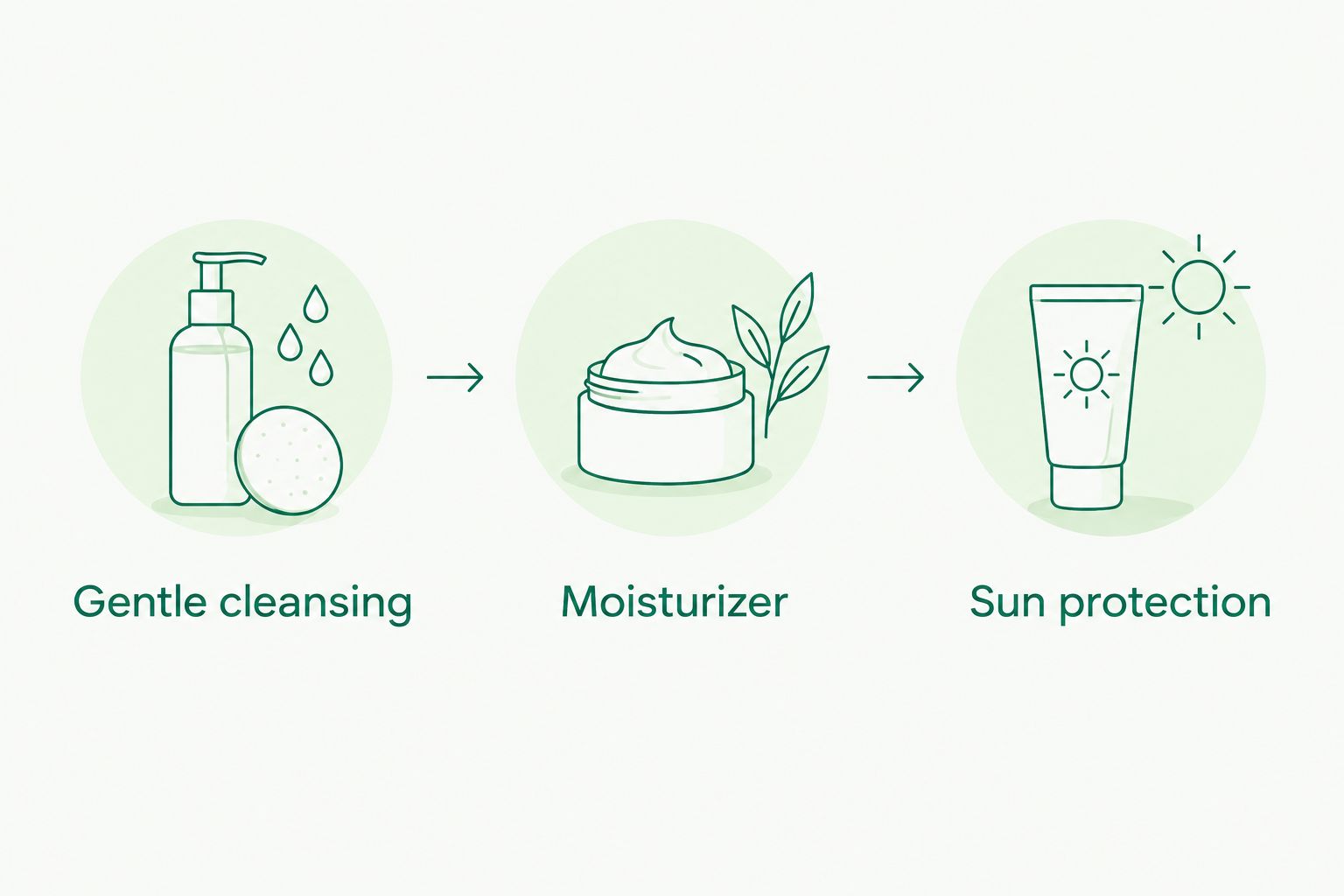
Keep the order clear: Gentle cleansing, Moisturizer, Sun protection. In the morning, cleanse according to your skin's needs, moisturize, and finish with sunscreen. At night, remove sunscreen and makeup gently, then moisturize.
A toner or toner pad is optional, not a missing requirement. If you use one, follow its directions and avoid repeated rubbing over flaky areas. A pad format does not automatically mean the formula exfoliates, and a hydrating pad does not replace moisturizer.
For a manageable 2026 routine, keep optional steps out until your basics feel comfortable. When you introduce a new product, avoid changing the rest of the routine at the same time. Otherwise, you lose a useful way to identify the cause of new irritation.
Can moisturizer make large pores look smaller?
Moisturizer can improve the appearance of dry, rough skin, making the overall surface look smoother. It does not permanently reduce the anatomical size of a pore or remove an established blackhead.
Apply moisturizer to slightly damp skin rather than waiting until your face feels tight. If dryness returns quickly, reassess the formula, your cleansing habits, and possible irritation instead of adding more exfoliation.
Should you exfoliate dry skin with large pores?
Exfoliate only when there is a clear reason, such as congestion, and your skin tolerates the product. Visible pores alone are not enough reason to start an acid.
If your skin burns, cracks, or peels, stop exfoliating and simplify your routine. Persistent symptoms need medical advice rather than a stronger at-home treatment.
How do you know whether your routine is helping?
Track comfort before chasing a close-up photograph. Less tightness after washing, fewer flaky areas, and comfortable moisturizer application are useful signs that your dry-skin routine is becoming more tolerable.
For your 2026 progress photos, use the same lighting, distance, and camera settings. Avoid comparing a filtered image with an unfiltered close-up. Photographing immediately after moisturizer also gives a different impression from photographing dry skin later in the day.
Do not assign every new bump to purging. A product can irritate your skin or simply be unsuitable, and continuing through worsening symptoms is not proof of commitment. Stop a suspected irritant and seek advice if symptoms persist.
FAQ
Why do I have large pores if my skin is dry?
Dry skin and visible pores can occur together because moisture level is not the only factor determining pore appearance. Genetics, congestion, sun damage, and changes in skin firmness also matter.
What's the best first step for large pores on dry skin?
The best first step is a gentle cleansing-and-moisturizing routine with daily broad-spectrum SPF 30 or higher. Address tightness and flaking before introducing a pore-focused treatment.
Can toner pads close my pores?
Toner pads cannot permanently close pores. Their usefulness depends on the formula, and rubbing a pad repeatedly over dry skin can cause irritation.
Is salicylic acid suitable for dry skin with blackheads?
Salicylic acid can help blackheads, but it can also irritate dry skin. Follow the product directions and do not introduce it while your skin is already burning, peeling, or sore.
How should I test a new skincare product on dry skin?
Test a new skincare product on a small area before applying it widely. American Academy of Dermatology guidance recommends testing twice daily for 7–10 days, following the product's normal use directions; stop if a reaction develops.
Can I use Velvente for dry skin with visible pores?
Velvente offers a low-pH Foam Cleanser and a rich Anti-Aging Cream that fit cleansing and moisturizing roles. Test individual tolerance, and do not expect either product to permanently shrink pores.
When should I see a dermatologist about large pores?
See a dermatologist when visible texture comes with persistent acne, scarring, painful bumps, or ongoing irritation. Sudden or changing skin findings also deserve assessment rather than another exfoliating product.
One last thing
Your mirror is not a treatment plan. Before buying another pore product, check whether your current cleanser leaves your skin tight and whether your moisturizer keeps it comfortable. Correcting those basics is more useful than repeatedly treating normal skin openings as a flaw.
Leave the magnifying mirror out of your daily assessment. If your skin feels better but pores remain visible, that is not a failed routine; normal skin has texture.


