
Your pores look large because of inherited pore size, oil production, clogged follicles, or reduced skin firmness from aging and sun exposure. Harsh cleansing and over-exfoliation can make surrounding skin irritated and its texture more noticeable. In 2026, the practical goal is to make pores less conspicuous—not erase them or permanently close them.
- The answer to why are my pores so big starts with genetics, oil, clogged pores, and skin firmness.
- Velvente Korean skincare offers cleansing and moisturizing steps, not a permanent pore-shrinking treatment.
- Treat blackheads differently from normal sebaceous filaments; repeated squeezing can injure skin.
- Choose gentle cleansing, appropriate moisturizer, and broad-spectrum SPF 30 or higher before adding more treatments.
Why are my pores so big? Causes and skincare mistakes
Large-looking pores are not automatically a sign of dirty skin. Oil, follicle contents, and the condition of surrounding skin all affect how visible they appear. Your nose can look dotted even when you cleanse properly.
Use the pattern below to choose your next step. These clues help organize your routine; they do not replace a diagnosis. If you're considering pads, start with the distinction explained in can Korean skincare toner pads tighten pores?.
| What you notice | Possible explanation | Best next step | Limitation |
|---|---|---|---|
| Visible openings with oily shine | Oil makes existing pores more conspicuous | Cleanse gently and choose noncomedogenic skincare | Cleansing does not change inherited pore size |
| Distinct dark plugs or raised bumps | Blackheads or other clogged follicles | Consider an acne treatment suited to your skin | Scrubbing cannot reliably clear follicular plugs |
| Small, fairly uniform dots on your nose | Normal sebaceous filaments | Leave them alone and maintain gentle care | They naturally refill after removal |
| Pores look more prominent alongside fine lines | Reduced firmness from aging or sun damage | Prioritize sunscreen and discuss suitable treatments | Moisturizer cannot reverse structural changes |
| Tightness, redness, or flaking after skincare | Irritation around visible pores | Stop irritating extras and simplify | Irritation needs attention before stronger treatments |
Why this matters
Trying to remove every visible pore creates the wrong target. Pores are normal openings associated with hair follicles and oil glands, and healthy skin still has visible texture.
Your 2026 routine should address the feature you actually see: congestion, excess shine, irritation, or changing firmness. A comfortable face with visible pores is a better outcome than a sore face that looks temporarily matte.
Why pore appearance varies
Several factors overlap. You can have naturally visible pores, blackheads, and irritated cheeks at the same time, so avoid treating your entire face as if every area needs aggressive oil removal.
- Genetics: Your inherited skin characteristics influence pore size. Skincare cannot rewrite that baseline.
- Oil production: More visible oil can emphasize follicular openings. Hormonal changes also affect oil production and acne.
- Follicular buildup: Oil and dead skin cells can form plugs. A clogged pore needs a different approach from an empty but visible opening.
- Aging: Changes in skin firmness can make pores look more prominent. Surface hydration and structural firmness are not the same thing.
- Sun exposure: Ultraviolet damage affects the skin's supporting structures. Daily sun protection belongs in a pore-conscious routine.
- Irritating skincare: Scrubbing, hot water, and excessive exfoliation can cause redness and roughness. That surrounding texture can make pores stand out.
Blackheads are not the same as sebaceous filaments
Blackheads are open comedones: follicles containing a plug whose exposed surface darkens. The dark color is not proof that you failed to wash your face.
Sebaceous filaments are normal structures that help move oil toward the skin's surface. They often appear as small, fairly uniform dots, especially across the nose. Removing them does not prevent them from forming again.
Do not use repeated extraction as your maintenance routine. If you cannot tell whether you are seeing plugs, normal filaments, or acne scars, a dermatologist can identify the difference before you buy another treatment.
Which skincare mistakes make pores look worse?
Washing until your skin feels tight
A squeaky-clean finish is not the goal. Tightness, stinging, and flaking after washing are reasons to reconsider your cleanser, water temperature, or technique.
Use lukewarm water and your fingertips rather than a scrub brush. General dermatology guidance recommends washing up to 2 times per day and after heavy sweating; repeatedly washing throughout the day is not a pore treatment.
Treating every toner pad as an exfoliant
A pad is a delivery format, not an ingredient category. Some pads hydrate, while others contain exfoliating acids; you need the ingredient list and directions to know which you have.
Do not assume a hydrating pad clears blackheads. Equally, do not combine an acid pad with a scrub and another exfoliant simply because each product occupies a different step.
Squeezing dots under a magnifying mirror
Close-up lighting makes normal texture look more dramatic. Repeated squeezing adds the risk of inflammation, marks, and scarring without changing your underlying tendency to show pores.
Put the magnifying mirror aside when judging progress. Compare your skin in ordinary lighting rather than checking individual openings after every wash.
Skipping moisturizer because your skin is oily
Oiliness does not mean your skin cannot become dry or irritated. A moisturizer helps support hydration, particularly when you use acne treatments that cause dryness.
Choose a texture you tolerate and look for noncomedogenic labeling. That label helps guide selection, but it does not guarantee that every formula suits every person.
Expecting an ingredient trend to change pore anatomy
In 2026, separate ingredient interest from the result you need. Rose PDRN, matcha, and white truffle are not interchangeable with established acne treatments simply because they appear in a pore-focused routine.
An ingredient story does not establish permanent pore tightening. Judge a finished formula by its intended role, your tolerance, and the specific concern it addresses.
How do you build a routine for visible pores?
Start with the basics below before adding a targeted treatment. Change products individually so you can identify what causes discomfort or breakouts instead of replacing your whole routine at once.
- Gentle cleansing: Remove daily buildup without scrubbing. Follow the cleanser's directions and rinse thoroughly; more foam or more pressure does not mean smaller pores.
- Optional hydration: Add a hydrating toner or pad only if it improves comfort. Skip this step when it adds friction, stinging, or unnecessary complexity.
- Moisturizing: Apply a moisturizer that suits your skin's dryness and oiliness. You do not need to force the same rich texture onto both dry cheeks and an oily nose.
- Sun protection: Use broad-spectrum, water-resistant SPF 30 or higher during the day. When outdoors, reapply sunscreen every 2 hours and after swimming or sweating, following the label.
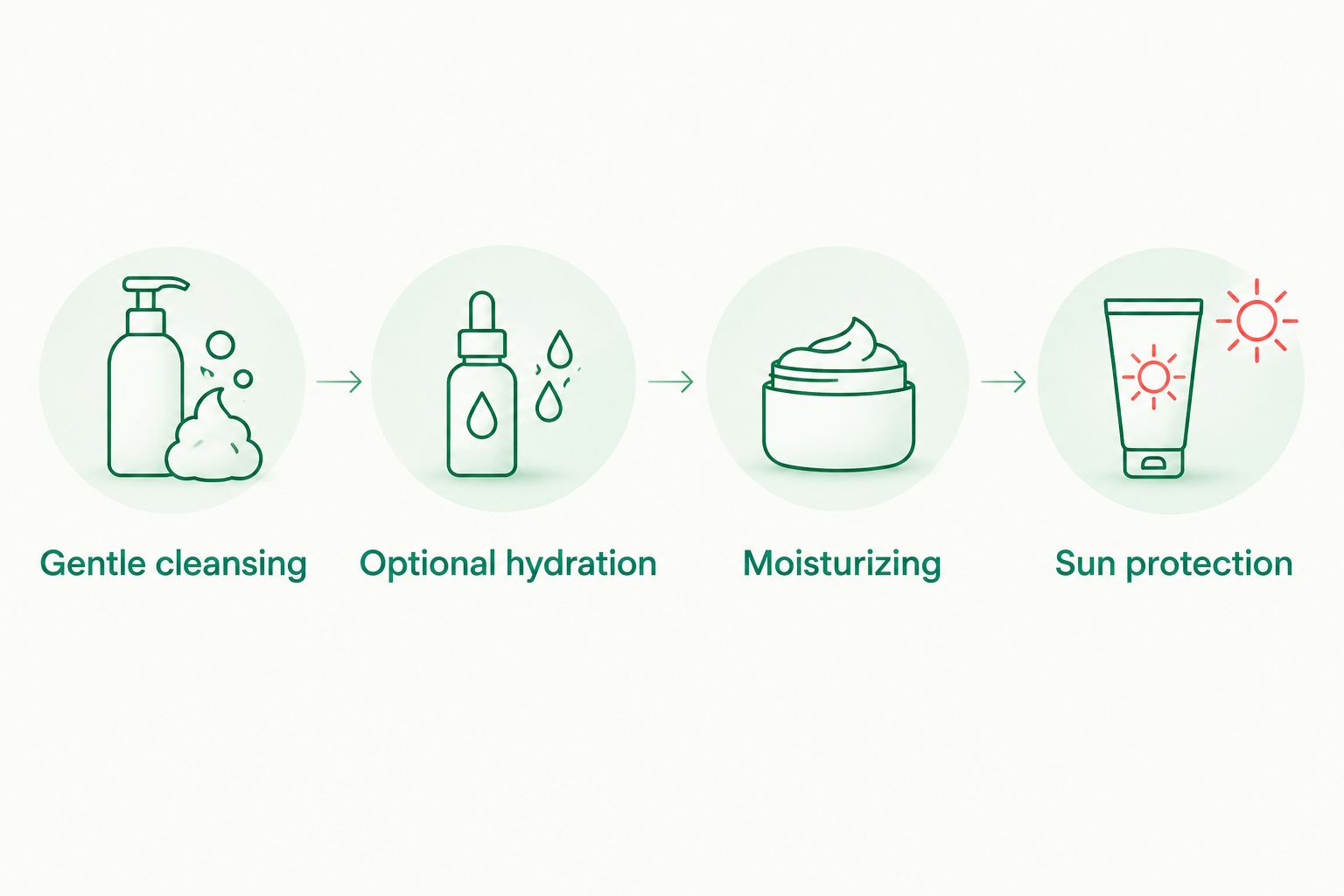
This baseline supports skin care, but it is not a complete treatment for persistent acne. If clogged pores remain your main concern, consider an ingredient specifically used for comedones rather than adding more hydrating layers.
Where targeted treatments fit
Salicylic acid helps unclog pores, while topical retinoids are used to treat comedonal acne. Both can irritate skin, so follow product directions and avoid starting several active products together.
Retinoids are not appropriate during pregnancy. Ask your clinician about treatment choices if you are pregnant, planning pregnancy, breastfeeding, or already using prescription skincare.
For your 2026 routine, choose treatment by the problem—not by the number of steps. Persistent blackheads, inflamed acne, and acne scars need different decisions.
Where Velvente fits in a pore-conscious routine
Velvente Korean skincare is best for shoppers seeking a cleanser, vegan toner pads, and cream—not a permanent pore-size treatment. The range includes Rose PDRN, Jeju matcha, and white truffle ingredients, but those ingredient names do not establish that a product clears comedones.
The following options serve different routine roles. They are not alternatives to sunscreen or a diagnosis for persistent acne.
| Product | Best for | Useful role | Limitation |
|---|---|---|---|
| Foam Cleanser | Shoppers seeking a low-pH foam wash | Cleansing makeup, oil, and impurities, as described in the product information | A rinse-off cleanser does not permanently shrink pores; stop if it irritates |
| Anti-Aging Cream | Shoppers who prefer a rich moisturizer | Moisturizing within an anti-aging routine | A rich texture will not suit every preference and is not a blackhead treatment |
You do not need both products simply because your pores are visible. Keep a cleanser that already works, and choose moisturizer according to comfort rather than assuming a richer formula produces a better pore result.


Can I permanently shrink my pores?
You cannot permanently close pores with a cleanser, toner pad, or cream. You can reduce how noticeable they look by managing congestion, protecting skin from sun damage, and avoiding irritation.
Professional treatments also require realistic expectations. Ask a dermatologist what change is appropriate for your skin rather than accepting a promise of poreless skin.
Why do my pores look bigger after washing?
Pores that look more noticeable after washing do not prove that the cleanser opened them. Hot water, rubbing, dryness, or redness can change the appearance of surrounding skin.
If washing consistently leaves your face uncomfortable, simplify your technique and reconsider the formula. Do not respond by washing again or immediately applying a stronger exfoliant.
When should I see a dermatologist?
Book an appointment if visible pores accompany persistent blackheads, painful acne, scarring, or irritation that does not settle after you stop the suspected product. Deep pits and acne scars are not simply enlarged pores, and another toner is not a substitute for assessment.
Seek evaluation for a spot that changes, bleeds, or does not heal. Treat a new isolated lesion as something to identify, not something to squeeze.
FAQ
Why are my pores so big even though I wash my face?
Visible pores are not necessarily caused by inadequate washing. Genetics, oil production, follicular plugs, aging, and sun damage all affect their appearance; washing more often does not address every cause.
Can cold water close my pores?
Cold water does not permanently close pores. Use lukewarm water for comfortable cleansing rather than alternating extreme temperatures to chase a tightening effect.
Are the dots on my nose blackheads or sebaceous filaments?
Small, fairly uniform dots on your nose are often sebaceous filaments, while distinct dark plugs can be blackheads. A dermatologist can identify uncertain spots; repeated squeezing is not a reliable diagnostic method.
Should I exfoliate every day if my pores look large?
Daily exfoliation is not a default requirement for visible pores. Follow the specific product directions and reduce or stop use if you develop burning, redness, or flaking.
Can Velvente toner pads make my pores disappear?
Velvente toner pads cannot make pores disappear. Treat them as a skincare step rather than a permanent pore-size treatment, and check the ingredient list before assuming they provide chemical exfoliation.
What sunscreen should I use if I have visible pores?
Choose broad-spectrum, water-resistant SPF 30 or higher, with a texture you can wear consistently. Noncomedogenic labeling can help guide selection if you are prone to clogged pores.
One last thing
A blackhead becoming less noticeable and a pore disappearing are different outcomes. Clearing a plug can leave a normal follicular opening visible—and that is not treatment failure.
For the rest of 2026, measure progress by fewer plugs, less irritation, and comfortable skin in normal lighting. Keep the routine that improves those outcomes, not the routine that promises to remove normal anatomy.


