
Toner pads lose potency the fastest of any step in a Korean skincare routine, and most of the damage happens in storage, not in use. Store them sealed, cool, dark, and handled only with clean tongs or dry fingers, and the essence inside stays stable for as long as the PAO (period-after-opening) symbol on the jar promises — typically the 6M or 12M icon printed near the ingredient list.
Heat, sunlight, bathroom steam, and dirty fingers all shorten that window. A jar left open on a steamy bathroom counter can turn cloudy or grow mold weeks before its printed date, even though nothing about the formula itself changed.
- How to store toner pads: sealed, cool, dark, and away from bathroom steam — never on an open shower shelf.
- The PAO symbol (a small jar icon, usually 6M or 12M) tells you how long an opened jar of toner pads stays effective in 2026.
- Humidity and UV light degrade PDRN and matcha actives faster than the printed shelf life suggests.
- Use clean tongs or dry fingers only — wet hands introduce bacteria that spoil pads before the PAO date.
- Velvente's vegan Toner Pads hold up best in a dry cabinet at room temperature, not the fridge and not the windowsill.
Why toner pad storage matters more than you think
Vegan toner pad formulas, including PDRN and Jeju matcha blends, generally skip the heavy synthetic preservative loads found in older-generation toners. That's good for skin, but it means the formula relies more on you keeping air, light, and moisture out than on the chemistry doing the work alone.
Once a jar is open, every time you lift the lid you let in a small dose of oxygen that reacts with antioxidant compounds in the essence. Layering toner pads into a routine correctly only pays off if the pads you're applying still have their actives intact — a degraded pad still feels wet, but it's not doing the job the label promises.
How to store toner pads properly
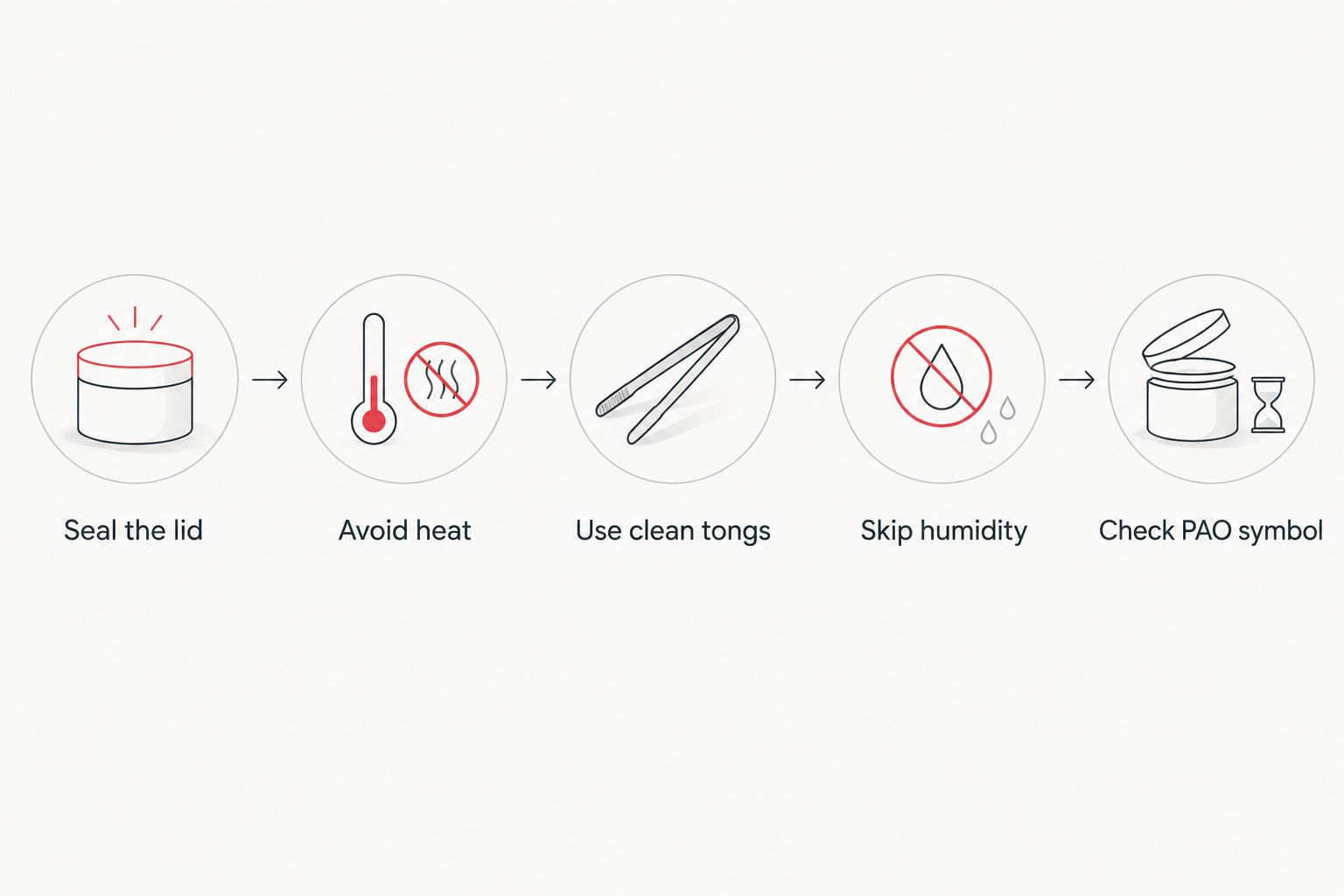
Follow these steps every time, not just when you remember:
- Close the lid immediately after pulling a pad — don't leave the jar open while you finish the rest of your routine.
- Keep the jar at room temperature, roughly 60-75°F (16-24°C), in a cabinet or drawer away from direct sunlight.
- Skip the shower shelf. Steam raises both humidity and temperature every time you rinse, and that combination is the single fastest way to spoil an opened jar.
- Use clean tongs or dry fingers only. Wet or unwashed hands transfer bacteria into the essence, which spoils pads long before the PAO date.
- Check the PAO symbol — a small jar icon with a number like 6M or 12M — printed on the packaging or box.
- Finish the jar within that window once opened, rather than stockpiling several open jars at once.
Opened jar vs. unopened jar
| Status | Best storage spot | Shelf-life signal |
|---|---|---|
| Unopened | Cool, dark cabinet, original box | Printed expiration date on the box |
| Opened | Same cabinet, lid sealed tight after each use | PAO symbol (6M-12M jar icon) |
An unopened jar of toner pads is far more forgiving — the seal keeps out air and moisture until you break it. Once that seal is broken, the clock on the PAO symbol starts, regardless of how carefully you handle the jar afterward.
Can you store toner pads in the fridge?
Refrigeration isn't necessary for most toner pad formulas, and it can backfire. Moving a jar between a cold fridge and warm bathroom air causes condensation to form inside the lid every time you open it, which adds the exact moisture problem you're trying to avoid. Verdict: skip the fridge — a cool, dry cabinet does the job better.
Some people like the cold-pad sensation on puffy mornings, but that's a comfort choice, not a shelf-life benefit. If you want that effect occasionally, keep the jar in the main cabinet and just chill a single pad on a small dish right before use instead of storing the whole jar cold.
Why toner pad storage conditions vary in impact
- Humidity swells the pad fibers and creates the damp, warm conditions bacteria and mold need to grow.
- UV light breaks down PDRN and antioxidant compounds like matcha polyphenols, dulling their effect even before the PAO date.
- Heat from steam or direct sun speeds up oxidation of the essence, changing its texture and scent.
- Repeated air exposure from leaving the lid open lets oxygen react with actives every single time.
- Finger or tong contamination transfers skin bacteria into the damp essence, which spoils pads regardless of temperature.
How often should you use toner pads once they're stored right?
Proper storage only matters if you're actually using the jar at a normal pace — how often to use toner pads in a routine affects how quickly you work through a jar before the PAO window closes. A jar used once or twice daily typically empties well within a standard 6M or 12M PAO period; a jar left half-full for months is the one that spoils.
Can toner pads replace a separate toner and exfoliant?
Whether toner pads can replace a separate toner and exfoliant in your cabinet also changes how much product sits in storage at once — fewer separate bottles means fewer things that can degrade from poor storage in the first place.
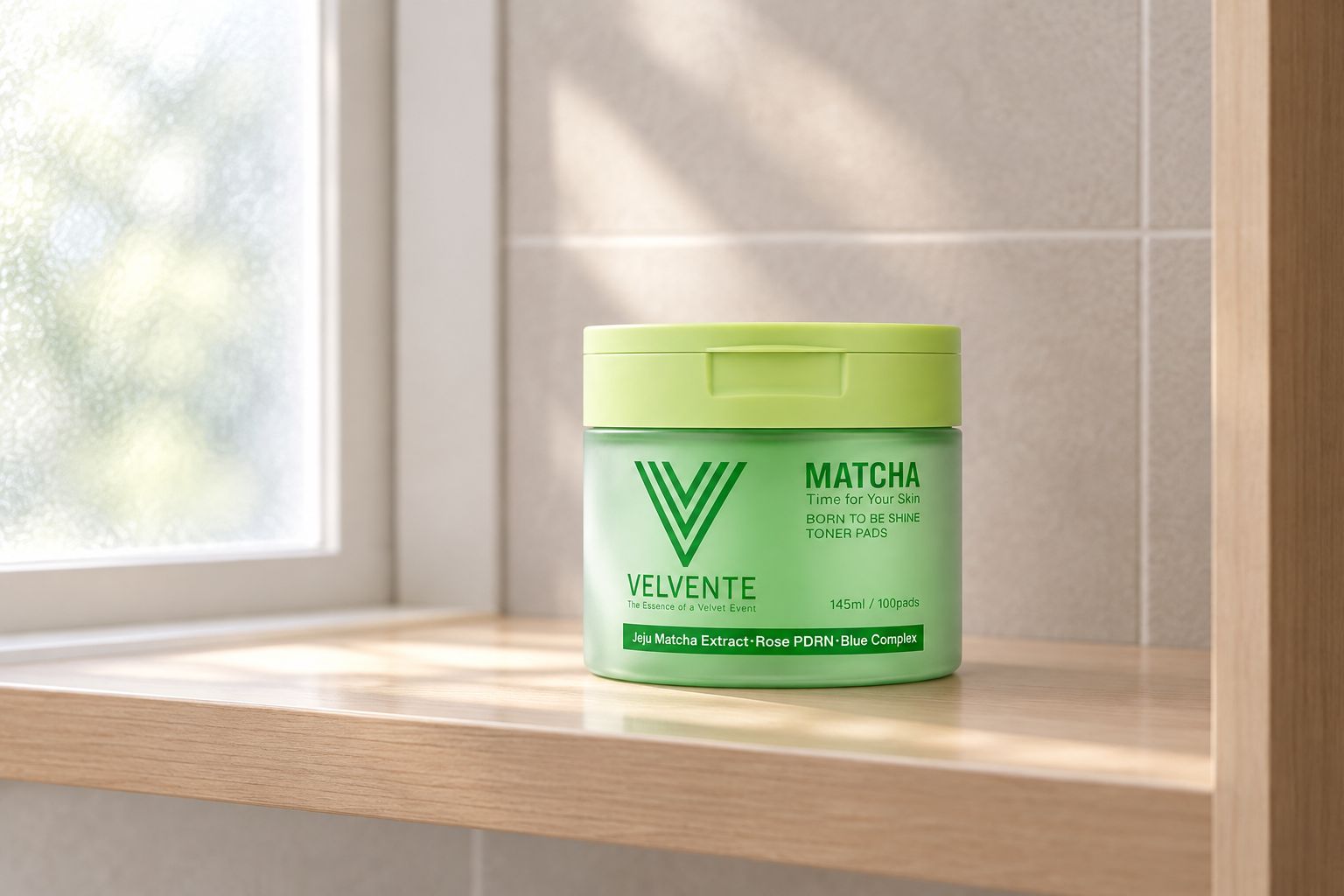
Velvente's Toner Pads, formulated with Rose-Derived PDRN and Jeju matcha, follow the same storage logic as any vegan toner pad: sealed jar, room temperature, clean tongs, and a watch on the PAO symbol once it's opened. No amount of active ingredient sourcing fixes a jar left open on a steamy counter for a month.
FAQ
How long do toner pads last once opened?
Most opened toner pad jars last for the period shown on the PAO symbol, typically 6 to 12 months (6M or 12M). Heat, humidity, and dirty fingers can shorten that window well before the printed date.
Is it bad to leave the toner pad jar open?
Yes, leaving the jar open lets air, moisture, and bathroom steam reach the essence every minute it sits uncovered. Always reseal the lid immediately after removing a pad.
Should toner pads be stored in the fridge?
No, refrigeration isn't necessary and can cause condensation inside the jar when it's moved between cold and warm air. A cool, dry cabinet at room temperature works better for most formulas.
Can you use fingers instead of tongs to remove toner pads?
Dry, clean fingers are fine, but wet or unwashed hands introduce bacteria that spoil the essence faster than the PAO date allows. Wash and dry hands first, or keep a set of tongs by the jar.
Does bathroom storage ruin toner pads faster?
Yes, a bathroom shelf near the shower exposes the jar to steam and humidity every time you rinse, which is the fastest way to spoil an opened jar. A bedroom drawer or closed cabinet away from the shower is safer.
What does the PAO symbol on a toner pad jar mean?
The PAO symbol is a small jar icon with a number like 6M or 12M, showing how many months the product stays effective after opening. It's a cosmetics packaging standard, not a specific date, so it only starts counting once you break the seal.
Do vegan toner pads spoil faster than traditional ones?
Vegan formulas often use lighter preservative systems, so storage habits matter more than with heavier synthetic formulas. Sealing the lid and avoiding heat and humidity closes most of that gap.
Can sunlight damage toner pads through a closed jar?
Yes, UV light passing through a clear or thin jar can still degrade PDRN and antioxidant compounds inside. Store the jar in a cabinet or drawer rather than on an open shelf near a window.
One last thing
The detail most people miss isn't the fridge question — it's the shower steam. Every time you finish a shower and reach for pads on a bathroom shelf, that jar has just absorbed a burst of heat and humidity, the exact combination that shortens a PAO window fastest. Move the jar six feet away, into a bedroom drawer or a closed bathroom cabinet, and the pads inside outlast the ones left on an open shelf by a wide margin — no reformulation required, just a different shelf in 2026.


