
Yes, Korean skincare toner pads expire. An unopened tub is good for roughly 2-3 years from the manufacture date, but once you break the seal, the countdown drops to about 6-12 months depending on the formula and how much air gets in every time you dig out a pad.
The part most people miss: pads sit soaked in liquid, so they lose potency and pick up bacteria faster than a cream in a jar does. A pad that still smells fine can already be underperforming on actives like PDRN or matcha polyphenols.
- Toner pads expire: unopened lasts 2-3 years, opened lasts 6-12 months once air and hands get in.
- The Period-After-Opening (PAO) symbol on the tub — the little open-jar icon with a number — is the real expiration clock, not the manufacture date.
- Warning signs: sour or musty smell, dry or crumbly pads, brown discoloration, or liquid that's gone cloudy.
- Antioxidant-heavy formulas (matcha, rose PDRN) degrade faster once opened than simple hydrating toners.
- Velvente's Matcha PDRN Toner Pads follow the same 6-12 month opened window as any liquid-soaked pad format.
Why this matters
Expired toner pads aren't just less effective, they can actively irritate skin. Once preservatives break down, bacteria and mold can grow in the leftover liquid at the bottom of the tub, and rubbing that across your face after cleansing defeats the point of the step entirely.
This matters more for pad-format toners than for bottled ones because every swipe reintroduces your fingers, and sometimes your face, back into the shared liquid pool. That repeated contact accelerates contamination in a way a pump bottle doesn't.
Can Korean skincare toner pads expire?
Toner pads expire on two separate timelines, and mixing them up is where most people go wrong.
| Status | Typical shelf life | What ends it |
|---|---|---|
| Unopened, sealed tub | 2-3 years from manufacture | Preservative breakdown over time, even without air exposure |
| Opened, in regular use | 6-12 months from first use | Repeated air exposure, hand contact, and light degrading actives |
| Opened but rarely used | Can expire faster than 6 months | Long gaps between uses let bacteria establish in standing liquid |
Signs a tub has turned:
- Sour, musty, or off smell compared to when you opened it
- Pads feel dry, crumbly, or stuck together instead of saturated
- Liquid at the bottom looks cloudy or has separated
- Color has shifted, especially browning in matcha or rose-based formulas
- Any stinging or new redness after use that wasn't there before
Unopened toner pads: 2-3 years shelf life
A sealed tub sitting in a drawer isn't exposed to air, light, or fingers, so the preservative system does its job over a much longer window. Most K-beauty toner pad brands print a manufacture date or batch code on the bottom of the tub rather than a hard expiration date, since the 2-3 year figure assumes the seal stays intact.
Verdict: unopened stock is safe to hold for 2-3 years — don't stockpile beyond that.
Opened toner pads: 6-12 months after first use
The moment you peel the inner seal, the clock resets. Air gets in every time you lift the lid, your fingers touch the liquid to pull out a pad, and light exposure starts breaking down antioxidant actives like matcha polyphenols and Rose-Derived PDRN faster than a sealed cream would degrade.
Most brands, including formulas built around PDRN and matcha, land in the 6-12 month range once opened. Using the tub daily and resealing it tightly each time keeps you closer to the 12-month end; leaving it cracked open in a humid bathroom pushes it toward 6.
Why toner pad shelf life varies
A handful of factors decide whether your tub lasts closer to 6 months or the full 12:
- Ingredient stability — antioxidant-forward actives like matcha and rose extracts oxidize faster once exposed to air than simple humectants like glycerin
- Preservative system — vegan formulas without harsh synthetic preservatives can have a shorter safe-use window once opened
- Packaging design — a tight-sealing tub or pouch slows moisture loss and contamination compared to a loose-fitting lid
- Storage location — a bathroom shelf near a hot shower speeds up degradation versus a cool, dry drawer
- Frequency of use — daily use with clean, dry hands keeps liquid moving and fresh; sporadic use lets bacteria settle in standing liquid
- Hand contact — dipping fingers directly into the tub introduces oils and bacteria every single time
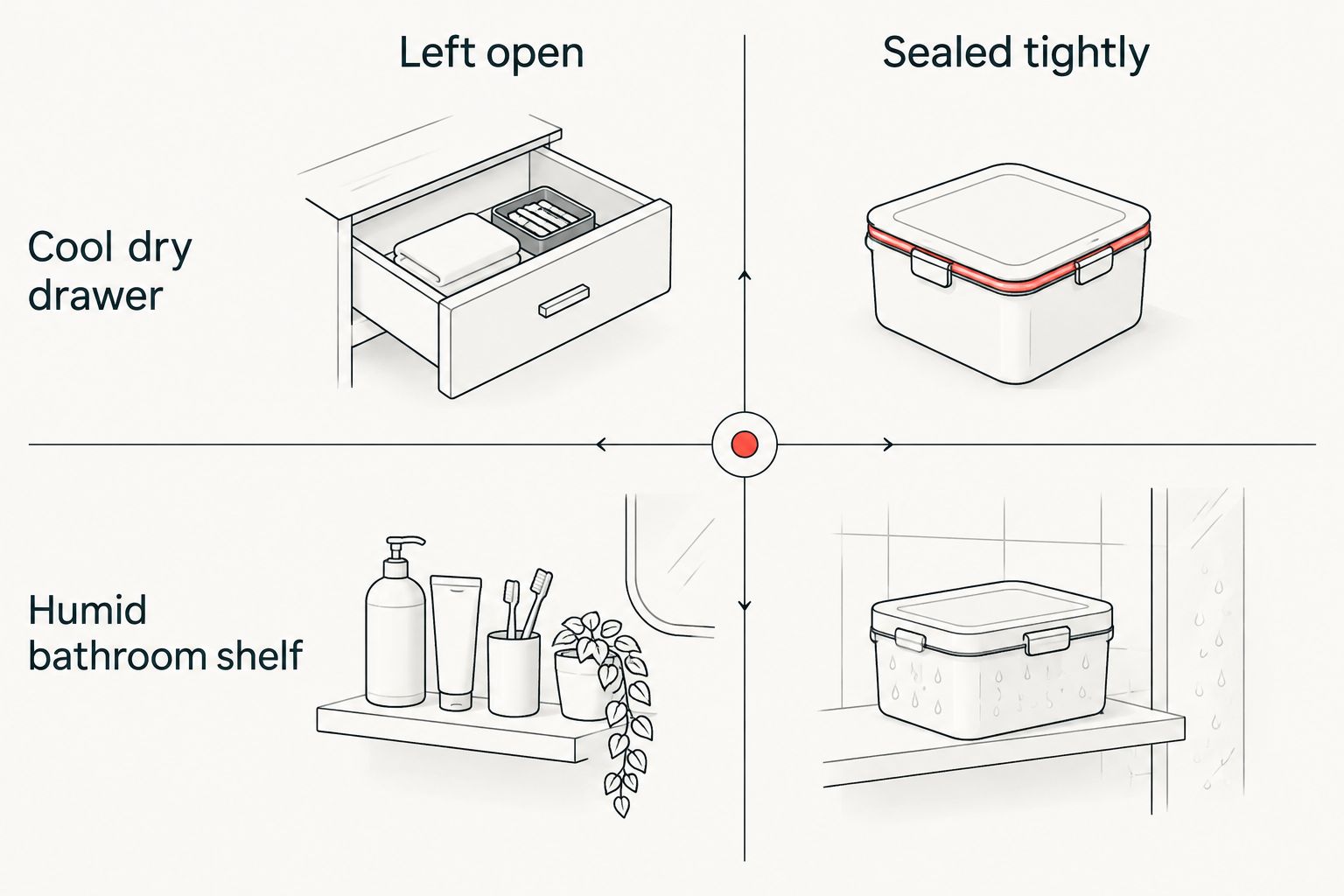
If you're working a full routine of toner pads layered before serum and cream, the tub gets opened daily, so the packaging seal and where you store it matter more than the ingredient list alone. Checking how often you should use toner pads also helps you estimate whether a tub will run out before it expires or sit half-used for months.
For a formula built around Rose-Derived PDRN and Jeju matcha, like Velvente's Matcha PDRN Toner Pads, treat the tub the same as any pad-format toner once opened: reseal it fully after every use and keep it out of direct light and heat. Pairing pads with a foam cleanser that finishes clean skin without residue also means the pad itself is doing the toning work, not compensating for leftover makeup or oil.

How can you tell if toner pads have gone bad?
Toner pads have gone bad when the liquid smells sour or musty, the pads feel dry or crumbly instead of saturated, or the liquid looks cloudy. Any new stinging or redness after use is also a sign to stop, even if the tub is within the printed 12-month window.
Do toner pads need to be refrigerated?
Toner pads don't need refrigeration, but a cool, dry drawer extends their usable life more than a warm, humid bathroom shelf does. Some people keep pads in the fridge for the cooling sensation on application, which is a comfort choice, not a shelf-life requirement.
Can you still use toner pads after the expiration date?
Using toner pads past the 6-12 month opened window isn't worth the risk once the formula has visibly changed, since degraded actives do less for your skin and standing liquid can harbor bacteria. If the smell, texture, or color has shifted, replace the tub instead of finishing it out.
A quick way to keep this from becoming a guessing game is to check how toner pads rank by price against how fast you actually go through a tub — a smaller size that gets used up in 3-4 months avoids the expiration question altogether. And if you're deciding whether pads even need a separate exfoliant and toner step, that's covered in whether toner pads can replace a separate toner and exfoliant.
FAQ
Can toner pads expire?
Yes, toner pads expire — unopened tubs last about 2-3 years, opened tubs last roughly 6-12 months once air and hand contact start breaking down the formula.
How long do Korean toner pads last once opened?
Once opened, most Korean toner pads last 6-12 months. Antioxidant-heavy formulas with matcha or rose extracts can shift color or smell sooner if left in a humid bathroom.
What's the shelf life of unopened toner pads?
Unopened toner pads have a shelf life of about 2-3 years from manufacture, since the sealed tub blocks the air and light exposure that speed up degradation.
Is it safe to use expired toner pads?
It's not worth using expired toner pads once the smell, texture, or liquid color has changed, since degraded actives do less and bacteria can build up in standing liquid.
Do toner pads need to be refrigerated to last longer?
Toner pads don't require refrigeration, but storing them in a cool, dry drawer instead of a hot, humid bathroom extends how long the opened tub stays usable.
Why do toner pads expire faster than a serum bottle?
Toner pads expire faster than a serum bottle because the liquid sits exposed every time you lift the lid, and fingers touching the pads introduce bacteria a pump bottle avoids.
How do I know if my toner pads have gone bad?
Toner pads have gone bad when the liquid smells sour, the pads feel dry or crumbly, the color has browned, or using them causes new stinging or redness.
Does resealing the tub tightly actually extend shelf life?
Resealing the tub tightly after each use extends shelf life by limiting air exposure, which is the main driver of oxidation in matcha and PDRN-based toner pad formulas.
One last thing
The PAO symbol — that small open-jar icon with a number printed inside, usually on the bottom of the tub — is the number that actually matters, not the manufacture date on the box. If your tub shows "12M," the 12-month opened window starts the day you break the seal, and 2026 packaging on most K-beauty pad tubs carries this symbol whether or not the brand also prints a batch code.


